For almost a year, most of the largest U.S. retailers have spoken openly about the impact tariffs are having on their margins as they justify price increases for customers. Executives have addressed the issue on earnings calls, in TV interviews and onstage at conferences.
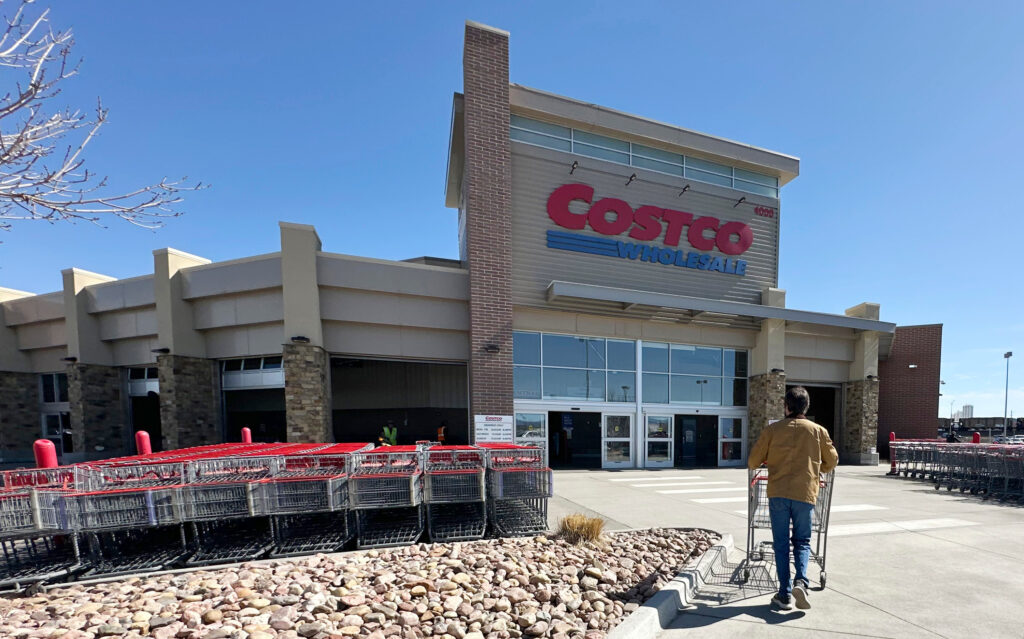
But only one has made its dissent known in court: Costco.
The warehouse club became the largest company — and the first major retailer — to sue the Trump administration last week, seeking a full refund for the levies it has paid this year. The Supreme Court heard arguments in November on whether President Donald Trump has legal authority to impose tariffs on goods from nearly all countries, and it is expected to rule in the coming weeks or months. If it rejects the administration’s case that tariffs are justified as an emergency, the companies could be entitled to hefty refunds.
While some analysts point to Costco’s lawsuit as a smart business decision to ensure it gets its money back, others note the chain is uniquely positioned to weather any backlash from Washington regardless. And that’s what’s setting it apart from retailers that are reluctant to make waves with the administration.
“They’re not alone in being impacted by tariffs,” said Michael Baker, a retail analyst at D.A. Davidson. “But Costco has the size and the clout with consumers, suppliers — and really everyone within the retail ecosystem — to potentially take action that won’t be viewed favorably by the administration.”
Costco didn’t respond to a request for comment.
The Issaquah, Washington-based retailer has a track record of not yielding to the administration. Earlier this year, Costco was one of the few holdouts in the industry to maintain its diversity, equity and inclusion initiatives.
While the grassroots efforts to boycott Target for ending its DEI programs led to weakening foot traffic and diminished financial outlooks for consecutive quarters, Costco saw a boost. Net sales for the 2025 fiscal year (which ended Aug. 31) increased 8 percent over 2024 to $269.9 billion. Net sales for November were also up 8.1 percent over last year, reaching $23.6 billion, the company reported last week. Costco releases its first-quarter earnings this week.
“Unlike all the other major retailers, [Costco] pushed back and said: ‘No, we believe that diversity, inclusivity and inclusion are important tenets of our brand,’ and they won because of that,” said Glenn McMahon, a former global retail executive and now founder of McMahon Advisory Consultants.
Costco, which filed suit in the Court of International Trade, joins the dozens of businesses that are also suing U.S. Customs and Border Protection for refunds ahead of the Supreme Court decision — including canned foods maker Bumble Bee, motorcycle manufacturer Kawasaki, beauty conglomerate Revlon and Ray-Ban parent EssilorLuxottica. All want legal assurance that they will be paid if the Supreme Court rules Trump’s tariffs are unlawful.
Costco filed its case in the run-up to a Dec. 15 deadline, when customs officials will “liquidate” the company’s tariff payments. Costco had requested an extension, but it was denied. About a third of Costco’s sales are imported goods, with two thirds being nonfood, Chief Financial Officer Gary Millerchip said in a May earnings call.
When the Supreme Court heard arguments last month, it took up the question of whether Trump can legally impose levies under the International Emergency Economic Powers Act, a 1977 law that has traditionally been used to sanction countries. The law does not mention tariffs, and justices signaled during arguments they may strike down or restrict Trump’s defining economic policy.
But Trump continues to defend the tariffs, calling them an essential tool to reduce an annual U.S. trade deficit that he declared as a “national emergency” in April.
Cost of business
Even if the administration loses, Customs and Border Protection will probably stall in paying the tariff rebate, said Marc Busch, a trade law and policy scholar at Georgetown’s School of Foreign Service.
“I have a sneaking suspicion that whoever is advising Costco said: ‘It’s going to be a political quagmire, even if the Supreme Court says they’re illegal, so let’s go to the Court of International Trade just to protect ourselves,’” he said.
Under that logic, the retailer’s move to ensure its refund is a smart business decision, said Neil Saunders, a managing director at retail analytics firm GlobalData. It will have legal recourse to recoup its payments, which would be “a great boon to the bottom line,” he said.
“I don’t think it’s really about Costco trying to be a stalking horse here and trying to reverse the tariffs,” Saunders added. “It is significant what they have done, but I think, for them, it’s just part of the cost of doing business.”
But Costco also has a degree of independence that not all retailers have, in part because of its cult following, Saunders said. As of the end of August, the company had more than 145 million members globally, a 6 percent year-over-year increase, and a 92.3 percent renewal rate in the United States.
“It’s Retail 101: They’re true to their customer; they’re adamant about maintaining value and price and experience for their members,” McMahon said. “And they do a better job than anybody else.”
Customers are addicted to the retailer’s “terrific merchandising” that provide a “wow factor,” Baker said, and it drives loyalty.
“It’s the idea that you walk into a Costco store, and you have a general idea of what you’re looking to shop for on any given trip,” he said. “But as you walk the aisles, you start seeing things that you didn’t know you needed but now can’t live without.”
To weather the tariffs, the retailer employed tactics similar to those of its peers, such as putting pressure on suppliers to lower costs, diversifying manufacturing to lower-tariff countries and selecting where to hike prices strategically.
For example, Costco has lowered prices on tariffed items that are especially important to members — such as bananas and other fresh fruits — while raising them in categories where consumers would be willing to pay a few dollars more, such as flowers and other discretionary items, executives noted in earnings calls.
The strategy hasn’t deterred consumers. Same-store traffic in the U.S. was up 3 percent in November over last year.
Furthermore, Costco has benefited from offering bargains in an inflationary environment. Customers are more value-driven now, and the business model of bulk buying is made for these economic conditions, analysts said.
The company also got a boost during the pandemic, drawing in higher-income consumers as shoppers battled to get their hands on staples like toilet paper and baby formula, McMahon noted.
“They got hooked,” he said.
Costco’s stock price has surged 140 percent in the past five years.
Andrew Jeong contributed to this report.
The post Why Costco is the only big retailer to challenge Trump on tariff refunds appeared first on Washington Post.


