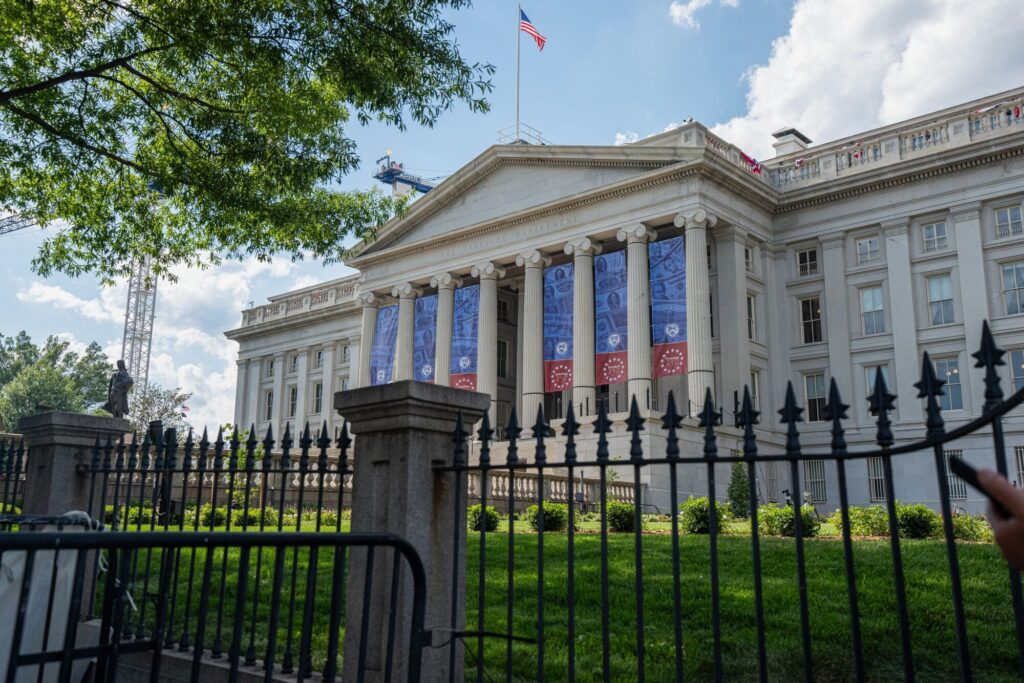
The U.S. Treasury Department doubled the amount of government debt it can buy back Wednesday morning, sending bond yields plummeting and boosting financial markets.
The decision came just after Treasury bond yields reached their highest level since 2007 — a worrying development that had shaken global markets and created new challenges in the domestic economy, including probably raising borrowing costs for businesses, consumers and the U.S. government.
Treasury’s change in strategy will run from Sept. 9 to Nov. 4. That’s the day after the 2026 midterm elections, in which Republicans are fighting to retain control of the House and the Senate, even as they are dogged by persistently high gas prices due to the Iran war.
Some economists argued that the action was an effort by Treasury Secretary Scott Bessent to manipulate Treasury yields.
A yield curve control strategy “is far from a free lunch,” economist Mohamed El-Erian wrote on X. “While it can help bring down longer-end yields in the immediate/short term, thus helping mortgage and other borrowing costs, it risks collateral damage and unintended consequences.”
However, the impacts would be “short dated” unless they are followed by “fundamental policy adjustments,” he added.
Catch up quickly every weekday morning with a rundown of the 7 most important and interesting stories. Sign up for The 7 newsletter.
The post Bond yields fall, markets rally after Treasury doubles debt buybacks appeared first on Washington Post.