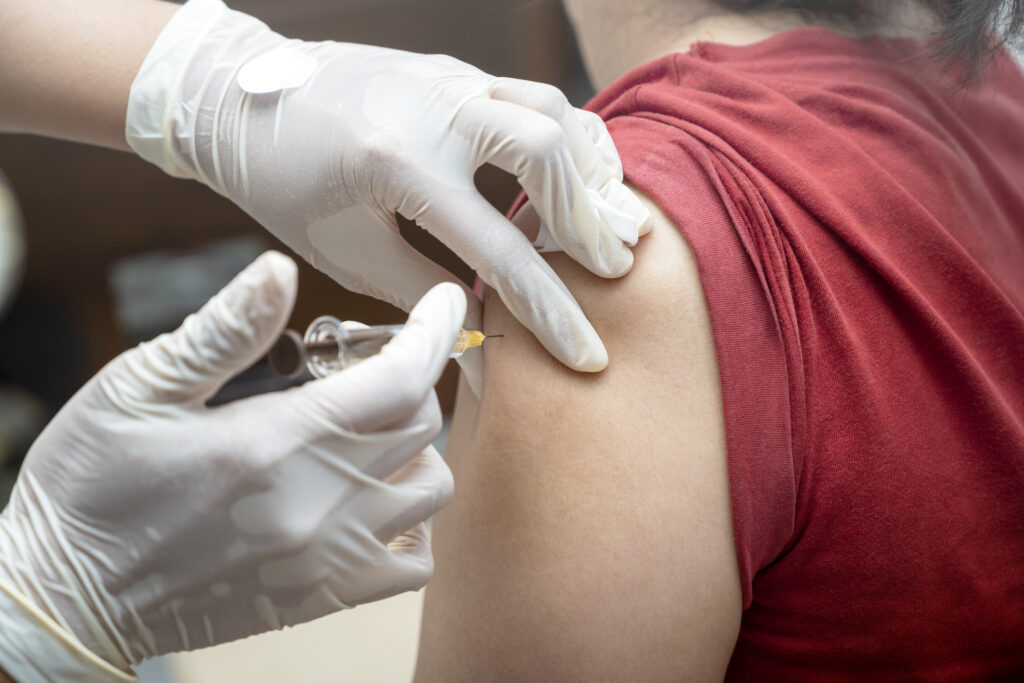
An experimental drug that uses messenger RNA to deliver a vaccine customized to a patient’s tumors effectively prevented skin cancer recurrence in a large-scale clinical trial, according to new results announced by drugmakers Wednesday.
Researchers have explored the use of mRNA drugs — the same technology behind the leading coronavirus vaccines that helped end the pandemic — to treat cancer for years, but this one is the first to clear a Phase 3 trial, according to Moderna and Merck.
That opens the door for the Food and Drug Administration to potentially approve the first ever mRNA-based cancer treatment, in what would be a landmark moment for the fast-emerging field.
“It was an idea 10 years ago, it was a dream still three or four years ago, and now it feels like very much a reality,” Moderna President Stephen Hoge told The Washington Post.
The drug, intismeran autogene, treats melanoma, the deadliest form of skin cancer, of which the National Cancer Institute estimates there will be more than 100,000 new cases this year. It can often recur even after a tumor is surgically removed.
On patients with resected melanoma — a tumor that was completely removed — the drug was previously found in Phase 2 trials to cut the risk of recurrence or death by nearly half after five years when combined with an approved immunotherapy, Keytruda, compared with patients who were just given Keytruda.
Under the same regimen, intismeran also prevented recurrence and metastasis in the larger, Phase 3 trial of 1,137 patients, Merck and Moderna said Wednesday. The companies did not release the full results of the study itself, which have not yet been independently reviewed, but said the trial met its primary endpoint of improving recurrence-free survival. They will announce data from the trial in an upcoming meeting.
Merck, which also makes Keytruda, and Moderna have invested hundreds of millions of dollars in personalized mRNA cancer-vaccine technology since the mid-2010s, well before the coronavirus pandemic.
The stakes extend well beyond melanoma. Experts said the trial’s success could help establish a new way of treating cancer; versions of the treatment are already being studied in lung, kidney, bladder and other cancers.
“This is exciting,” said Antoni Ribas, a professor of medicine at the University of California, Los Angeles, of the intismeran trial results. “That hasn’t happened ever, with any cancer vaccine.”
‘The next frontier’
Intismeran represents a significant advance in cancer care.
Rather than giving every patient the same treatment, researchers first sequence a patient’s tumor and compare it with normal cells to identify mutations unique to the cancer.
A computer algorithm then selects up to 34 of the resulting abnormal proteins most likely to attract an immune response, and those instructions are encoded into a custom-made mRNA vaccine for that individual patient.
The personalized mRNA vaccine and Keytruda are designed to deliver a one-two punch against cancer. The vaccine teaches the immune system to recognize mutations unique to a patient’s tumor, essentially showing it what to attack.
Keytruda then helps release a “brake” that cancer can use to hold the immune system back, allowing immune cells to more effectively attack the cancer.
“This is representative of the next frontier of cancer immunotherapy,” Karen Knudsen, CEO of the Parker Institute for Cancer Immunotherapy, wrote to The Post.
Knudsen added that longer follow-ups would be needed to determine if the protection against recurrence caused by the drug continues to hold up in patients over time.
The safety profile of intismeran and Keytruda “remains consistent” with its previous reports, which have noted that the number of serious reactions were comparable to patients who received only Keytruda, Merck and Moderna said. The most commonly reported side effects related to intismeran were fatigue, pain at the site of injection, and chills, the drugmakers disclosed in December 2023.
mRNA-based treatments deliver instructions to cells to produce specific proteins that trigger the body’s immune response and gained prominence as the platform that allowed drugmakers to speedily develop the coronavirus vaccines during the covid-19 pandemic. They have since come under fire from the Trump administration, which has cast largely unfounded claims about the technology’s safety.
mRNA injections can be faster to design and manufacture than conventional vaccines. Drugmakers were able to pivot to produce coronavirus vaccines so quickly because of existing research into mRNA cancer treatments, said Hoge, the Moderna president.
“In many ways, covid [vaccines] depended upon our investments and strategy around oncology in order to come into existence,” Hoge said. “This is a bit of coming home and seeing all that investment in messenger RNA technology really serve its original purpose.”
Hoge did not say when Moderna will apply for FDA approval of intismeran but said the company would move “as fast as possible.”
Daniel Gilbert contributed to this report.
The post Cancer treatment could face landmark moment with promising vaccine appeared first on Washington Post.