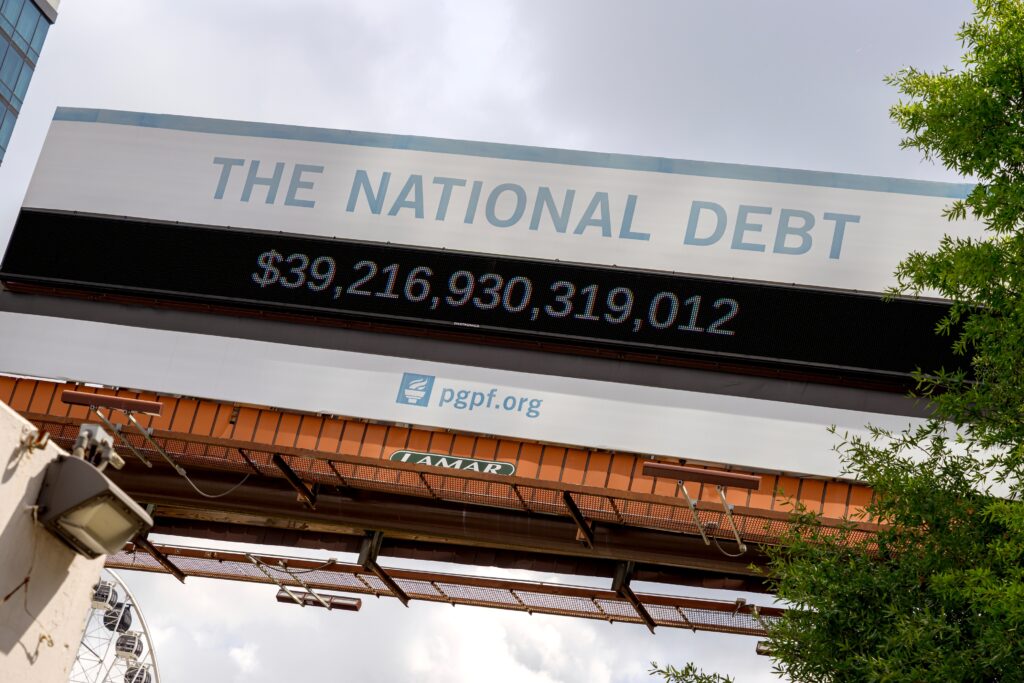
The national debt is poised to reach $40 trillion this week, months ahead of Congressional Budget Office projections. This follows the federal government’s eye-popping report of a $432 billion deficit for July, the highest monthly level since the coronavirus pandemic. The excuses for this rolling shortfall only highlight the extent to which Washington has lost control of federal spending.
The last time the monthly deficit exceeded July’s level was in March 2021, when pandemic relief spending drove the figure to $658 billion. But today, the government is not dealing with the fallout of a historic pandemic, and unemployment is low. The deficit swelled anyway.
The Treasury Department said July’s deficit, the fourth highest on record, was inflated by tariff refunds (the Supreme Court ruled the White House’s emergency tariffs unlawful in February) as well as the early payment of August benefits, a result of calendar quirks.
But there’s no one-off explanation for the overall trajectory bringing U.S. debt to the big 4-0. Net interest paid by the Treasury Department so far this fiscal year totals $931 billion. That’s nearly a trillion dollars of taxpayer money spent not on defense or education or scientific research but to service the money politicians have already spent.
Unrestrained pandemic spending, and the round-the-clock money printing that took place to enable it, contributed to the inflation that followed and has still not resolved. It will be nearly impossible for the Federal Reserve to deliver on its mandate to return inflation to 2 percent if the government doesn’t rein in its cash flow.
Inflation puts upward pressure on interest rates, which makes government borrowing even less sustainable. If deficits continue on their current trajectory, they will cripple Social Security and Medicare. The latter was the largest expense last month, at $174 billion. The military will also have a harder time addressing its munitions shortfalls absent long-term, credible spending guarantees.
Politicians are addicted to making promises that require sources of money they don’t have. Their failure to control spending remains one of the biggest threats to the country. If only the $40 trillion milestone could be a wake-up call.
The post Washington’s $40 trillion milestone appeared first on Washington Post.