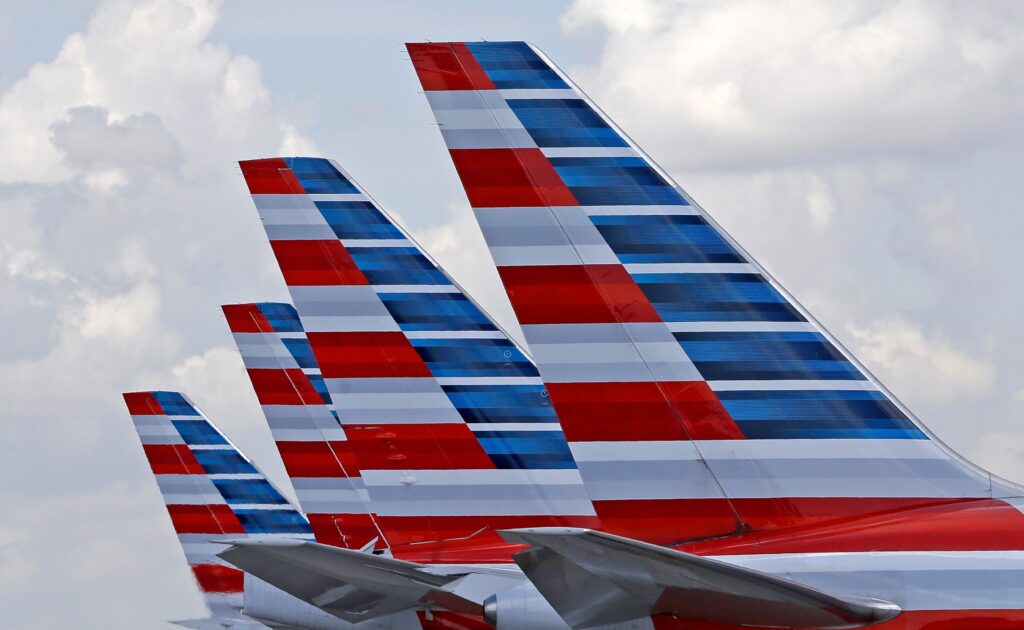
American Airlines is no longer leaving in-flight entertainment up to passengers’ personal devices.
The carrier announced today that it is upgrading its narrowbody fleet with “state-of-the-art” entertainment screens on every seat back in its retrofitted aircraft and new Airbus and Boeing planes. The company will roll out the amenity, plus expanded first-class and Main Cabin Extra seating, on domestic and short-haul international flights starting in 2028 and through the early 2030s.
Ben Mutzabaugh, managing editor at the travel website the Points Guy, said the enhancement is a U-turn from the carrier’s decision in 2017 to remove the screens from its mainline fleet’s coach class and subsequently not introduce seat-back screens on new planes. Though American’s long-haul aircraft feature the entertainment system, seat-back screens are a mainstay on many more Delta and United routes.
“To economy passengers, Delta and United at least looked the part [of a full-service carrier] as they walked past the glow of seat-back screens on their way to their seat,” Mutzabaugh said. “By today’s standard, [American’s] economy cabin began to feel more like a no-frills budget carrier.”
According to American Airlines, passengers will be able to enjoy free movies and TV shows, music and games. They can also charge their gadgets on USB-C ports at every seat and connect through Bluetooth.
When asked why now, American Airlines cited advancements in technology, such as satellite internet, and a shift in customers’ in-flight entertainment habits. For example, the younger generations of fliers prefer access to multiple devices and larger screens.
“New planes look old without them, old planes look new when they’re installed,” said Gary Leff, founder of the aviation blog View from the Wing, “and many passengers see them as difference makers in the onboard experience.”
Catch up quickly every weekday morning with a rundown of The 7’s most important and interesting stories. Sign up for The 7 newsletter.
The post American Airlines planes are getting an upgrade appeared first on Washington Post.