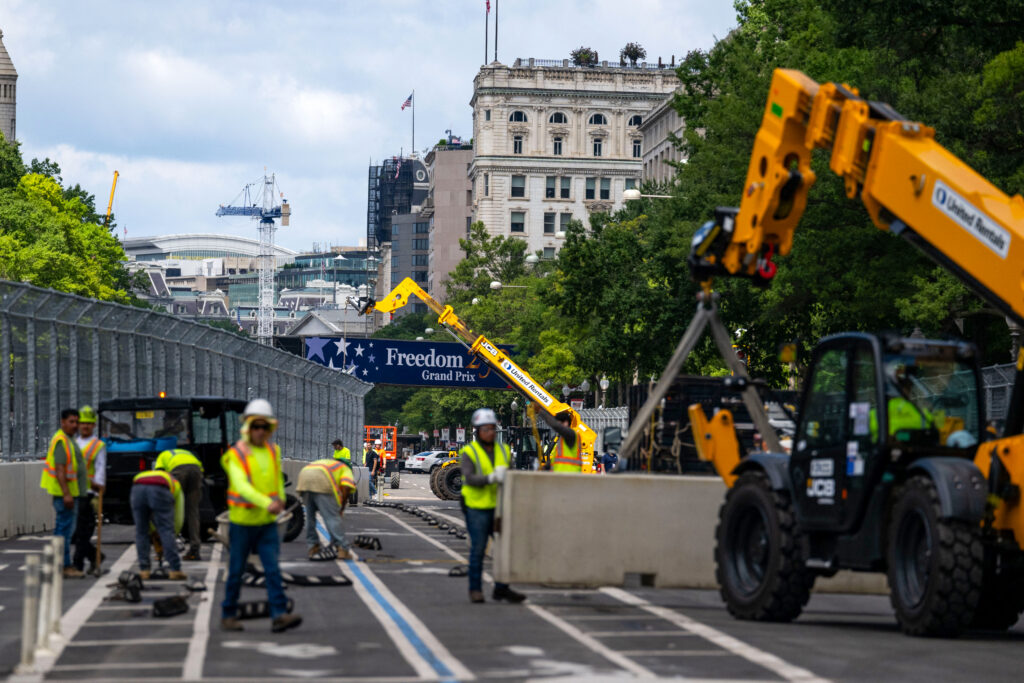
The speed limit on Pennsylvania Avenue NW is 25 mph. But this weekend in Washington, racecars will zoom around at speeds as high as 185 mph during the Freedom 250 Grand Prix.
The Penske Corp., which owns IndyCar, has put a lot of work into preparing the 1.66-mile, seven-turn course, including having crews weld down all 220 manholes in the race area to prevent them from going flying when cars zip over them.
The high speeds and unique vehicle design quickly funnel air under the car and out the back instead of pressing toward the ground against the manhole, according to Neil Johnson, a physics professor at George Washington University.
The pressure underneath the manhole is then greater, a discrepancy Johnson said could cause problems.
If left unwelded, Johnson said the manholes would be like a pressure cooker. “These things would fire up like ballistic shells into the car,” he said. “It would probably kill a driver.”
As part of other road prep for the race, a few dozen manholes also needed silicon to smooth them out. Once the races are over, all the work will be reversed.
Catch up quickly every weekday morning with a rundown of the 7 most important and interesting stories. Sign up for The 7 newsletter.
The post Why over 200 manholes were welded down for the Grand Prix race in D.C. appeared first on Washington Post.