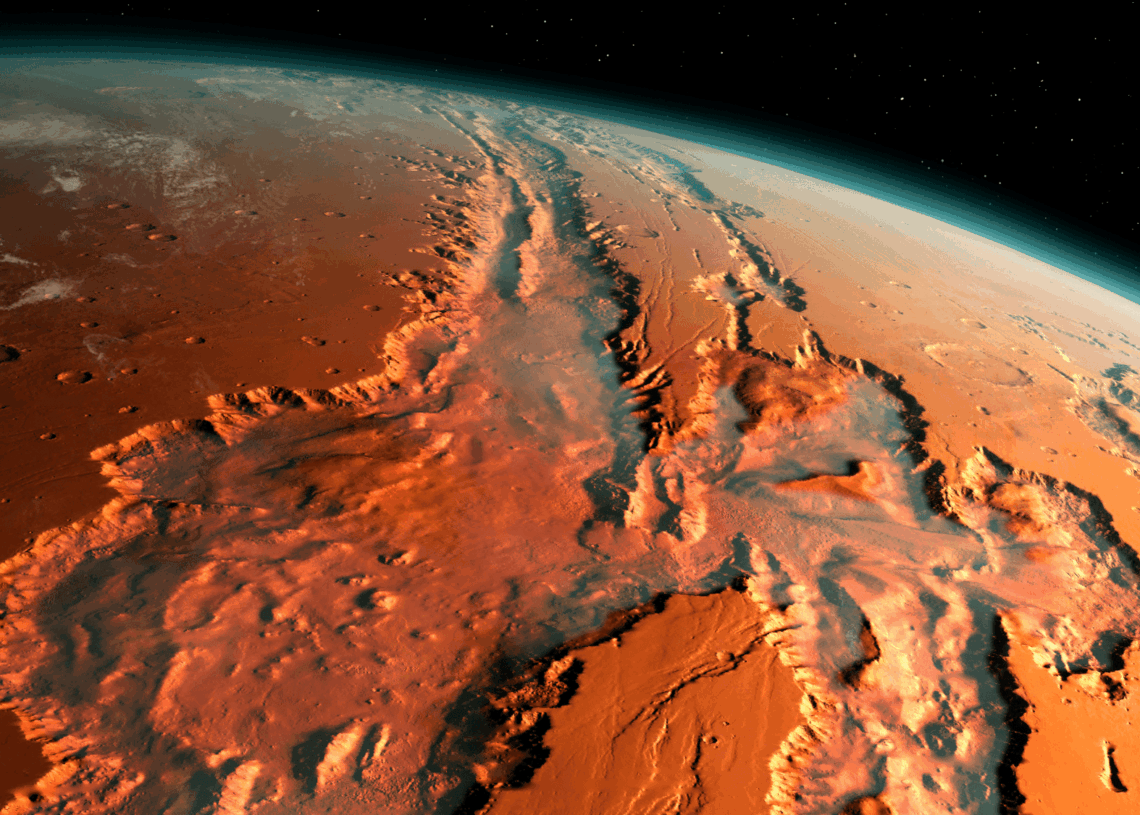
Earlier this week, I covered how NASA’s Perseverance rover detected faint electrostatic currents on Mars that could be the first evidence of lightning on the red planet. Today, we’re scaling up the weather phenomenon and shifting it deep into Mars’ ancient history, as a new study based on data gathered by Perseverance found evidence that tropical storms once battered its rusty surface.
NASA’s Perseverance rover stumbled onto light-colored chunks of kaolinite clay, the same stuff that forms on Earth after ages of rainfall. Mars, essentially a gigantic ball of rust, is not typically associated with rainfall, thus making this discovery a pretty big deal if it proves to be true.
In a new study published in Communications Earth and Environment, led by Adrian Broz of Purdue University, researchers report that these aluminum-rich rocks scattered around Jezero Crater have the same chemical signature as kaolinite formed in Earth’s tropical climates after millions of years of water slowly stripping minerals from rock.
In other words: a wetter, hotter, more humid, stormier Mars that felt less like the Sahara and more like the tropical vibes of Costa Rica.
What makes these rocks extra perplexing is their placement. They are, essentially, geological orphans. They are pebbles with no obvious nearby rocks that they could have been chipped off from.
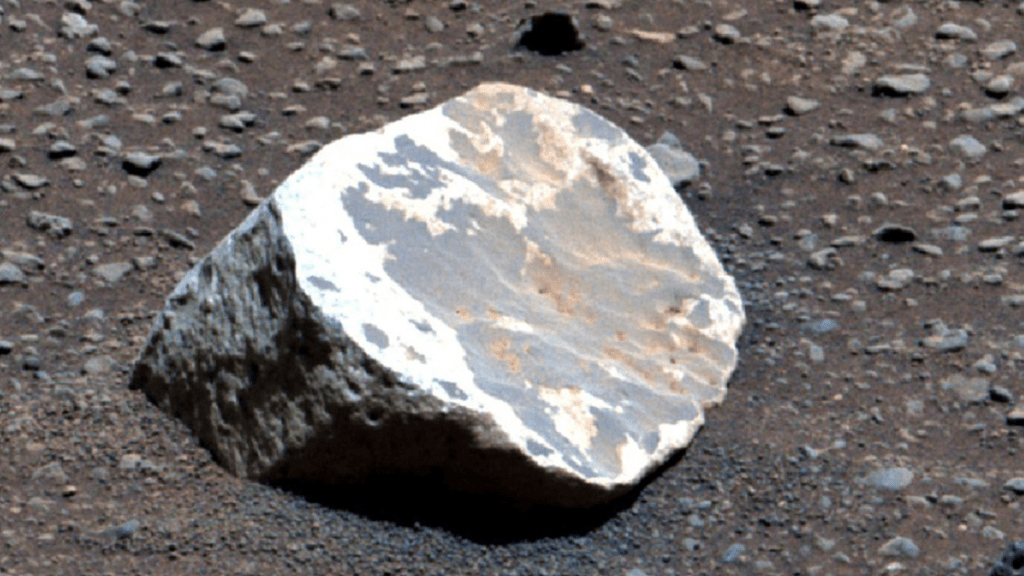
Perseverance touched down near what used to be a lake twice the size of Lake Tahoe, but the rover hasn’t spotted any big kaolinite deposits in the neighborhood. The researchers have some theories. Perhaps ancient rivers swept these clay chunks into the lake, which is plausible, given that it was recently found that caves on Mars may have been carved out by water. Another theory is that an impact event blasted them there from afar.
Satellite images show massive kaolinite deposits elsewhere on the planet, but until the rover drives over and takes a closer look, these scattered stones are the only evidence scientists have for ancient Martian weather that didn’t suck as much as it does now.
All signs point toward a Mars that was once surprisingly livable, a place where rainfall didn’t instantly vaporize and lakes didn’t freeze solid for eternity. If Mars once had a tropical, rainfall-powered environment, it wasn’t just wet, it was habitable. Maybe even…inhabited. But that’s getting ahead of ourselves, and being dramatic for just the sake of drama.
But maybe.
The post NASA’s Perseverance Rover Found Evidence of Tropical Storms on Mars appeared first on VICE.