Before Honduras’s presidential election on Nov. 30, José Ignacio Cerrato López, a retiree, had mostly made up his mind.
Although Mr. Cerrato López, 62, normally backed the right-wing National Party, he said he had planned to vote for another right-wing candidate, Salvador Nasralla, who was leading by a small margin in some polls, in hopes of kicking the governing left-wing party out of office.
But when President Trump threw his support behind the National Party’s candidate, Nasry Asfura, just days before the vote, and suggested he wouldn’t work with the other top two candidates, Mr. Cerrato López said he was surprised but pleased. He said he switched his vote to Mr. Asfura.
Mr. Trump “said he was going to make things worse,” said Mr. Cerrato López, citing fears that the immigration and economic relationships between the countries could deteriorate if the U.S. president’s preferred candidate did not win.
And when Mr. Trump announced that he would pardon a notorious former president of Honduras, Juan Orlando Hernández, a member of Mr. Asfura’s party who was convicted last year of working with cartels to flood the United States with cocaine, Mr. Cerrato López said he was more confident in his decision because he believed Mr. Hernández had helped the military when in office.
Honduras, a small Central American country that is among the poorest in the Western Hemisphere, has weathered a political storm over the past week and a half.
Mr. Trump’s intervention in the country’s elections — backing one candidate, denouncing others as “communists,” pardoning a convicted former president and claiming election fraud without evidence — has sparked fears that he has tipped the scales in favor of his preferred candidate. And the contest itself remains unresolved.
Problems with the tabulation of results have fueled doubts about the integrity of the election and brought back memories of the 2017 election which had widespread allegations of fraud and led to unrest. And the top two candidates shunned by Mr. Trump have claimed fraud and unjust interference.
As of Saturday afternoon, the Honduran election authority said that Mr. Asfura led Mr. Nasralla by 0.7 percentage points, or roughly 20,000 votes, with nearly 75 percent of tally sheets counted.
“We will not allow them to alter the popular will,” Mr. Nasralla said on Saturday, suggesting, without presenting evidence, that Mr. Asfura’s party was messing with the results and calling for election authorities to release more of them.
(This is Mr. Nasralla’s fourth time running for president, and he has claimed fraud in other instances.)
On Saturday, the Organization of American States, which observed the elections and noted concerns about the election system, called for speedier vote counting, transparency and ensuring “that the electoral authorities fully guarantee that the subsequent stages of the process.”
Over 2,400 tally sheets have been flagged for inconsistencies by the electoral body — which represents enough votes to sway the election to either of the leading two candidates. An adviser for Mr. Nasralla, Arísitides Mejía, said that the campaign would contest many more for what it said were irregularities.
Mr. Mejía said that independent voters and “many” supporters of Mr. Asfura’s party had intended to vote for Mr. Nasralla because they saw him as having the best chance to end the tenure of the governing party, which includes the candidate Rixi Moncada.
“But when they heard that about Trump, they went back to their party, and some independents started to have doubts,” he said.
Ricardo Romero Gonzales, who runs an independent polling company in Honduras, said that based on his daily polling, Mr. Nasralla had a nine-point lead before Mr. Trump’s endorsement of Mr. Asfura. After Mr. Trump weighed in, he said, the candidates were in a virtual tie.
Mr. Romero Gonzales said that roughly a third of Hondurans have a family member in the United States and that people thought about them when voting. He added, “People believe the country will be worse off if we are enemies of Trump.”
Not everyone was pleased about Mr. Trump’s involvement in their country’s election.
A few dozen people from Indigenous, environmental and farmworker organizations marched on Thursday to the U.S. Embassy in the capital, Tegucigalpa, to protest the U.S. president’s interference and his pardon of Mr. Hernández. Other Hondurans interviewed, though they hadn’t taken to the streets, said they were upset with Mr. Trump.
One of the protesters, Arnold Sanchez, 24, a carpenter and an activist with an Indigenous organization, said the Trump administration was “imposing what it wants and not letting us choose what we want.” He said Mr. Trump had “instilled fear” in Honduras.
Hondurans who voted for Mr. Asfura said they did so in part because they yearned for a better relationship with the United States. They said they worried that a different candidate winning could hurt Honduras, a country that relies heavily on money transfers from many undocumented migrants in the United States.
Alexi Salustriano Vargas, 65, a shoe shiner in Tegucigalpa, said he hoped that Mr. Asfura could perhaps stem the tide on Mr. Trump’s deportations of undocumented Hondurans, or perhaps even have a migrant protection program restored. (Mr. Trump has not promised either if Mr. Asfura wins.)
“If you don’t have communication with someone, nothing can be done,” he said.
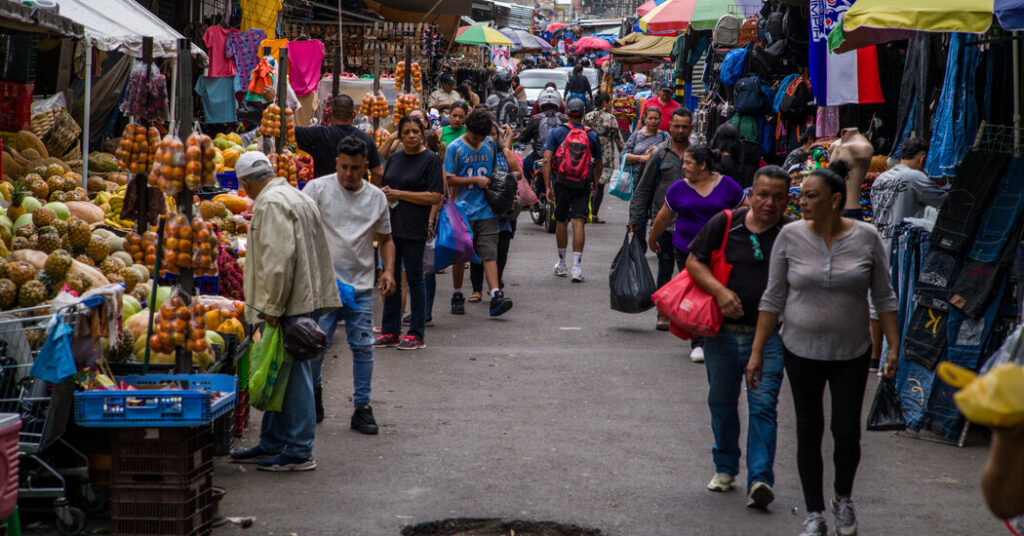
Norma Ortega, 58, who has been selling fruits and vegetables for over two decades in Tegucigalpa, said she would have voted for Mr. Asfura anyway, but Mr. Trump’s backing made her feel more confident. She said she believed that Mr. Asfura could help protect Honduras’s remittance flow and its migrants.
“That benefits us all,” said Ms. Ortega, who earns roughly $380 a month with her husband as produce vendor but receives money transfers from her two children in the United States.
Even though her preferred candidate was leading, Ms. Ortega acknowledged that the delays and interruptions in the election results gave her pause.
When those sorts of things happen, she said, “that is when people start to believe there’s fraud.”
James Wagner covers news and culture in Latin America for The Times. He is based in Mexico City.
The post In Honduras, Some Voters Were Swayed by Trump, Others Angered appeared first on New York Times.