It was just before dawn on Dec. 4, 2024, when a masked man outside a hotel in Midtown Manhattan walked up behind Brian Thompson, the chief executive of UnitedHealthcare, and fatally shot him.
The man slipped away, leading to a five-day manhunt. As the police pieced together his whereabouts, they released surveillance photos of the accused, which revealed a young man with thick eyebrows.
“What drew audiences to this case are the same thing that draws audiences to movies,” said Diana Rickard, a criminology professor in New York.
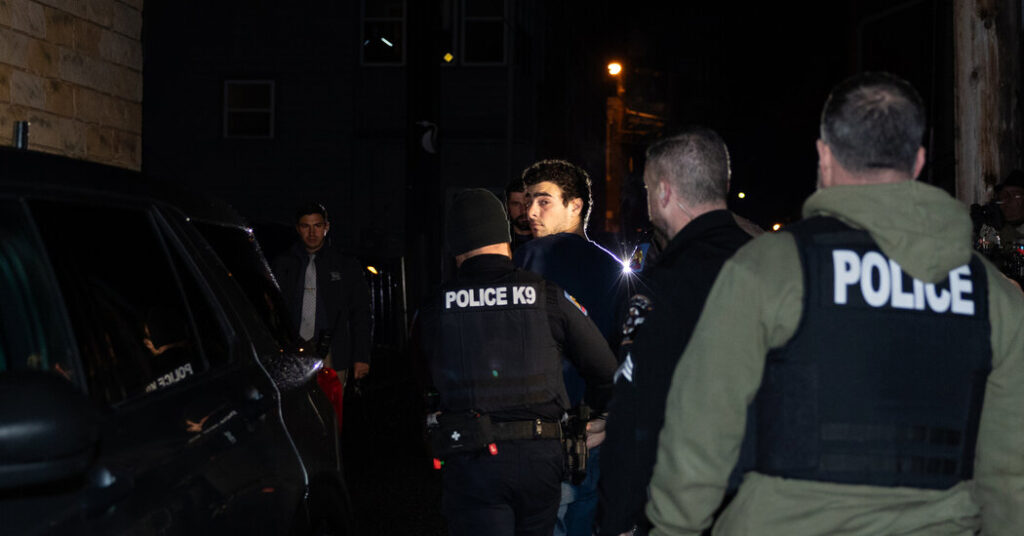
The authorities identified that masked man as Luigi Mangione, then 26, who was arrested at a McDonald’s in Pennsylvania after an employee called the authorities, believing he was the man in the photos. A notebook found in his backpack revealed his grievances about the health care industry. That is when some people on social media began showing him sympathy — and, sometimes, full support.
“He’s seen online as an antihero, a Batman of characters — someone to stand up for the dissatisfaction that is being felt,” said Tim Weninger, a computer science professor at the University of Notre Dame who studies social media and violent discourse on the internet.
Nearly two years later, he admitted in federal court that he had stalked Mr. Thompson and then shot him on that December morning. “I understood that my actions would place him in fear of death or bodily injury. I knew what I was doing was illegal.”
“While most people are not going to go out and do what he did, he is an icon of the frustration people are feeling,” Mr. Weninger said.
But the killing of Mr. Thompson, who was a father of two, was also immediately recognized as an abhorrent crime. Mr. Mangione was charged in both state and federal courts, and the U.S. Attorney General talked of pursuing the death penalty.
On Friday, Mr. Mangione, who was less than a month out from his state murder trial, pleaded guilty to federal stalking charges leading to the death of the executive. He told a judge: “I shot Mr. Thompson,” adding, “I knew what I was doing was illegal.”
The victim’s family released a statement after the plea, asking for a sentence that matched the seriousness of the crime that killed Mr. Thompson.
“While nothing will ease the pain of losing him,” the statement read, “we are grateful that the federal justice system has held the person responsible for this heinous act accountable.”
Before Mr. Mangione admitted his guilt on Friday, some online supporters were adamant that should be freed or was innocent, raising questions about his arrest and whether law enforcement officials properly handled the evidence in the case.
Fans developed a cultlike following that glamorized his appearance and used the facts of the case to support their own theories. Some went as far as spewing vitriolic and hateful speech toward Mr. Thompson and his family.
Just two months after his arrest, Mr. Mangione began cataloging the first of thousands of pieces of fan mail that he said arrived at his Brooklyn jail cell. “While it is impossible for me to reply to most letters, please know that I read every one that I receive,” he wrote in a log that is posted to a website created in the name of his legal defense.
Some supporters, claiming to back his legal fund, set up a store to sell merchandise, including T-shirts that read “deny, defend, depose,” some of the words that the authorities said were engraved on the bullet casings found at the scene of the shooting. Fans have camped outside courthouses to catch a glimpse of him heading to hearings. A Levi’s hooded jacket similar to the one he wore when he shot Mr. Thompson and a maroon sweater he wore for a court appearance quickly sold out.
Earlier this year, a man showed up at the Metropolitan Detention Center, where Mr. Mangione was being held, with a pizza cutter and apparently tried to break him out, claiming he was an F.B.I. officer with official release papers, federal prosecutors said. The man’s lawyer said in court that his client “obviously needs some sort of treatment.”
“I don’t think this was a serious effort to free someone from prison,” the lawyer said.
The fandom and social media seem to have distorted the grave nature of the incident, said Ms. Rickard, the criminology professor, who teaches at the City University of New York, Borough of Manhattan Community College.
Mr. Mangione’s “looks and his swagger and how assured he was” made him attractive to people, Ms. Rickard said, and his appearance and stated principles have been conflated “with the idea that he must somehow be innocent and sympathetic,” she added.
Mr. Weninger, who studies social media, said: “The adults in the room are kind of like, ‘Lets not make this a normal thing. There has been a deeper frustration, but this isn’t the way to handle it.’”
The post Luigi Mangioni’s Case Hit a Cultural Nerve appeared first on New York Times.