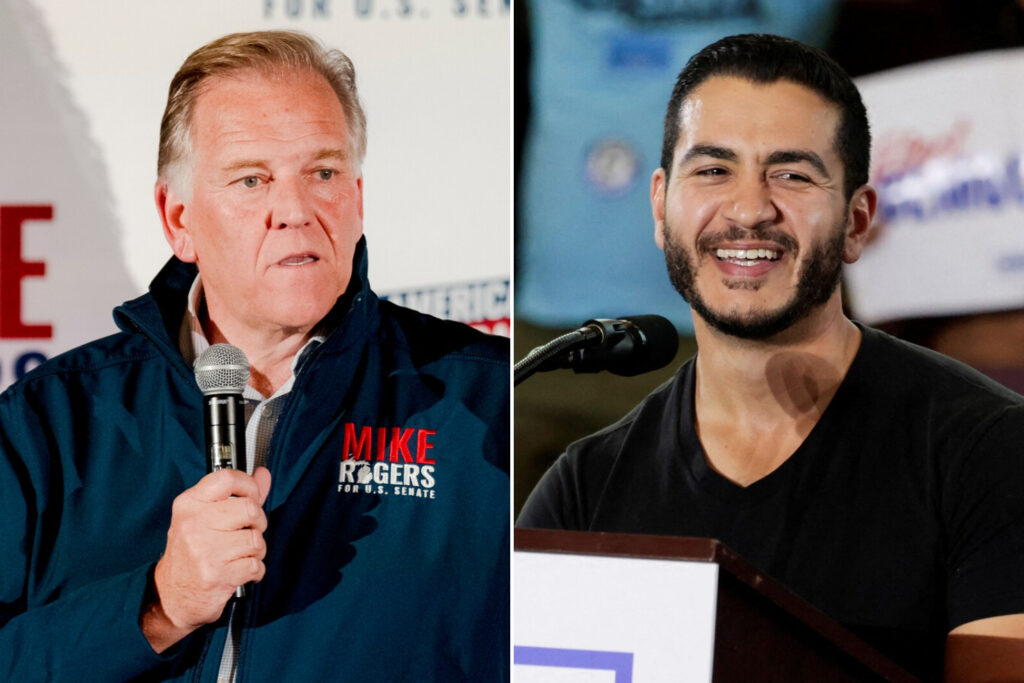
Michigan voters are sharply divided between Republican Mike Rogers and Democratic nominee Abdul El-Sayed, according to a Fox News poll that finds significant challenges for both candidates in a race considered critical for control of the Senate.
The first survey since last week’s primaries finds Rogers with a narrow 51 percent to 47 percent edge among registered voters, within the survey’s three-percentage-point margin of error, which estimates the high and low ranges for each candidates’ support.
But El-Sayed has a four-point edge among Michiganders who say they will “definitely vote,” echoing Democrats’ enthusiasm advantage this year.
Sign up for The Pollwatcher newsletter
Both candidates are unpopular, with 55 percent of registered voters viewing El-Sayed negatively and 51 percent seeing Rogers in a negative light. Political independents are even less charitable: 58 percent dislike El-Sayed and 60 percent dislike Rogers.
President Donald Trump’s unpopularity is a key challenge for Rogers: 59 percent of voters are unfavorable toward the president and 51 percent are extremely or very concerned that Rogers is too close to Trump.
A similar 54 percent say El-Sayed’s positions on the issues are “too extreme.”
The poll finds El-Sayed’s image among Black voters is relatively weak for a Democrat. More than one-third of Black voters (36 percent) have a negative view of El-Sayed, compared with 22 percent who are negative toward the Democratic Party overall. And while 75 percent say they would vote for El-Sayed if the election were today, that is below Kamala Harris’s 87 percent support with Black Michigan voters in 2024 exit polls.
The Fox News poll was conducted via phone and online by a bipartisan team of polling firms from Aug. 6 to Aug. 10 among 1,006 registered voters drawn from a statewide voter file.
Catch up quickly every weekday morning with a rundown of the 7 most important and interesting stories. Sign up for The 7 newsletter.
The post Michigan’s marquee Senate race close in first poll after El-Sayed primary win appeared first on Washington Post.