A lawsuit against the University of Michigan demanding the emails of a professor who has worked on “climate superfund” laws has been dismissed by a state judge.
Conservative groups and the energy industry oppose these laws, which would require oil companies to help cover the mounting costs of climate change.
Michael F. Gadola, chief judge for the Michigan Court of Claims, ruled in a 24-page decision on Monday that the emails were not subject to open-records laws because they did not relate to the official duties of the professor, Rachel Rothschild.
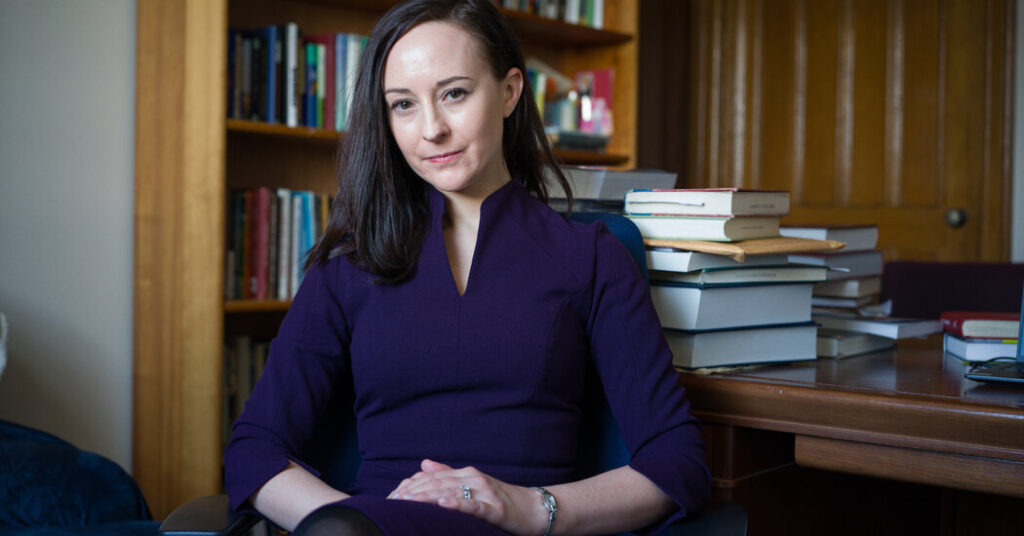
Ms. Rothschild, an assistant professor at the university’s law school, came up with the legal framework for climate superfund proposals that have become law in Vermont and New York and are under consideration in numerous other states. The laws are modeled after the federal 1980 Superfund statute, which required polluters to pay to clean up abandoned toxic waste sites.
The new laws have come under attack by oil companies, business groups, Republican attorneys general and the Trump administration. The Justice Department is among the organizations that have sued to stop the laws in each state. Several states have also recently passed laws that would shield oil and gas companies from liability for the effects of climate change, and federal bills have been introduced in both houses of Congress.
The lawsuit against the University of Michigan was filed in 2024 by a conservative Wyoming nonprofit group, Government Accountability & Oversight. The group asked the court to force the university to make public emails between Ms. Rothschild and clients she represented on a pro bono basis, including the Rockefeller Family Fund, a philanthropic group that supports climate litigation.
Ms. Rothschild joined Michigan’s law school in 2022. Before that, she was a legal fellow with the nonprofit Institute for Policy Integrity, housed within New York University’s law school. There, she wrote a memo outlining the climate superfund proposal based on a query, and funding, from the Rockefeller Family Fund.
Once she landed in Michigan, Ms. Rothschild continued working on the legislation on a pro bono basis, testifying before legislative bodies and briefing lawmakers.
Judge Gadola said that Ekow Yankah, an associate dean at the Michigan law school, had testified in the case that pro bono work was an external matter that did not factor into the annual tenure reviews of professors. It was part of the “public citizenship” of professors, he said, encouraged but with the caveat that it should not be distracting or overly time-consuming.
Trump Administration: Live Updates
Updated
- The ballroom case presents the Supreme Court with another challenge to a signature Trump initiative.
- Lawyers for an Olympian accused of vandalizing the reflecting pool asks a court to bar future charges.
- Kushner is expected to head to Israel for talks on Gaza early next week.
Ms. Rothschild was served with a subpoena in the case, which centered on her communications with the Rockefeller Family Foundation and N.Y.U.
“Sometimes it seems like the major oil companies and their allies spend more time harassing public interest advocates and academics than they do drilling for oil,” Lee Wasserman, director of the Rockefeller Family Fund, said after the decision.
Government Accountability & Oversight and the Institute for Policy Integrity did not immediately respond to requests for comment.
Judge Gadola found that there was “no factual support” for the plaintiff’s position that the documents “were used in the performance of an official function.” The judge noted that the emails had been sent from a private email address, though he also said that wasn’t the key issue.
Neel U. Sukhatme, the dean of the law school, said officials there were “pleased with the court’s decision.”
“It appropriately recognizes the distinction between a faculty member’s official university responsibilities and independent activities undertaken outside that role,” he said.
Ms. Rothschild said the decision was “so helpful in terms of protecting all of the work I do pro bono with outside environmental organizations.” Extending the Freedom of Information Act to all of the communications of professors at public universities would “raise all kinds of questions about academic freedom,” she said.
The post Judge Rejects Suit That Sought Professor’s Emails on Climate Law appeared first on New York Times.