Pro athletes always hold some degree of cultural significance, not just now but in civilizations long past. Archaeologists excavating an ancient town in Turkey may have found proof of this from thousands of years ago in the form of a grave that may belong to a beloved wrestler.
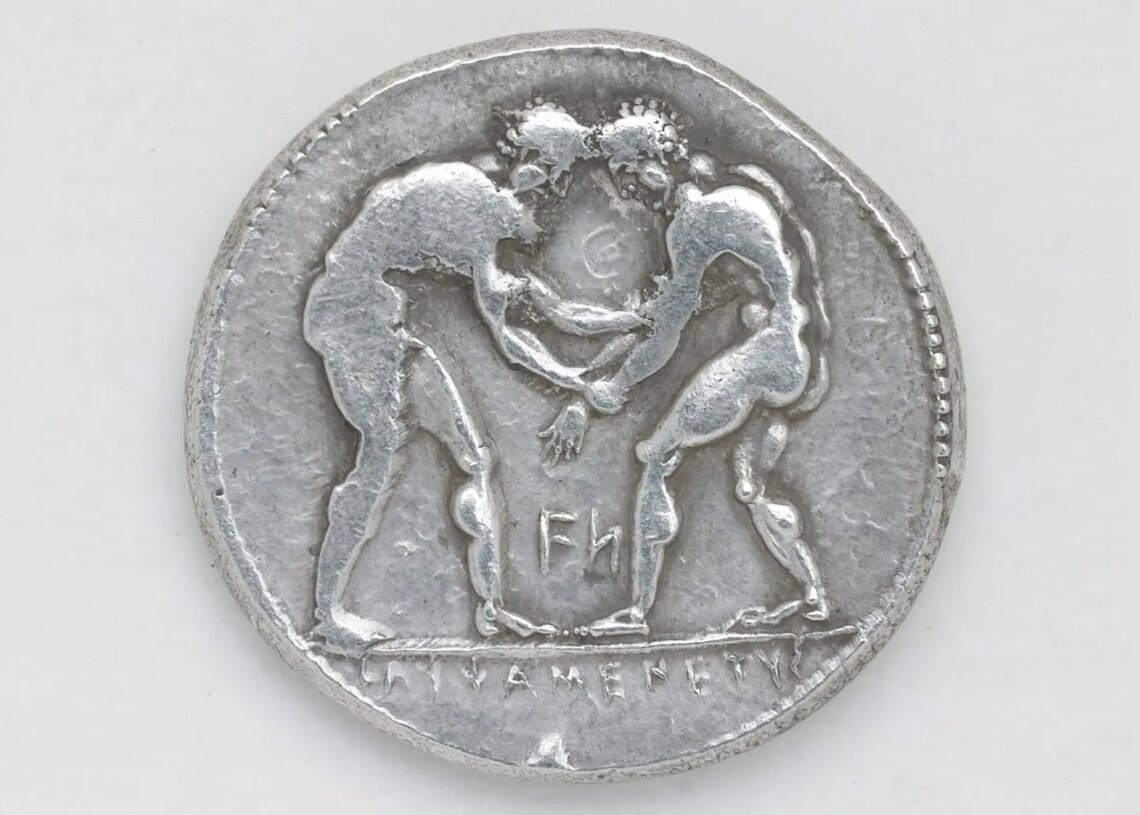
According to the Turkish Ministry of Culture and Tourism and reporting by Live Science, researchers excavating a newly discovered cemetery near ancient Aspendos uncovered a stone-slab tomb dating to roughly 475 to 300 B.C. Inside was a human skeleton accompanied by coins depicting two wrestlers locked in combat.
Turns out, adding a picture into a grave showing off a very specific act is a strong hint at what that dead person did when they were alive.
I’m fighting every instinct to call this guy a professional wrestler, because that immediately conjures images of modern-day beefy people in tights, silly gimmicks, and fake grudges. This was Greco-Roman-style wrestling—the “real” wrestling, the kind eventually seen at the Olympics.
A 2,400-Year-Old Grave in Turkey May Belong to an Ancient Wrestler
Still, even though the evidence strongly suggests this person was a wrestler, the researchers aren’t fully ready to declare him the John Cena of his day. Live Science spoke with a historian not involved in the study, Sarah E. Bond, who said that coins were a common currency used by everybody, so their presence in the grave doesn’t necessarily mean the deceased was a wrestler.
Maybe people in this region of Turkey liked wrestlers so much that they printed them on their money? Researchers are going to need to find some stronger evidence that this guy was a professional wrestler, like evidence of injuries consistent with the sport, to definitively claim that wrestling was this guy’s claim to fame, but there may be something linking the two ideas.
Aspendos minted silver coins depicting wrestlers for more than a century, suggesting to the researchers of the sport had some importance to the city and its people. The settlement also had an ancient gymnasium and eventually built itself a stadium big enough for thousands of fans to come watch sporting events.
So, maybe two things can be true: maybe this guy was a wrestler, and his significance was honored by the inclusion of coins depicting what he did in life in his grave. Whether the answer is this combined explanation or not, either way, it goes to show that humanity has been holding athletes in high regard for thousands of years.
The post Archaeologists Found Coins Depicting Wrestlers Inside a 2,400-Year-Old Grave appeared first on VICE.