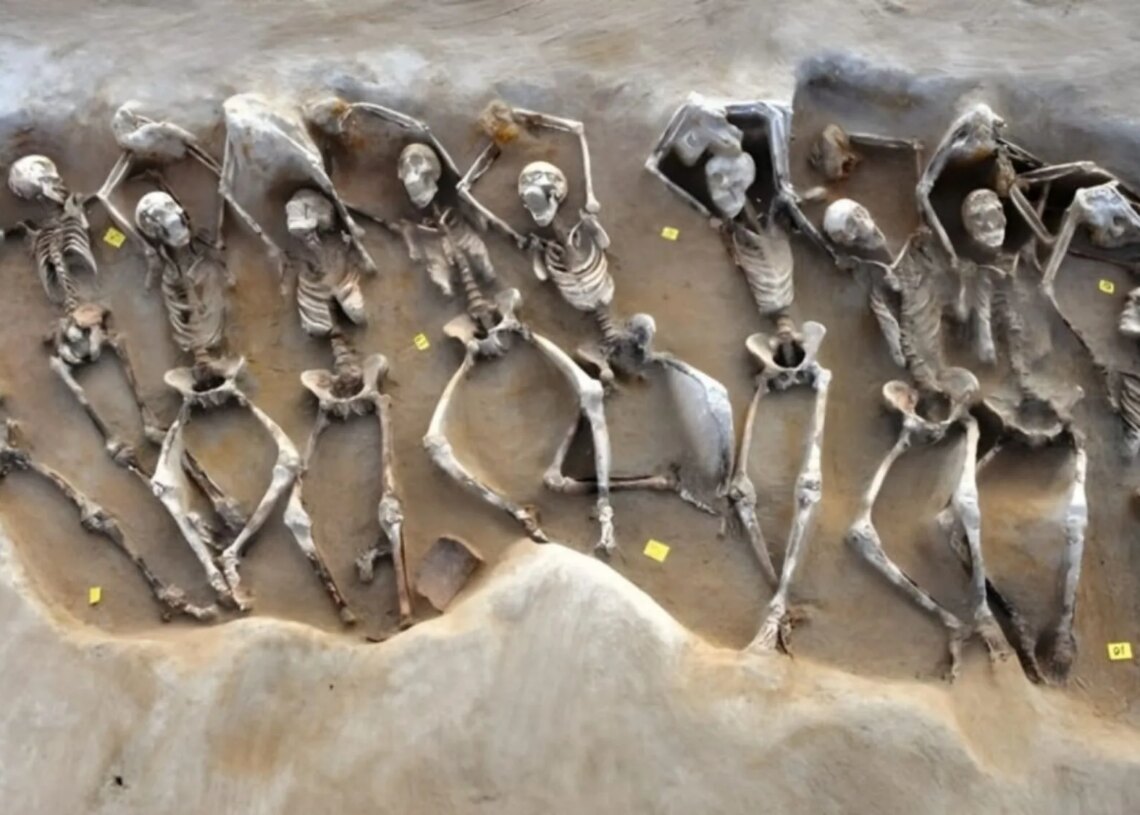
Near Athens is where you’ll find the Phaleron Burial Ground, where, in 2016, archaeologists found the remains of 79 adult men placed in three distinct rows, many still wearing metal shackles around their wrists. The discovery instantly sparked debate over who these men were and what they had done to get themselves confined and buried this way. The leading theory was that they were foreign invaders who had been rounded up, shackled, and tossed into the dirt.
New analysis of their teeth suggests something considerably more uncomfortable: They were probably locals.
The study, published in the Journal of Archaeological Science and detailed by Archaeology Magazine, examined strontium isotopes in the teeth of 66 men from the mass grave, along with 97 other adults buried at Phaleron. Strontium from local rocks enters food and water and gets incorporated into developing teeth. Researchers can use these chemical traces as a sort of chemical-level GPS.
Nearly 80 Shackled Men Found Near Athens Were Probably Locals, Study Finds
They found that about 97 percent of the shackled men had isotope signatures indicating that the group was somewhere in Attica, the region around Athens. Only two showed evidence of growing up somewhere else. The broader cemetery around them yielded similar results.
Suddenly, the “foreign invaders” theory is a whole lot less convincing. These weren’t dangerous outsiders who needed to be dealt with to protect locals. They were locals who did something that warranted being shackled and buried in unison.
The more likely explanation, according to the researchers, is that the men were on the wrong side of some internal political drama that ended in violence during a period when Athens was still figuring out the whole democracy thing it would later become famous for inventing. Who exactly they were, what side they were on, and why they were shackled is still, and may forever be, a mystery.
The post Ancient Shackled Men Found Near Athens Were Probably Locals, Not Invaders appeared first on VICE.