International differences in childhood immunization schedules have entered the political spotlight.
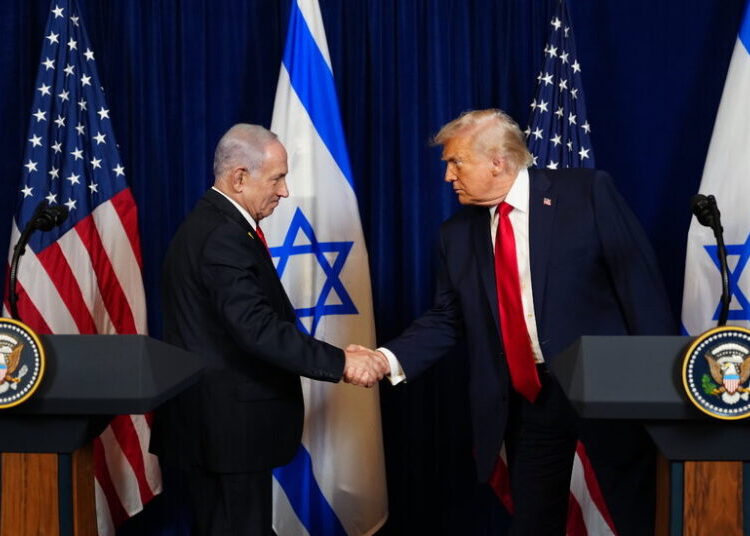
President Donald Trump on Friday evening directed a review of international practices, hours after an key vaccine advisory panel lifted its recommendation that all U.S. newborns receive hepatitis B vaccines at birth.
The meeting in which outside advisers to the Centers for Disease Control and Prevention made the decision — the largest such shift under Health Secretary Robert F. Kennedy Jr., under whom the agency has become a platform for vaccine skepticism — included a presentation on the immunization schedule in Denmark, where hepatitis B vaccines are typically recommended only for those at high risk.
The White House also named Denmark as a comparator in a fact sheet on Trump’s directive to review approaches in “peer, developed countries.”
The change in policy is part of a broader effort to tackle what Kennedy has called the “exploding vaccine schedule,” linking it, at odds with medical consensus, to rises in chronic diseases, autism and food allergies in the United States. The move comes months after the panel voted to limit access to the coronavirus vaccine and stop recommending the combination measles, mumps, rubella and chicken pox vaccine until a child is at least 4 years old.
“The American Childhood Vaccine Schedule long required 72 ‘jabs,’ for perfectly healthy babies, far more than any other Country in the World, and far more than is necessary,” President Donald Trump said Friday in a post on Truth Social. “In fact, it is ridiculous! Many parents and scientists have been questioning the efficacy of this ‘schedule,’ as have I!”
He did not break down the figure, but appeared to cite a count including each dose and each separate part of combination shots, along with seasonal vaccination, across childhood — not the actual number of jabs. The United States recommends childhood immunization for 17 diseases, more than many other countries.
Public health professionals critical of the way vaccine skeptics draw on international comparisons say many differences in vaccine recommendations are rooted in local conditions. “It seems to be irrelevant to compare U.S. policy with Danish policy, given that indeed, the data and the decisions need to be based on our local information and needs,” Flor Muñoz, an infectious-disease and pediatrics professor at Baylor College of Medicine, said at Friday’s meeting.
In 2023, Denmark reported just 108 cases of the hepatitis B infection, yet nearly all pregnant women are tested. In the U.S., more than 17,000 infants are born to women with hepatitis B each year, according to a report from the Vaccine Integrity Project, a health initiative based at the University of Minnesota. Some 1 in 5 pregnant women are not tested for the virus and only 1 in 3 hepatitis B infected women receive care, according to the report.
It’s like comparing apples to steaks, said Jessica Malaty Rivera, a member of Defend Public Health, a group of public health researchers, health care workers and advocates. “Denmark is about the size of Maryland, so what works to protect a small, very highly vaccinated population like Denmark cannot be extrapolated for a very large, heterogeneous and much more diverse population like the U.S.,” she said.
“The schedule is truly designed to protect children where they live, and so you cannot just compare it based on another country’s schedule,” Rivera said. “The exposure rate, the disease status rate in the U.S. is terrible, and that’s why we have the policy that we have to protect children. We shouldn’t be asking what another country is doing. We should be asking, ‘What should we be doing based on the exposures and risks and concerns that we have for our population?’”
Here are how some other countries handle childhood immunization for hepatitis B and other vaccines, as Trump directs U.S. officials to look abroad.
Australia
The Australian childhood and adolescent vaccination schedule protects against 16 diseases. Unlike in the U.S., Australian health officials only offer a single-dose maternal RSV vaccine from 28 to 36 weeks of pregnancy, according to the country’s immunization schedule.
Infants receive a hepatitis B vaccine “as soon as practicable after birth,” according to the country’s vaccine schedule. Health officials recommend immunization within seven days of birth.
Britain
The British childhood and adolescent vaccination schedule provides protection against 15 infectious diseases.
In Britain, health care providers only offer women the RSV vaccine after 28 weeks of pregnancy, whereas U.S. providers offer either a maternal RSV vaccine at 32 to 36 weeks of pregnancy or an infant antibody shortly before the RSV season or up to one week after birth if born between October and March. The hepatitis A vaccine is typically offered to the household members of an infected person to prevent transmission, whereas CDC advises all parents to vaccinate their children from 12 to 23 months of age.
Babies who are 2 months of age are given a 6-in-1 combination vaccine that protects against diphtheria, pertussis (whooping cough), Hib disease, tetanus, polio and hepatitis B. Additional doses are administered at 3 months and 4 months.
Babies born to hepatitis B infected women receive a vaccine dose at birth and then at 4 weeks of age. If a baby is born to a hepatitis B negative woman but will live in a household with an infected person and is at immediate risk of infection, health care providers will offer a single dose of the monovalent hepatitis B vaccine before the infant is discharged from the hospital.
Canada
Health officials in Canada offer vaccinations against 16 diseases, including RSV, or 17, including the hepatitis A, for Indigenous children.
Under the country’s routine childhood immunization schedule, babies must be given the 6-in-1 combination vaccine or the monovalent hepatitis B vaccine. Officials recommend immunizing babies with the vaccine at 2, 4 and 6 months, and administering another combination vaccine at 12 to 23 months. Or, health care providers can administer the 6-in-1 vaccine at 2, 4 and 12 to 23 months of age, and administer the other combination vaccine at 6 months.
Separately, infants can receive three doses of the monovalent hepatitis B vaccine. The second dose must be administered at least four weeks after the first, and the third dose must be given at least two months after the second.
Children who are considered at risk due to underlying medical conditions can receive three or four doses of the monovalent hepatitis B vaccine. Premature infants who weigh less than 2,000 grams at birth and are born to hepatitis-infected mothers will receive four doses.
Denmark
In the Scandinavian country, where expectant mothers are routinely screened for hepatitis B, health care providers can immunize newborns if they are born to women infected with the virus. The infants are also given an injection of HepB immunoglobulin, which provides antibodies to fight the hepatitis B virus. Additional vaccine doses are given at 1 month, 2 months and 12 months of age.
“One of the most glaring differences is that people in Denmark have access to free health care — every single person is covered. That helps prevent disease; it makes it affordable.” Rivera said. “They also have one of the best disease surveillance systems that we know of. In Denmark, no mothers or birthing people fall through the cracks.”
Denmark recommends vaccinations for 10 infectious diseases. Unlike in the U.S., Danish health officials do not recommend vaccinating babies and adolescents for RSV, rotavirus, the flu, varicella (chicken pox), hepatitis a or meningococcal disease.
Japan
The Japan Pediatric Society recommends routine vaccinations against 14 infectious diseases, including Japanese encephalitis, a mosquito born infection most common in parts of Asia.
If a mother tests positive for hepatitis B, health officials advise providers to administer the vaccine and HB immunoglobulin at birth. The baby receive a second dose at 1 month and a third at 6 months of age. Health experts recommend early vaccination if there is a hepatitis B virus carrier in the family other than the mother. Otherwise, officials suggest a three-dose series beginning at 2 months of age.
Unlike the U.S., Japan doesn’t vaccinate for RSV, influenza, mumps, hepatitis A or meningococcal disease. But providers do offer the Bacille Calmette-Guérin (BCG) vaccine for tuberculosis, which is not generally administered in the United States. The Japan Pediatric Society advises voluntary vaccination against mumps and influenza, instead of routine.
The post Trump urges a new vaccine schedule. Here’s what other countries do. appeared first on Washington Post.