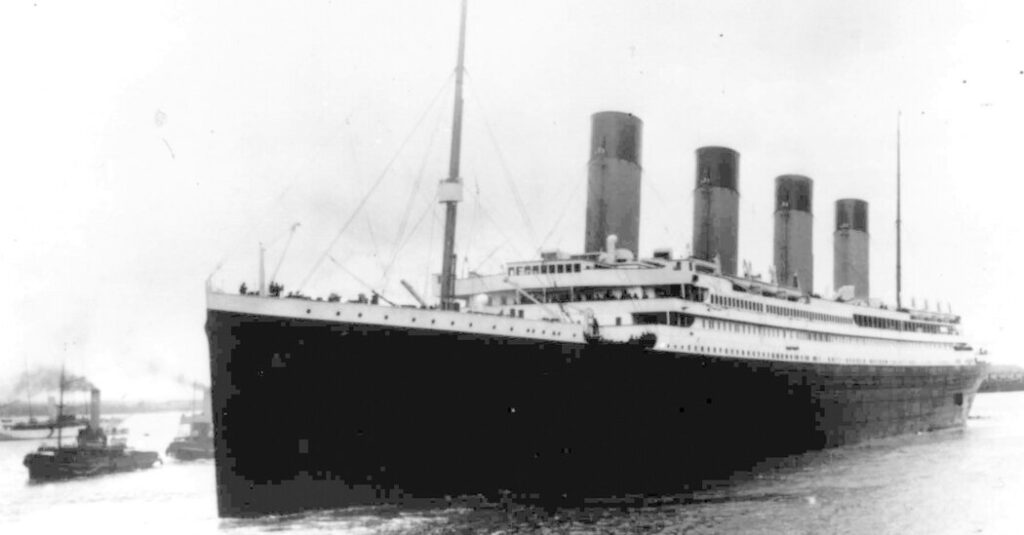
For much of the past four decades, the company that owns exclusive salvage rights to the Titanic shipwreck had vowed it would not sell the artifacts or break up the full collection.
But earlier this year, the company — the Atlanta-based R.M.S. Titanic Inc. — made plans to auction off 100 of the 5,500 artifacts it has collected. It went to court on Thursday to defend the proposed sale.
In U.S. District Court in Norfolk, Va., the company argued before Judge Rebecca Beach Smith that she has no jurisdiction over the 100 disputed artifacts because they were recovered in 1987 and were awarded to the company by a French court.
Under maritime law, salvage claims of wrecks in international waters can be taken to any admiralty court in the world. R.M.S. Titanic initially took its 1987 claim to France, but it brought claims for items salvaged later to the federal court in Norfolk, which is home to many maritime law firms.
The hearing also touched on R.M.S. Titanic’s financial condition. In court papers, the company has said it was suffering financially and needed to sell the 100 artifacts to pay debts and raise money to conserve and curate the remaining artifacts.
Judge Smith questioned the severity of the financial problems, noting that R.M.S. Titanic is backed by wealthy institutions. “Why do you need to sell these artifacts?” she asked.
The company’s lawyer, Brian Wainger, responded that “R.M.S.T. is in financial straits.”
Judge Smith also heard arguments from the U.S. government, which opposes the sale. The National Oceanic and Atmospheric Administration argues that R.M.S. Titanic is bound by legal promises to keep the collection intact and never to sell items to private collectors.
Judge Smith did not rule on Thursday but is expected to issue a written opinion in the coming weeks.
The Titanic sank on its maiden voyage after hitting an iceberg on April 14, 1912. The wreck lies on the ocean floor, two and a half miles below the surface, about 400 miles off the coast of Newfoundland, Canada.
From the very start, the work of salvaging the wreck, which began in 1987, has been controversial. Critics call it grave robbing. Supporters say it is a way of honoring the 1,500 people who died on that fateful night by using the artifacts to tell their stories.
The Norfolk federal court granted R.M.S. Titanic exclusive salvage rights to the Titanic in 1994. The company has raised 5,500 artifacts from the wreck site in seven expeditions from 1987 to 2004. About 1,800 of those artifacts were raised in the first expedition, in 1987, and it is some of those 1987 artifacts that are now the subject of dispute.
To date, the company has not sold any Titanic artifacts, though it proposed the sale of some in 2016. It has instead made money from public exhibitions of the artifacts that have drawn more than 35 million visitors worldwide. The company has permanent exhibitions in Las Vegas and Orlando and has five traveling shows that are currently in Cleveland; Portland, Ore.; Germany; Poland; and the Czech Republic.
Through the years, the company has experienced financial difficulties. It emerged from bankruptcy in 2019, under new ownership, and is currently being sued for more than $4 million by a contractor.
In recent court papers, R.M.S. Titanic said it “continues to face financial difficulties and has experienced significant operating losses,” but it did not specify why it was losing money or the amount of losses.
In a recent court filing, the company listed the 100 artifacts that it wants to sell, including a bronze cherub statue from the ship’s Grand Staircase, a bell from the ship’s crow’s nest, a diamond pendant necklace, a safe, a pocket watch, a ship steward’s shirt and other personal items from passengers and crew members, including jewelry, coins and bank notes.
The company originally planned to announce the artifact auction in April, but Judge Smith stopped any marketing or sale until she could determine the company’s legal rights.
In its original auction plan, R.M.S. Titanic proposed a four-city worldwide tour of the artifacts to attract possible buyers, including “V.I.P.-access previews” for what it described as institutional clients, major collectors, museum curators and the media.
To date, the court has received 18 letters from individuals and organizations in the United States and Europe opposing the sale, but no letters in favor of the sale. One group, the International Congress of Maritime Museums, representing 250 museums around the world, wrote that there is “overwhelming consensus” among its members that the sale should not proceed, and if it does, “none of our member museums would agree to exhibit the material” that would be sold from the collection.
The government of France also sent a letter to the U.S. State Department expressing “deep concern and opposition” to the auction plan. The 1987 artifacts were raised from the Titanic wreck site in a joint American-French expedition, and a French court gave R.M.S. Titanic title to those artifacts.
The French Embassy wrote that selling those items would violate a promise the company made to France in 1993 never to sell or break up the artifact collection, except for exhibition purposes.
The Norfolk court has allowed R.M.S. Titanic Inc. to retrieve artifacts from the ocean floor around the wreck, but the company has not been allowed to cut into the wreck or detach objects from the ship itself.
Since 2004, the company has not salvaged any additional artifacts, but it did conduct scientific expeditions in 2010 and 2024.
The post Salvage Company Hoping to Sell Titanic Artifacts Challenges Court’s Role appeared first on New York Times.