Ilan Berman is the senior vice president of the American Foreign Policy Council.
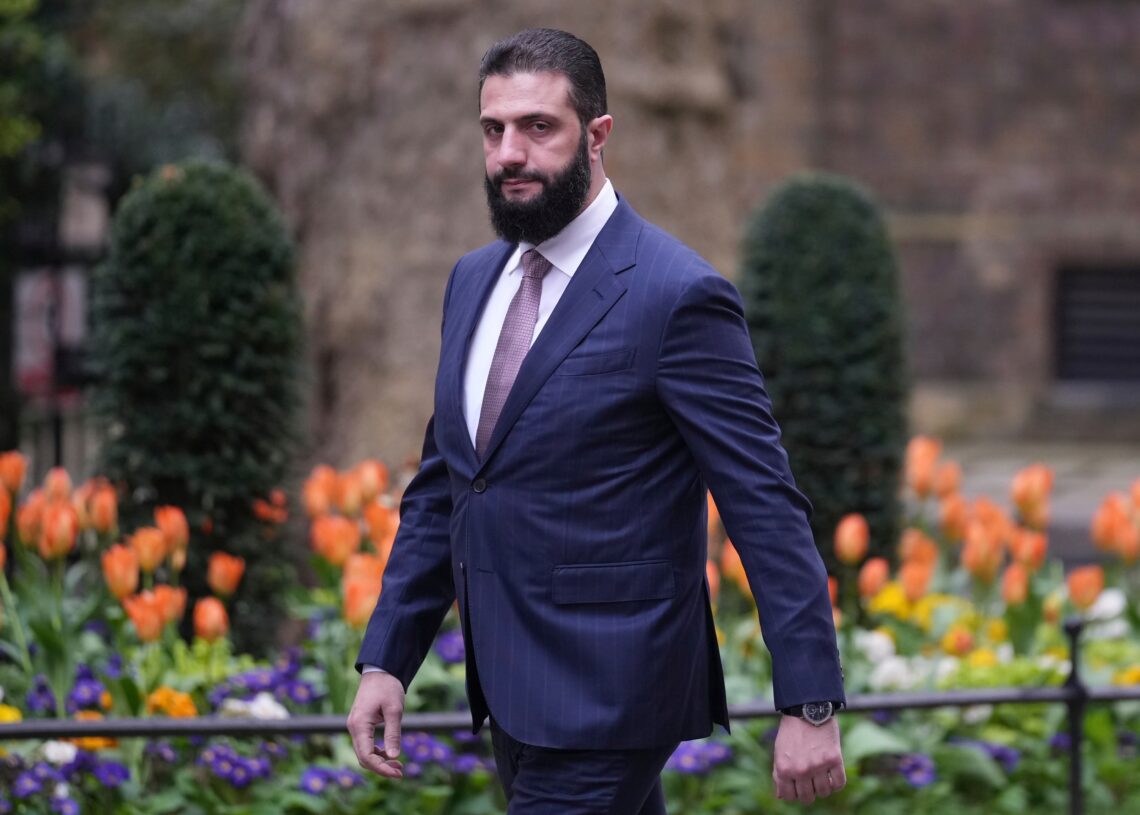
Washington’s rehabilitation of Syria has proceeded at remarkable speed. Over the past several months, the United States has dismantled much of the sanctions architecture that isolated the country for years, restored diplomatic engagement with Damascus and begun exploring new avenues of security cooperation with the fledgling government of Syrian President Ahmed al-Sharaa.
The logic is understandable. The fall of Bashar al-Assad’s regime in December 2024 at the hands of opposition forces spearheaded by Sharaa’s Hay’at Tahrir al-Sham presented the U.S. with an irresistible opportunity. It created an opening to pull Syria out of Iran’s orbit, where it had been nestled for decades under the rule of first Hafez al-Assad and then his son Bashar. It also held out the potential for a stabilization of the deeply fractured state, if a more pragmatic government was to truly take hold.
That wager may yet pay off. Indeed, recent days have seen new signs of cooperation between Syria and the United Nations’ nuclear watchdog. Still, it is becoming increasingly clear that, at least at the moment, Washington is making its bet based more on hope than hard evidence.
Developments inside Syria suggest the ideological makeup of the country’s new rulers has not changed nearly as much as Western officials might wish to believe. Instead, beneath the new government’s more polished diplomatic messaging lies an Islamist movement that continues to promote many of the same ideas that defined its origins as an al-Qaeda affiliate.
Take education. A new study by the Israeli Alma Research and Education Center think tank details the curriculum of the Dar al-Wahi al-Sharif school network, an educational system affiliated with the ruling HTS. The findings are troubling. According to the report, jihadist ideology and political indoctrination begin as early as kindergarten in schools run by the network, which “now operate in major provinces throughout Syria, including Aleppo, Hama, Damascus, Latakia, and Deraa.” Israel is systematically erased from classroom maps and replaced by “Palestine.” Jews and Christians are portrayed as perennial enemies of Islam, and armed jihad against them is presented as a religious obligation.
These are more than isolated examples of intolerance. They reflect an officially sanctioned effort to shape Syria’s next generation according to a radical, rejectionist worldview.
At the same time, Damascus is struggling with another unresolved problem that likewise speaks volumes about the character of Syria’s new order: the disposition of foreign fighters.
The Syrian military now contains roughly 5,000 extremists who fought alongside HTS during its successful campaign to topple Assad. Many of them have been accused of abuses against Syria’s minority communities, including extrajudicial killings and instances of sectarian violence. Naturally, the continued presence of these elements on Syrian soil has alarmed neighbors such as Israel and Lebanon, and raised serious questions from the international community about the reliability of Syria’s security apparatus.
The issue, moreover, was supposed to already have been settled. Removing foreign jihadist fighters from Syria’s armed forces was a central American condition for sanctions relief after Assad’s fall. Yet despite major U.S. concessions — including the repeal of the extensive architecture of economic pressure imposed by Congress under the 2019 Caesar Act — Sharaa’s government has made only limited progress in doing so. To the contrary, it has become painfully clear that these fighters remain indispensable to the new Syrian regime’s hold on power precisely because they constitute some of its most loyal and battle-hardened supporters.
These facts are presenting American policymakers with an uncomfortable reality. The central premise of the Trump administration’s current approach is that engagement will gradually moderate the Syrian government. But moderation is difficult to achieve when a regime’s political survival depends on the support of militants and the dissemination of extreme ideology.
None of this means that the U.S. should abandon engagement altogether. A stable Syria — one independent of Iran, contributing meaningfully to the fight against regional terrorism and protecting its minorities — would advance Washington’s interests in the Middle East. But such normalization needs to be earned, rather than assumed.
Fortunately, Washington and its partners still have considerable leverage over Damascus in the form of economic assistance, defense cooperation, diplomatic recognition and international financial support. These tools should be employed deliberately, with measurable benchmarks tied to genuine reform. Things like the removal of foreign fighters from Syria’s security forces, meaningful protection of religious and ethnic minorities and comprehensive revision of extremist educational materials shouldn’t be aspirational goals. They should be minimum requirements for deeper partnership.
Until they are, Washington needs to proceed with considerably more caution than is currently in evidence.
The post The U.S. acts as though it can’t see this Islamist movement-in-waiting appeared first on Washington Post.