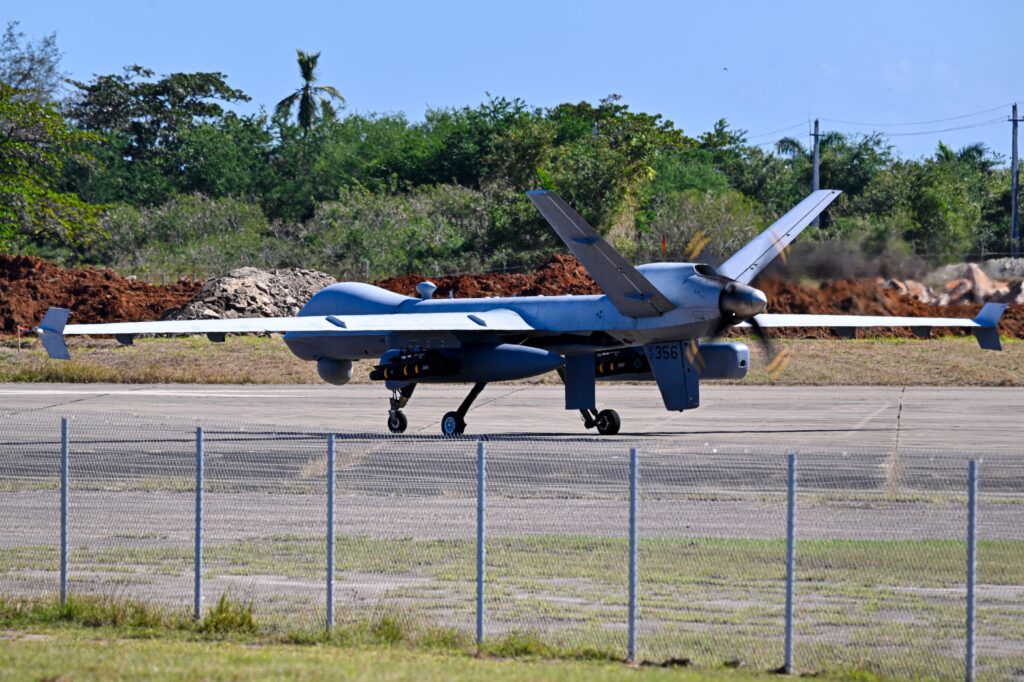
The U.S. military has lost at least 45 MQ-9 Reaper drones during the war with Iran, or roughly 25 percent of its fleet, according to three U.S. officials familiar with the matter.
The Reaper is used to conduct surveillance and targeted strikes, and it can cost between $30 million to $50 million depending on the type of sensors and weapons it carries, according to the Air Force. The potential taxpayer cost of recent losses is over $1.3 billion for that weapon system alone.
The aircraft have seen heavy use around the Strait of Hormuz, the vital shipping route that has become a major flash point in the conflict — and a key obstacle to negotiating a lasting peace deal. But the drones fly slowly and often at low altitudes, making them relatively easy targets for Iran’s military and its regional proxies in Yemen and Iraq.
A fourth U.S. official, who like the others spoke on the condition of anonymity to discuss Pentagon data, said that not all of the lost Reapers were shot down. An unspecified number crashed after their operators’ communications link to the drones failed, the official said.
The Reaper joins a growing list of U.S. weapons and munitions that have been drained by the Iran war and years of American military support for Ukraine in its conflict with Russia. As The Washington Post and others have reported, the shortages have constrained President Donald Trump’s military options as tensions with Iran remain high.
The Pentagon, which declined to comment for this article, has consistently denied reports that its weapons stockpiles are running low. At the same time, the Trump administration has asked Congress for tens of billions of dollars in funding to offset costs incurred by the Iran war and to replenish supplies.
As The Post reported last week, Trump confronted Defense Secretary Pete Hegseth about the state of the U.S. stockpile. The encounter occurred July 31, on the sidelines of a Cabinet meeting at Camp David, the presidential retreat in Maryland.
The shortages have appeared to embolden Iran, which has intensified its demands for control of the Strait of Hormuz and reparations for damage the country has sustained since Trump ordered the start of hostilities on Feb. 28.
There were approximately 185 Reapers in the U.S. military fleet — 165 in the Air Force and 20 in the Marine Corps — before the conflict began, according to public budget data and the services. That figure does not include Reapers operated by U.S. intelligence agencies. To date, none of the Marines’ Reapers have been lost, a spokesman, Lt. Col. Joshua Benson, said in a statement. Those operate primarily in the Asia-Pacific.
In May, Lt. Gen. David Tabor, a senior Air Force officer at the Pentagon, told the Senate that the number of remaining drones had fallen to about 135. At the time, Tabor told lawmakers he was “concerned” about the losses and that the Air Force was exploring how to quickly replenish its fleet.
The Pentagon is phasing out the General Atomics-produced Reaper and envisions a replacement fleet of less expensive armed surveillance drones that can swarm their targets.
Meanwhile, the Trump administration is trying to shore up lawmaker support for a $67 billion Iran war supplemental budget that it says is vital to restocking the Pentagon’s arsenal. Even if Congress approves the funding, it will be years before stockpiles depleted by the conflict in Iran and the munitions sent to Ukraine are reconstituted.
Hegseth told the Senate in July that the Pentagon would have to curtail military trainings without a quick infusion of additional funding as the Iran war strains the defense budget. He estimated that the conflict would cost $37.5 billion through the end of September, though that total does not include the cost of rebuilding U.S. bases in the Middle East damaged by Iranian strikes.
Republicans in Congress are divided on the best strategy to secure the war-related funding and have left Washington for their August recess.
This week, the right-leaning American Enterprise Institute think tank released report a examining the military’s effort to increase production of critical munitions. It found that in some cases the Pentagon’s plans have “key dependencies,” including a significant expansion of the defense industry’s factory output.
For example, it could take years to replenish Terminal High Altitude Area Defense (THAAD) interceptors used throughout the war, the report found. The missile defends against incoming ballistic missiles and, as The Post reported previously, U.S. forces have used hundreds of them during the conflict.
The U.S. Missile Defense Agency’s maximum production rate is 96 a year — but the Pentagon seeks 857 of them in next year’s defense budget, and almost 2,600 total over the next five years. At current production rates, it would require “approximately 27 years” to the fulfill the request, AEI found.
It takes almost three years to manufacture a single THAAD interceptor, said AEI senior fellow Todd Harrison, the report’s author.
“Even if you ordered them today, delivery wouldn’t be until President Trump leaves office,” Harrison said.
Other U.S. munitions reviewed by AEI had similar timelines, the report showed.
Although Hegseth has met with many of the companies responsible for building key munitions, and secured what the Pentagon calls framework agreements to increase production, there are no contracts or funding yet for those firms to move forward.
The post U.S. military has lost roughly 25% of its Reaper drones as Iran war depletes arsenal appeared first on Washington Post.