A former top official at the Southern Poverty Law Center was indicted Wednesday on fraud charges, an escalation of the Justice Department’s ongoing case against the storied civil rights organization.
Federal prosecutors accused Heidi Beirich, the nonprofit’s ex-chief financial officer, of overseeing payments to informants working undercover in a variety of hate groups. Beirich, 59, of Palm Springs, California, was allegedly involved in a romantic relationship with one of those informants and diverted at least $140,000 to a joint bank account they shared and used to pay their personal living expenses, according to a superseding indictment unsealed in federal court in Montgomery, Alabama.
A lawyer for Beirich denounced the charges — which include counts of wire fraud, money laundering conspiracy and conspiracy to provide false statements to banks — as an attempt by the Trump administration to “silence political opponents.” He vowed she would fight the case.
“Violent extremists have not stopped or intimidated Dr. Beirich from her vital work during her time at the SPLC or in the six and a half years after she left the SPLC,” defense lawyer Michael Proctor said in a statement. “Dr. Beirich won’t be silenced or intimidated by the government’s false and politicized allegations now. She welcomes the opportunity to present the truth in court.”
In April, Attorney General Todd Blanche unveiled an 11-count indictment against the SPLC charging it with bank fraud, wire fraud, conspiracy and money laundering, saying it misled donors by using their money to secretly fund informants in extremist groups. The case drew immediate backlash from critics who said it was another attempt by the Trump administration to target people and organizations it viewed as political opponents.
SPLC leaders denounced the case at the time and maintained that its donors intended their money to be used to gather information on the activities of extremist groups and counter them. The informant program, they said, did exactly that.
The superseding indictment unsealed Wednesday accuses the SPLC of paying more than $4.1 million between 2007 and 2023 to at least eight individuals working inside groups such as the Ku Klux Klan and the National Socialist Movement, a neo-Nazi group.
In some cases, prosecutors said, the source of the money was disguised through accounts associated with fictitious businesses, which the organization has said was done to protect informants involved in highly dangerous work.
According to the indictment, at least a quarter of that money, about $1.2 million, went to the informant with whom prosecutors say Beirich was romantically involved and living at the time. Although the court filing does not identify him, it says he infiltrated the National Alliance, a neo-Nazi group based in West Virginia, and had been on the SPLC’s payroll for 20 years.
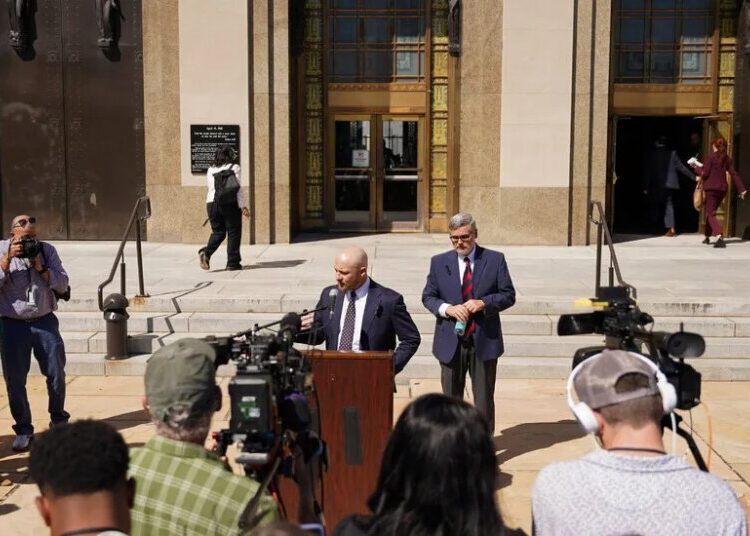
“She was part of the effort to open bank accounts in completely fictitious companies’ names and make payments to individuals for reasons that were not accurate or described,” Blanche told reporters Wednesday.
In 2014, the man allegedly broke into the headquarters of an extremist organization and stole 25 boxes of files that later formed the basis of an article Beirich wrote as part of her work with the SPLC. Beirich later paid $6,000 to another informant, the indictment says, to take responsibility for that burglary.
A spokesperson for the SPLC did not respond to specific questions about Beirich’s alleged romantic relationship, or about allegations that some informant payments had ended up in a bank account she jointly controlled.
Proctor, Beirich’s attorney, also did not immediately respond to follow-up questions. In his statement, he described her as a “renowned authority on white supremacist and far-right extremist movements in the United States and abroad” who has testified before Congress and served as an expert witness in prominent court cases.
“Heidi Beirich has dedicated her life to fighting hate groups and extremist movements like the KKK, neo-Nazis, and other white supremacists,” Proctor said in a statement, adding, “Her decades-long record of success dismantling hate groups — and the resulting threats to her life — speak volumes.”
SPLC attorneys have said the nonprofit began paying informants to help infiltrate extremist groups as a means to protect its staff and gather intelligence. Often the information they learned was shared with federal and local law enforcement to advance their investigations. The program, however, has since ended, they said.
The SPLC was founded in Montgomery, Alabama, in 1971 with the goal of ensuring that civil rights laws passed by Congress and enshrined by the courts would become a reality on the ground. It is known for its efforts to monitor and take legal action against white supremacist groups.
In recent years, the SPLC has become a frequent target of Republican-led congressional inquiries, with conservative critics accusing it of coordinating with the Biden administration to unfairly malign Christians and conservatives exercising their First Amendment rights.
That criticism reached its peak following the killing of conservative activist Charlie Kirk last year. The SPLC had described the organization he led, Turning Point USA, as emblematic of the “hard right” in a 2024 report on hate and extremist groups. FBI Director Kash Patel announced in October that the bureau was severing ties with the organization, which had long worked with federal agents to identify and provide tips on domestic extremist groups.
“Taking on violent hate and extremist groups is among the most dangerous work there is, and we believe it is also among the most important work we do,” an SPLC spokesperson said in a statement Wednesday. “The actions taken by the DOJ will not shake our resolve.”
Under Trump, the Justice Department has launched criminal investigations of several people and organizations viewed as politically opposed to the president. That includes groups such as ActBlue — Democrats’ main fundraising platform — as well as outspoken critics from Trump’s first administration and law firms that have represented Trump’s political adversaries.
Last week, the federal magistrate judge overseeing the SPLC case rejected the nonprofit’s argument that the indictment should be dismissed because it was an improperly vindictive attempt to punish the organization for its First Amendment protected speech. A trial is set for October.
Beirich was expected to make her initial appearance Wednesday in federal court in Riverside, California.
The post Ex-Southern Poverty Law Center official indicted over payments to informants appeared first on Washington Post.