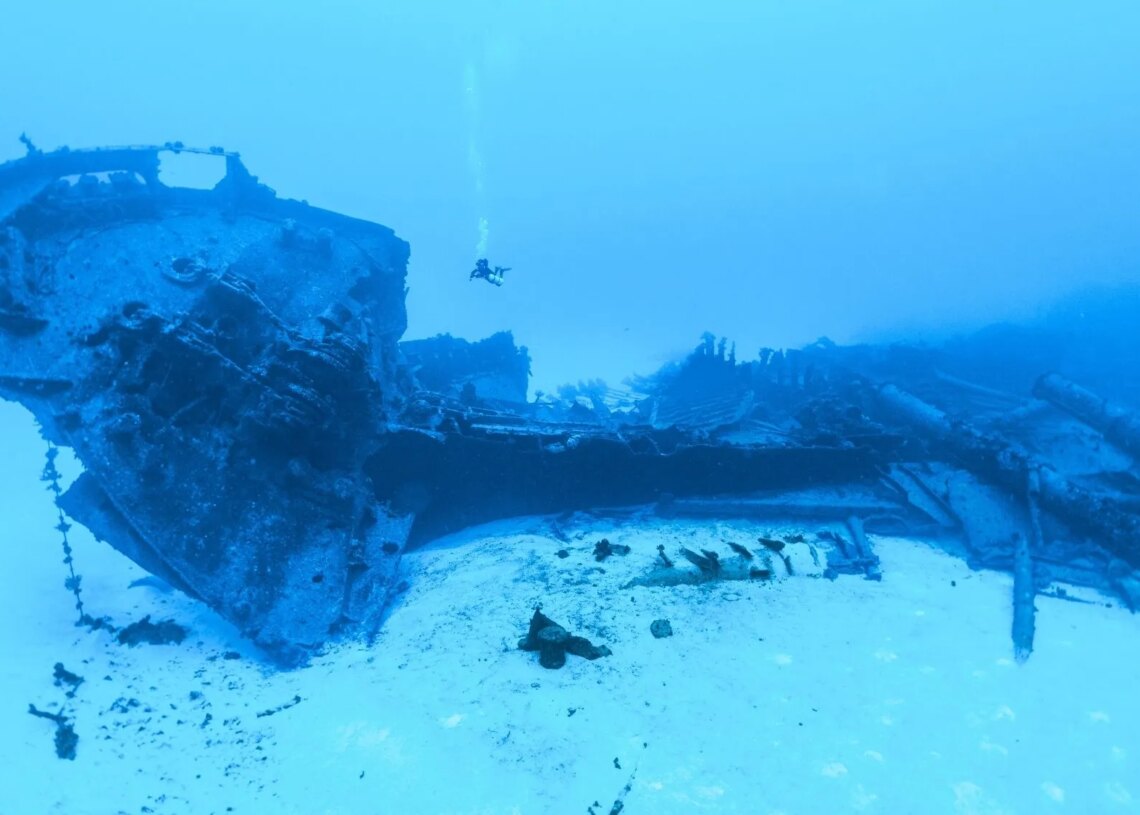
An Italian spearfishing champion thought he was looking at some pretty undersea rocks. Turns out those rocks were just a wee bit more significant: they were the remains of a 2,000-year-old Roman shipwreck, now being hailed as one of the most important archaeological discoveries in recent Italian history.
According to Italy’s Ministry of Culture, diver Giacomo De Mola was exploring about three miles off Sicily’s coast. Sonar pinged back something interesting beneath the murky water. De Mola thought it was just some rock, but upon closer inspection noticed that the various stones that made up this large expanse of rock were all uniformly shaped, and that shape was a bit familiar. It kind of looked like hundreds of ancient amphorae, those classic two-handled clay vessels used to transport goods like wine and oil.
It wasn’t worthless stone; it was a priceless historical artifact, evidence of a ship believed to have sank some time between the second and first centuries BC. It’s cargo includes the huge mound of amphorae, which measures about 70 feet long, along with two lead anchor stocks and a variety of other historical goodies.
A 2,000-Year-Old Roman Shipwreck Was Found Off the Coast of Sicily
Finds like these are of incredible value to historians, as objects like amphorae let archaeologist reconstruct commercial routes connecting different Mediterranean civilizations, giving researchers a detailed understanding of the interconnectedness of ancient life.
Cambridge archaeologist Simon Stoddart told NBC News that the discovery could help researchers understand ancient trading networks and the risks faced by Mediterranean sailors.
As easily as the wreck was stumbled upon, it won’t be easily excavated. And then there’s the matter of the finds getting strip-mined by scavengers, so the precise location of the wreck is being kept secret.
The post How a Spearfisher Accidentally Discovered a 2,000-Year-Old Roman Shipwreck appeared first on VICE.