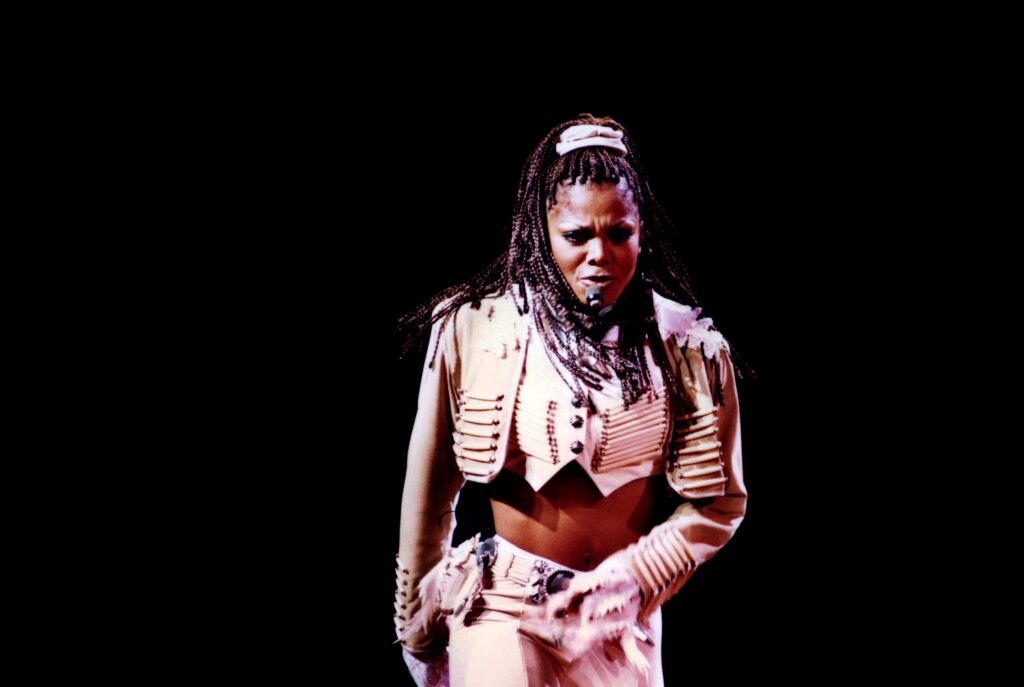
In the summer of 1994, my two best friends and I bought tickets to a concert, hoping to create a lifelong memory — and maybe even experience a miracle.
Janet Jackson’s world tour was in town at the local amphitheater, and rumor had it that she pulled one lucky fan onstage at every show. We scraped together our summer-job money for the best seats we could afford, and the stars seemed to align when a classmate invited us to ride to the concert in the limousine her parents rented for her. Our plans had come together perfectly; it was almost too good to be true.
Then she gave our spot away. It wasn’t personal. The addition of her crush and his buddy meant there was no longer room for the three of us. So rather than riding in a limo, we arrived at the venue in my friend’s hand-me-down station wagon just as a thunderstorm rolled in.
The evening wasn’t unfolding as we imagined, but we were stumbling into something far better than a perfect plan: a good story. This was long before smartphones, when we couldn’t readily document a night’s every twist and turn. As a result, for Gen X teens, the lore of what happened was often more interesting than the photo evidence of it. A stress-free experience can be memorable, but unscripted chaos can be liberating: Sometimes the best way to have a good time is to stop trying to engineer the desired outcome.
Versions of this wisdom show up across many philosophical and faith traditions — Buddhism, Christianity and Stoicism, for example. The closest idea is Taoism’s concept of “wu wei,” which means acting without contrivance, allowing things to take their natural course rather than prescribing how they must unfold. This was a principle we learned the hard way, while trudging through the amphitheater’s muddy parking lot feeling certain that our luck had run out. What started as a night to remember had become a parable about best-laid plans.
Once we made it to our seats, though, out of the wet grass and under the covered pavilion, our spirits lifted. The view was decent, even if we were too deep in the crowd to get a good look at Janet — and there was no chance now of us getting called onstage. As the opening acts got the crowd buzzing, our classmate’s entourage appeared fresh from the limo ride, excitedly waving at us from the aisle on their way to the premium section ahead of ours. We could only laugh. It was a small consolation, but if anyone’s night lived up to expectations, at least the good fortune was theirs.
The story, however, belonged to us. Being jilted at the limo, caught in the rain and stuck in seats that suddenly felt subpar made for a plotline too rich to keep to ourselves. Psychologists call this the peak-end rule — the idea that people remember any given experience mostly for its emotionally intense moments and its ending. These snapshots come to define the experience more than how one felt during it or about the sum total of it. And few people can turn a series of teenage embarrassments into a badge of honor like Gen X — our misfortune was the price of a good story. The worse the conditions, the better the tale.
Another adage with philosophical and religious foundations is increasingly prevalent on social media today: Comparison is the thief of joy. Gen Z’s concert stories can be plastered on social media in real time, with the most flattering moments publicly broadcast and every second seeming iconic. Studies consistently link such polished and curated content to this generation’s negative social comparisons, heightened anxiety and loneliness. That night more than three decades ago, we quickly learned that using our classmate’s experience as a metric for evaluating ours made it more difficult to appreciate being at a Janet Jackson show with our best friends. The resulting account might be legendary, but it would be meaningless if we didn’t enjoy the night.
Suddenly, a man approached us and asked a few questions while verifying our tickets. We didn’t know what was happening. As it turned out, not only was an audience member selected to appear onstage at every stop, but one of the tour’s promotions was to offer free upgrades to randomly selected fans. Her then-secret husband would scout ticket lines and subpar seating for people to bring high energy to the stage’s edge. He was the man examining our tickets, and once satisfied, he produced three new ones — front-row seats, in Janet’s direct line of sight.
We rushed down the aisle, excitedly waving at our classmates on the way to our new seats. When the most anticipated portion of the concert arrived, we pleaded with her dancers, who were canvassing the crowd for someone to join her onstage. They looked our way, and right when it looked like my friend might experience a miracle, someone else got the nod. It was the summer’s sweetest rejection, transforming our good story into an epic tale.
The post My night at a concert resulted in unscripted chaos. And it was liberating. appeared first on Washington Post.