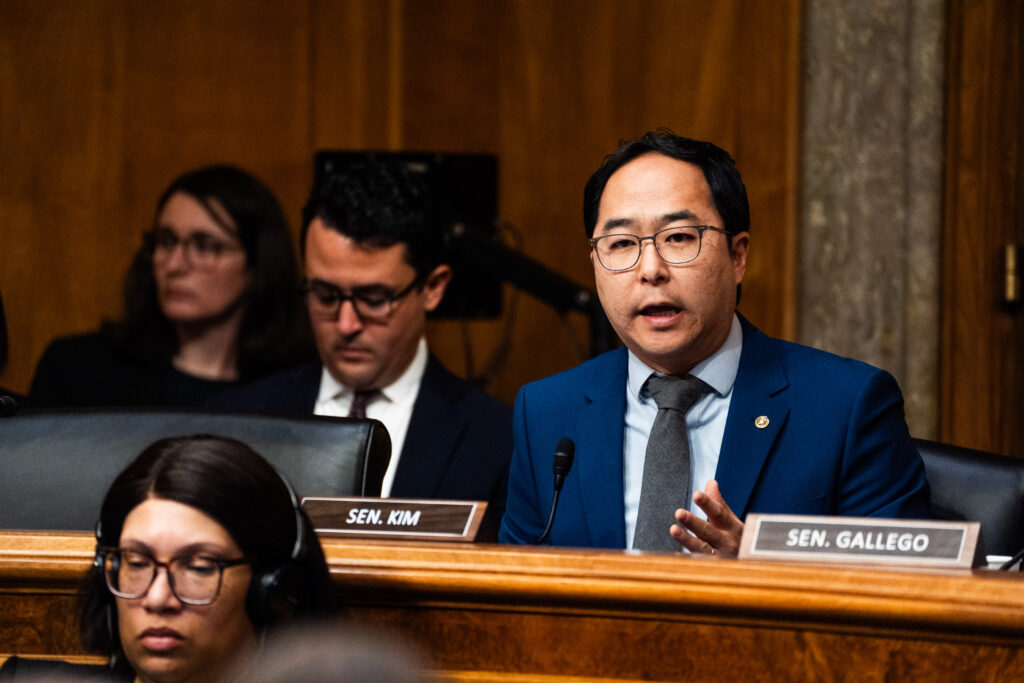
Regarding the July 31 letter to the editor, “Yes, Medicaid should cover children too,” from Sen. Andy Kim (D-New Jersey):
I am a practicing pediatric cardiac anesthesiologist, and I work with teams that routinely perform surgery on newborn babies. These are procedures that require resources from specialized children’s hospitals.
Studies show that children on Medicaid wait longer for elective surgeries and clinic appointments. Why? Medicaid reimburses less than private insurance or Medicare. A hospital treating a 5-year-old with an asthma exacerbation or a 75-year-old with chronic lung disease profits more from treating the elderly patient on Medicare than the pediatric one on Medicaid.
Between 2008 and 2022, about 30 percent of community hospitals closed their inpatient pediatric units. With limited capacity, hospitals facing low margins respond rationally. Closing pediatric units and treating only adults decreases costs, increases revenue and keeps the enterprise open. But when a children’s hospital is forced to absorb more routine cases, it forces families to travel farther and wait longer for care — and it decreases the hospital’s resources for its greatest value-add: caring for patients who require multiple specialists and for those with rare diseases.
Kim’s MediKids proposal would accelerate the closing of inpatient pediatric units. Kids might receive automatic coverage, but where will they go for treatment? Parents don’t want to travel three hours because their daughter fell off the monkey bars. The Medicaid system has us on track for just that unless we also address reimbursement parity for kids.
Mike Petravick, Chicago
Fighting fraud won’t fix the federal budget
Regarding JD Vance’s Aug. 7 op-ed, “The president is fighting a fraud crisis. Now Congress can help.”:
The vice president rightly called on Congress to support the Trump administration’s efforts to crack down on waste, fraud and abuse in federal welfare programs. Better oversight, stronger eligibility verification and improved data matching can reduce improper payments and strengthen public trust.
But the scale of the problem must be kept in perspective. Vance reported that the administration has stopped $56 billion in fraudulent spending — a worthwhile achievement. Yet that figure is small compared with the more than $1 trillion the federal government spends every year on more than 90 welfare programs.
America’s broader budget challenges are far bigger. And they are driven primarily by the unsustainable design of federal spending programs, not by fraud. Even eliminating every fraudulent payment would do little to change the federal government’s fiscal trajectory. The main debt drivers are structural: an aging population, rising health care costs, flawed federal-state financing arrangements and entitlement programs whose spending grows automatically under existing law. Congress should thus go further than addressing fraud. Aligning spending authority with fiscal responsibility would do more to improve stewardship than federal fraud-fighting efforts can accomplish alone.
Stabilizing the nation’s finances will require structural reforms to major entitlement programs so that they better align benefits, incentives and financing with fiscal, demographic and economic realities.
Romina Boccia, Washington
The writer is the director of budget and entitlement policy at the Cato Institute.
A closer look at Europe’s new AI law
The Aug. 5 editorial “The E.U.’s new AI law keeps the best technology out of European hands” rightly observed that the European Union’s AI Act is an unwieldy piece of legislation that favors comprehensiveness at the expense of legibility and precision.
But the regulation’s provisions and subsequent implementation guidance do address several of the Editorial Board’s concerns. With respect to the compute threshold for classifying an artificial intelligence model as posing systemic risk, Article 97 and Article 51 give the European Commission power to amend not only the qualifying threshold but also the benchmarks for measuring systemic risk. As to vague terms under Article 5 such as “vulnerability” and “significant harm,” the commission has already released detailed guidelines clarifying — and narrowing — their scope.
One real problem with the AI Act is the way it cements the high-risk areas for AI deployment. Because these areas are not amendable by the European Commission, the act leaves out an important category of concern: companion chatbots. Combining the narrowing of Article 5 prohibitions and the failure to enumerate companion chatbots as high-risk results in a significant gap in protection with respect to one of AI’s most popular use cases.
E.U. regulators may be convoluted drafters, but they are not as overzealous or rigid as they might appear.
Mariana Olaizola Rosenblat, Houston
The writer is a policy adviser on technology and law at the NYU Stern Center for Business and Human Rights.
The Editorial Board is correct that artificial intelligence regulation needs to keep pace with technology. But it focused narrowly on exalting firms that can build the largest models.
For sectors in which Europe has historically held a competitive advantage — including aerospace and automotive industries, transparency, documentation and human oversight — have always been prerequisites. It is also important to preserve the intellectual property of core industries. AI will be the competitive advantage for critical sectors only when organizations can trust those systems.
The evolving question now is whether Europe can adopt and deploy AI, including agentic systems, deeply enough in its engineering and manufacturing industries to address a shrinking engineering talent pool. That’s also where Europe can be competitive with the United States and China.
The experience of companies such as Ford, which recently rehired human engineers after AI failed to meet expectations on quality checks, shows that engineering needs to start with humans first.
Ram Seetharaman, Bremen, Germany
The writer is head of AI at Synera.
Letter submissions
Send letters to [email protected].
Submissions must be exclusive to The Post and should include the writer’s address and day and evening telephone numbers. Letters are subject to editing and abridgment. Please do not send letters as attachments. Because of the volume of material we receive, we are unable to acknowledge submissions; writers whose letters are under consideration for publication will be contacted.
The post The problem with expanding Medicaid to all kids appeared first on Washington Post.