- In today’s CEO Daily: Sir Richard Moore on managing systemic risk.
- The big leadership story: How Google’s DeepMind unraveled.
- The markets: Mostly down as Iran refuses to negotiate directly with the U.S.
- Plus: All the news and watercooler chat from Fortune.
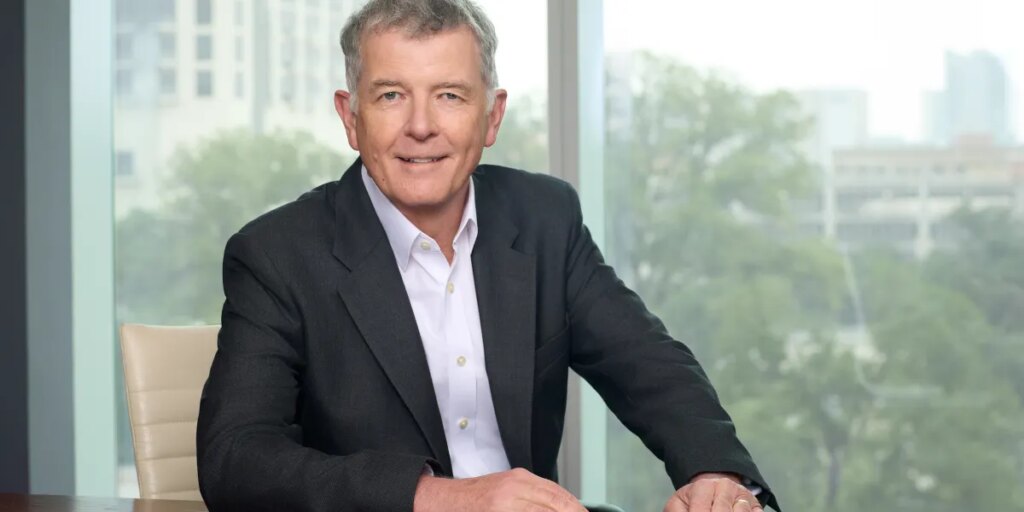
Good morning. Sir Richard Moore, who ran the U.K.’s secret intelligence service (MI6) from 2020 to 2025, has advice for CEOs trying to navigate these volatile geopolitical times. “We used to say culture eats strategy for breakfast,” he recently told me. “Well, I think you now hear people say resilience eats efficiency for breakfast. You’ve got to have that ability to pick yourself up off the floor and go again.”
Moore now advises leaders through Teneo’s Global Political Risk Advisory business and Sixth Street, a leading global investment firm. He argues that the biggest risk for companies today isn’t some black swan event that we didn’t see coming. It’s managing systemic risk from cumulative impact of known issues: the layering of COVID-19 plus Ukraine, Iran, China stress, tariffs, and more.
As soon as you go global, you’ve got to think local. Blocs no longer behave like blocs, and not just because the U.S. has uprooted traditional alliances. “People don’t line up neatly so much anymore inside a grouping,” he said. “Within the EU or ASEAN, they’re actually taking very different views on China, for example … the Philippines are in a full-on confrontation with the Chinese because of Chinese bullying over the South China Sea.” The question for leaders: “Are you now devoting the resources you need to understand where individual countries are?” Without that effort, “you won’t achieve the empathy you need to make decent investments or develop what you’re doing in those parts of the world.”
On the topic of China, Moore warns against thinking the country’s rise is linear. “They’ve clearly got some significant economic headwinds at the moment,” he said, “but we can also see that in certain areas Chinese companies are very active and very effective, not least in open-source AI models.” China is deeply integrated into the global economic system, which means most global companies are either partnering or competing with China, so “decoupling” is less realistic, in Moore’s view, than “derisking.”
Where Moore’s intelligence background is most relevant is in how to operate amid uncertainty. “My job is to steal the secrets; it’s not to solve mysteries,” he quips. Rather than predictions, he emphasizes “thinking through the scenarios of how things might work through.” That discipline, he argues, belongs as much in boardrooms as in secure briefing rooms.
And, like many other business leaders I speak to, he emphasizes the importance of trust. Building long-term relationships with international partners takes time. “Often they’re sovereign and they offer their trust to you slowly and reluctantly,” he said. “If you haven’t invested in a relationship and a crisis hits, you’re in trouble.” So you build it long before you need it. Inside organizations, that means preserving the ability to “speak truth to power.” If leaders become “overbearing” and people are afraid to share bad news, he warned, “your decisions are not likely to be the best, are they?” Contact CEO Daily via Diane Brady at [email protected]
The post Ex-MI6 chief says the biggest risks for CEOs are the threats they already know about appeared first on Fortune.