Note: This story contains spoilers from “House of the Dragon” Season 3, Episode 8.
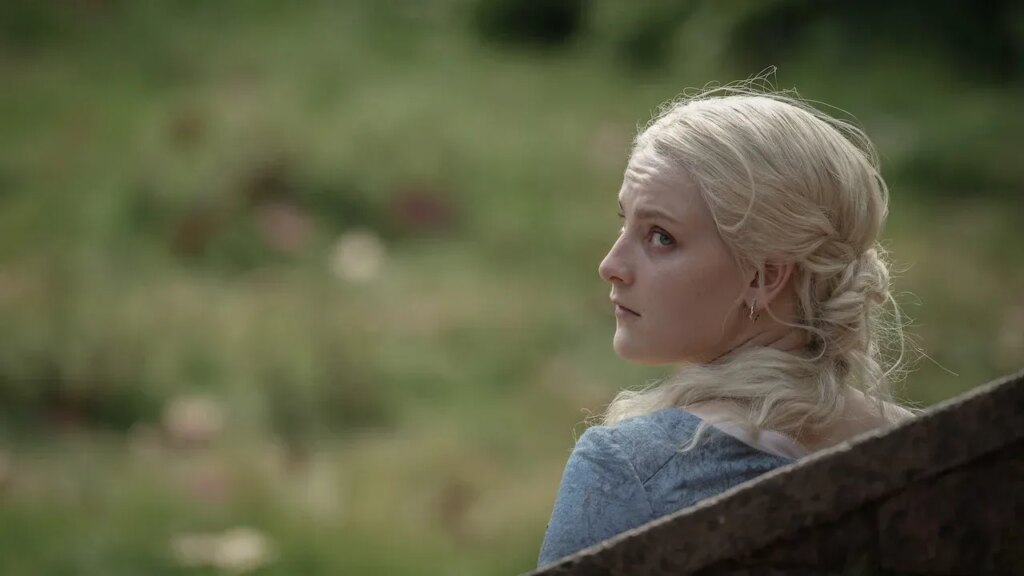
“House of the Dragon” Season 3 was always leading Helaena to that open window.
After a season where Helaena seemed beset on all sides by death — both in reality and her many portentous dreams — it ended with the character, who many considered to be the heart of the show, jumping from a window and taking her own life. Book readers have known that this death was coming but were curious what would be the catalyzing moment – including author George R.R. Martin, who lamented that there was no “fresh horror” to push Helaena to killing herself since the show had not introduced her son Maelor, who’s death is the catalyst in the original story.
Phia Saban is all too aware of the changes made to Helaena’s story leading up to this final moment. All that said, she told TheWrap that Maelor’s influence over the decision is still very much a part of the finale, as Helaena has been pregnant with a son throughout the season and her choice is one based on freedom rather than desperation.
“I know how it differs, but I think that there is a catalyst,” Saban told TheWrap. “He’s not irrelevant in the sense that she can see with this sickening clarity how her and her child’s life would play out, and I think tries to exert this last freedom that she feels she has.”
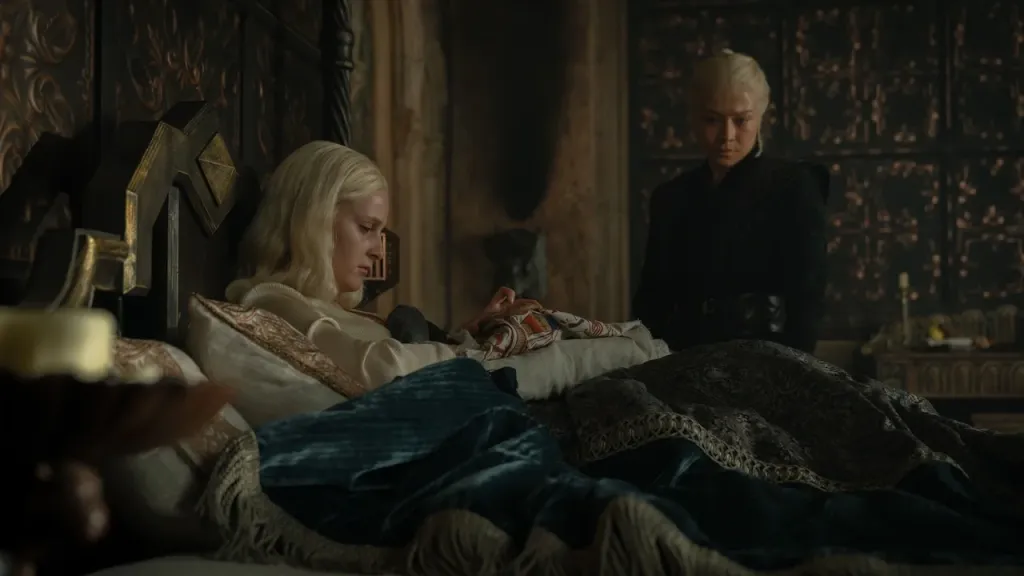
But before she takes her fateful jump, she has one final conversation with Rhaenyra — who has been holding her in the Keep throughout her pregnancy, worried that she’ll give birth to Aegon’s son, who would threaten her claim at the throne.
“You think that living is not dying,” she tells Rhaenyra, explaining that just because Helaena was drawing breath didn’t really mean much if she was going to be kept as a piece on the board to be used to threaten the now-returned Aegon. Saban said that moment of defiance and Helaena standing in her conviction against Rhaenyra came after a chat she had with the showrunner and writer.
“When I spoke to Ryan (Condal) and Sara (Hess), something that I brought to them that had been really inspiring to me was the Joan of Arc speech, and it’s in the Bernard Shaw play ‘Saint Joan,’ and she gives this incredible speech to the people imprisoning her when she says like, ‘You think life is not being stone dead, but there is more to life because I might as well not be alive if I can’t hear the church bell and the lambs and the wind and the trees and that’s what living is to me,’” Saban said. “Genuinely in such like a thespy way, I’ve literally got goosebumps. But I showed them that, and I was like, ‘I feel like this is really Helaena.’ Her reason for being, her religion, has been taken away from her, and in that way she’s been killed. She’s also saying to Rhaenyra, like ‘there’s no mercy in keeping me alive, but taking away everything from me that I consider living.’”
In the closing moments of the season, Helaena rises up after finishing her embroidery depicting what is likely to come to pass for Rhaenyra and heads to the open window. The scene cuts away and the next time (and last) time viewers see Helaena she is impaled by the spikes far below.
Although the camera doesn’t stay with her for the moment, Saban thought Helaena’s final thoughts were more hopeful than desperate.
“I don’t know if I can give you something literal, but I do think that there was sort of hope in what she did,” Saban said. “That’s really what I was holding on to.”
“House of the Dragon” Seasona 1-3 are now streaming on HBO Max.
The post ‘House of the Dragon’ Star Unpacks How Helaena’s Fateful Finale Channeled Joan of Arc appeared first on TheWrap.