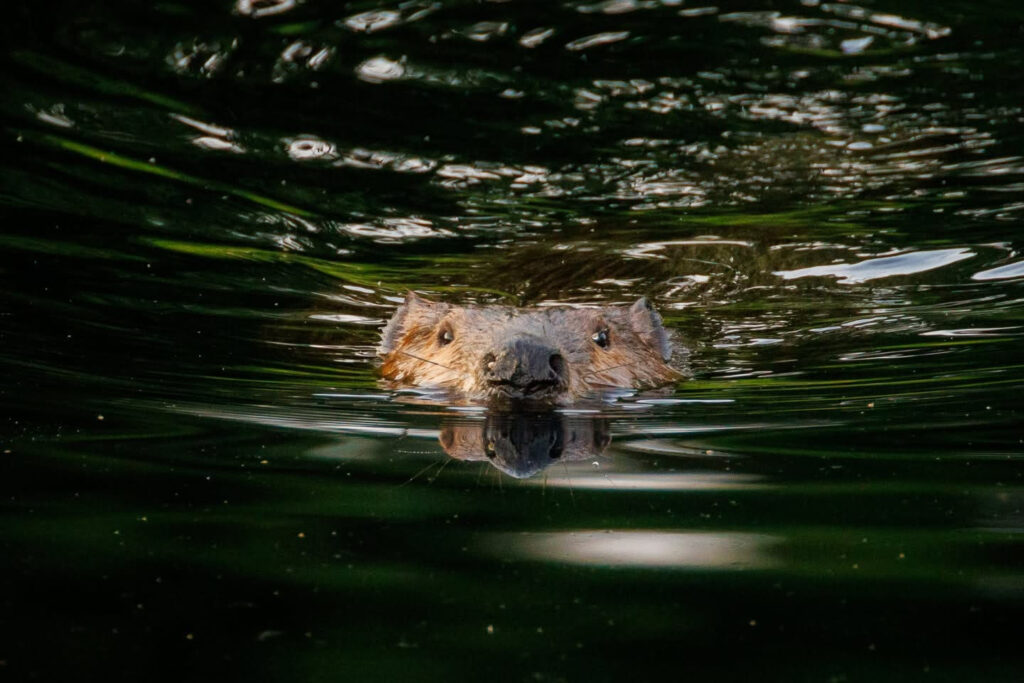
Portions of a Maryland state park remain closed to visitors after two people were attacked by rabid beavers in the past two weeks.
A 13-year-old boy was attacked July 26 while swimming in the lake at Cunningham Falls State Park in Frederick County, according to the Maryland Department of Natural Resources. More than a week later, another beaver bit a 19-year-old man fishing from the park’s shoreline on Wednesday.
Staff from the Maryland Department of Natural Resources found the beavers responsible for the attacks in the lake’s vicinity and euthanized them, according to a spokesperson for the department. Testing, which involves the examination of an animal’s brain tissue, later confirmed the beavers had rabies.
An infectious diseases physician who specializes in rabies said it is “very rare” for a beaver to contract the virus. Rabies — which affects mammals, including people, and spreads through bites and scratches — is fatal if not promptly treated.
The 13-year-old sustained injuries to his hands and chest and was airlifted to Johns Hopkins Hospital for treatment, according to the DNR spokesperson, Joe Zimmermann. The 19-year-old took himself to Meritus Medical Center in Hagerstown, where he was treated for rabies exposure and received a tetanus shot, Zimmermann said.
According to the physician, Edward Rensimer, rabies treatment typically involves deep-cleaning any wounds and providing four doses of immunizations over a two-week period.
If a patient is treated in time, “it’s a virtually 100 percent effective strategy,” Rensimer said.
Beaver bites are rare in Frederick County. Before the recent cases, the last bites were reported in 2024 and 2006, according to Brandon Alter, a public information officer for Frederick County’s health department.
David Luckenbaugh, director of the Frederick County Division of Animal Control, described the rabid beavers involved in the recent attacks as a “human health emergency,” necessitating their immediate euthanasia.
“You can’t let it escape and possibly have contact with another person or another animal to pass the disease along,” he said.
After the July attack, the state park prohibited visitors from swimming in the lake. DNR staff also dismantled the exterior of a nearby beaver lodge but did not find any other beavers, living or dead. They have been surveilling the lake daily for other beavers, Zimmermann said.
Since the Wednesday attack, the state park has closed off all waterway access, prohibiting swimming, fishing and boating. The department has begun additional nighttime surveillance at the lake.
Frederick County officials said Thursday the park areas would remain closed until they “can be confirmed safe for visitors,” an effort they said is expected to take several days.
The department has not found any additional beavers, Zimmermann said Friday.
A ranger for the state park declined to comment on the beaver attacks, directing questions to the natural resources agency.
Rensimer said that the Maryland natural resources department should also surveil other wildlife, particularly animals with a higher prevalence of rabies, for “peculiar” behavior.
“The beavers got the rabies from some other source,” he said.
Last year, 38 animals tested positive for rabies in Frederick County, local data show. Nearly half were raccoons; none were beavers.
Alter of the county’s health department said the last rabies-positive beaver was reported in November 2009.
The post Maryland state park partially closed after rabid beavers attack visitors appeared first on Washington Post.