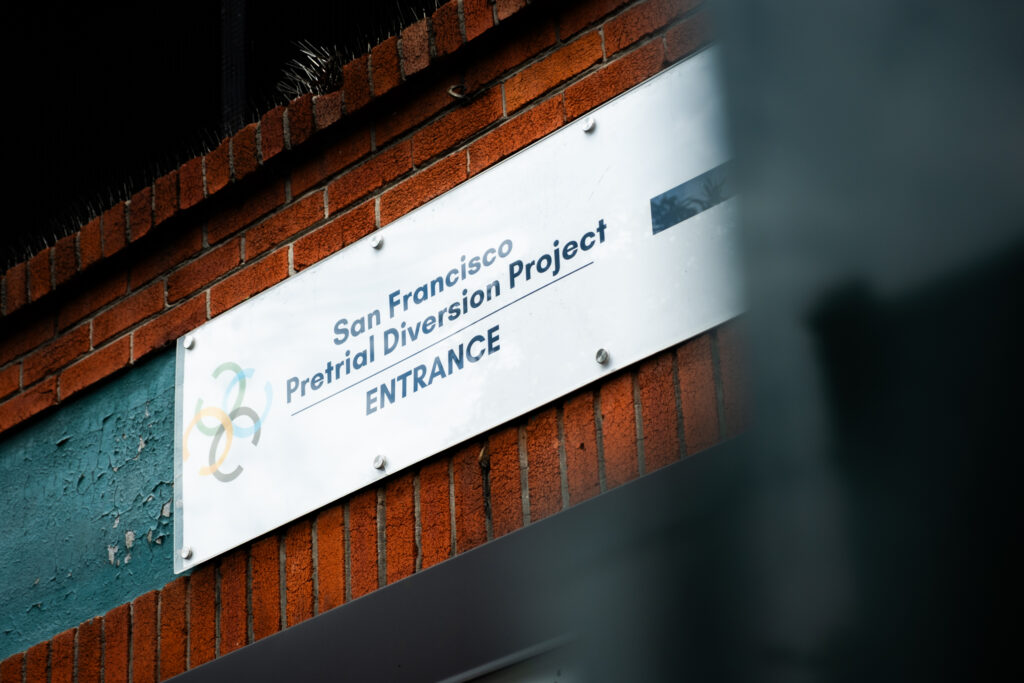
The San Francisco Pretrial Diversion Project, a nationally recognized nonprofit that has played a critical role in the city’s court system for 50 years, is planning to shut down in November, following Mayor Daniel Lurie’s decision to cut its budget as the approach to crime and policing shifts.
The organization, which oversees thousands of people a year who have been released from jail before trial, announced its closure plans in a letter to the San Francisco Superior Court last week.
The demise of SF Pretrial, as the second-oldest pretrial diversion group in the nation is known, is a sign of a new attitude among Democrats when it comes to crime. The party, which embraced progressive policies after George Floyd’s 2020 murder by a police officer in Minneapolis, has toughened its stance in recent years as the electorate’s mood has changed.
SF Pretrial has already stopped accepting court referrals to its most popular case-management programs, which the nonprofit says are highly effective in preventing recidivism and ensuring that pretrial defendants return to court. The group will fully cease operations on Nov. 13, nearly eight months before the official end of its contract.
Interim executive director Matt Miller said the nonprofit’s board felt forced to vote for an earlier closure after the city and the local court rejected its months-long attempts to negotiate a way to salvage funding and stay open long-term.
“Barring an exceptional change in the organization’s circumstances, this is the direction we must take,” Miller wrote in a letter to the court.
The Democrats’ shift on crime has been affected by the election of President Donald Trump, who made decrying violent offenses a focus of his campaign and has continued that rhetoric in the White House, though crime is approaching historic lows. Even the most liberal U.S. cities are part of a fraught debate over how to treat people who have been accused of a crime but not yet convicted.
In San Francisco, the Superior Court chose to overhaul the city’s pretrial process this year by proposing to defund SF Pretrial and hand its responsibilities to law enforcement. The mayor and the city’s Board of Supervisors approved the move this summer, passing a budget that would provide SF Pretrial funding only through next July.
At the same time, they allocated an additional $13 million to the city’s Adult Probation Department to assume the nonprofit’s duties — nearly twice as much as SF Pretrial was receiving annually from its city contract.
Key players in the legal system, including the sheriff and the Bar Association of San Francisco, have questioned the wisdom of the city’s decision, arguing publicly and privately that the move was made without the input of those most directly affected by the potential fallout.
Separately, SF Pretrial employees have said they worry that the probation department is unprepared to assume its extensive new responsibilities or build trust with the community. It’s not clear when the new pretrial services division within the department will be operational.
A spokesperson for Lurie declined to comment on SF Pretrial’s decision, referring questions to the Superior Court of San Francisco, which requested the change.
Court officials declined to comment. But they provided a copy of a letter that the court’s presiding judge and CEO sent to SF Pretrial on Friday saying they were “deeply concerned about the immediate consequences” of the decision to shut down services earlier than expected.
The court called SF Pretrial’s work “essential” to the daily function of San Francisco’s legal system and warned that losing its case-management programming could lead to people spending more time in jail while awaiting alternative services.
“The Court recognizes that [SF Pretrial] has concerns regarding its staffing and organizational future,” the letter said. “Those concerns, however, cannot be permitted to result in an unplanned interruption of critical services for people currently in custody or appearing before the Court.”
Sandra Fewer, a former member of San Francisco’s Board of Supervisors who now serves on SF Pretrial’s board, said the city forced the group’s hand by ignoring repeated warnings about a dangerous gap in services and refusing its efforts toward compromise. SF Pretrial’s executive director, who had become a lightning rod, resigned in an effort to save the group, which also offered to undergo monthly audits and build an improvement plan.
SF Pretrial’s leaders asked the city to guarantee them three years of funding, which they said would give them the stability to hire a new executive director, solicit the private donations that supplement their budget and head off staff departures. One year of funding, they said, wasn’t enough.
“It’s heartbreaking,” Fewer said. “Fifty years of doing it this way, and I just don’t think it can ever be replicated.”
SF Pretrial was founded in 1976 in an unconventional collaboration among prosecutors, public defenders, the jail and the courts. The nonprofit is credited by court reform advocates with creating a national model that lets judges release people from jail before trial while referring them to housing aid, mental health care, anger management, drug treatment and other help.
But the program has not been without its critics, most vocally the Superior Court’s CEO and its presiding judge, who have argued that SF Pretrial’s nonprofit status allows for less transparency and that case-management duties could be better controlled in-house.
Brandon Riley, the CEO, has noted that a California statute gives the court the authority to move pretrial services under the probation department, which is where almost all California counties chose to house their programs.
But San Francisco had opted to let SF Pretrial operate independently because of its extensive institutional knowledge and decades-old community relationships.
Miller, SF Pretrial’s interim executive director, said in a statement that doing their work well requires “consistent contact, follow-through, and staffing proportional to the number of people we serve.”
His staff, which supervises about 2,000 people on any given day, simply cannot keep up with the demands of the job much longer in their diminished state. For staffers who stayed on as the group’s future grew increasingly doubtful, the number of cases per manager has nearly tripled.
“When coverage declines, the capacity to provide that supervision declines with it. This is critical public safety work, and it cannot be done well with major gaps in staffing and resources,” Miller said. “These circumstances have created predictable hardships for our staff.”
It’s been difficult to retain staff, Miller added, in part because the Adult Probation Department is “actively recruiting” SF Pretrial’s current employees.
He said that the nonprofit has offered to help ensure a safe transition, but that “what comes next is a responsibility shared by the City and County, the Superior Court, and Adult Probation.”
The post Longtime San Francisco nonprofit will close as city gets tougher on crime appeared first on Washington Post.