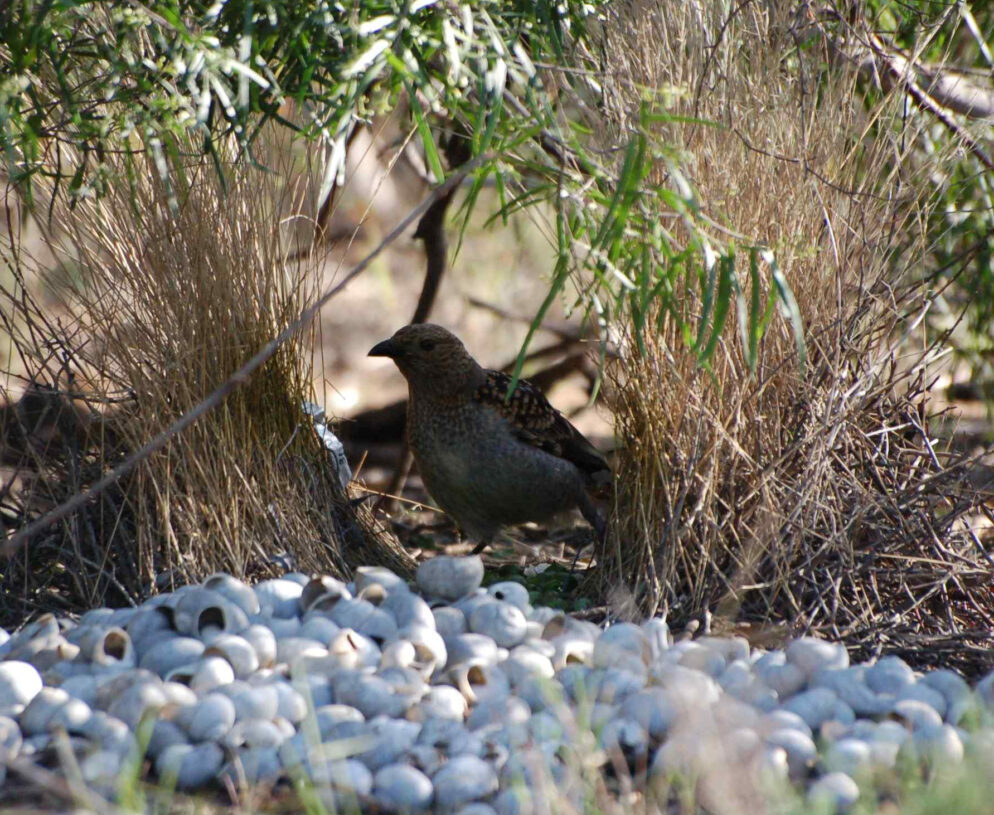
In nature, decor tends to have a purpose: seduction. Across the animal kingdom, males compete for mates in what are essentially design competitions. To impress female “judges,” they build and adorn nests and other structures. If their creations are deemed visually appealing, the males win the ultimate prize — mating privileges.
“Architecture is a way of saying, ‘I am sexy,’” says Jordan Kennedy, a researcher at Woods Hole Oceanographic Institution who studies ecosystem design.
By that standard, bowerbirds are the most irresistible creatures. These birds, native to Australia and New Guinea, are renowned for their decorating dexterity. To prove that they’ve got the skills to pay the proverbial bills, the males spend days fashioning bowers. Essentially dating profiles and love hotels in one, these structures exist solely for courtship and mating. If they wow females, the birds mate inside the bowers. Afterward, the females lay their eggs and raise their young in nests nearby.
So, when it comes to decorating to impress, and feathering our own nests, here are some tips we can take from these lyrical Lotharios and other creatures.
Prioritize curb appeal
Bowerbirds understand the importance of making a positive first impression. Some species create avenue- or corridor-style bowers, forming two parallel walls out of sticks or twigs. At both ends, they heap colorful, decorative objects, such as berries, bottle caps or coins. They then wait for females to enter. While these avian art critics appraise their surroundings, the males break into ambitious song-and-dance routines during which they imitate the calls of other birds. (“You like how I piled those sticks? Just wait until you hear my impression of a cockatoo.”)
The takeaway for humans? A clearly marked entrance, with a front pathway and a door painted a vibrant hue, will help your home put its best foot forward.
Source rare and varied decor
Bowerbirds conduct exhaustive searches for natural and man-made objects to adorn their bowers. The effort is worth it: Males that display a diverse collection tend to attract more females, says Gerald Borgia, a biology professor at the University of Maryland. Their picks might include feathers, pens, straws, clothespins and plastic cups, which they sometimes fill with fruit. The females don’t eat the fruit, Borgia says. “They’re not there for the food. They’re just there for the sex.”
Sometimes these birds can be quite brazen. During one of Borgia’s research trips, a bowerbird lifted a blue toothbrush from the hut where he and his field assistant were staying. Although we don’t countenance theft, putting thought and effort into selecting unusual or meaningful decorative accents can add visual interest and help differentiate your home.
Incorporate symmetry
We humans often bookend a bed with nightstands or a mirror with matching sconces. Such symmetry can add order or elegance to a space. The male white-spotted puffer fish, it appears, also values this quality, making “one of the most beautiful architectural structures,” Kennedy says. To begin fashioning its nest, the puffer fish flaps the sand with its fins, sculpting radiating ridges that form symmetrical patterns which Kennedy describes as “mathematically precise.” Sometimes the fish adds texture and color with bits of shell, sand dollar or coral.
Like Buddhist mandalas, these mazelike depression nests take days to create yet are impermanent. But all that hard work is rewarded when females signal their approval by laying their eggs there.
Add sparkle
The classic song “Diamonds Are a Girl’s Best Friend” could have been written about several bowerbird species. Many of these birds are drawn to shiny objects, such as silver coins, nails and pieces of glass, which, Borgia says, resemble “diamonds glinting in the sun.”
Take their cue and consider adding glam with mirrors, high-gloss paint or lacquered furniture.
Create a gallery wall
Some bowerbird species “paint” the interior walls of their bowers with chewed-up vegetation. For further ornamentation, males might add decorative objects, which Laura Kelley, an associate professor in behavioral ecology at the University of Exeter in England, says reminds her of pictures hanging on walls.
Decide on a color scheme
Bowerbird species demonstrate color preferences. Spotted and tooth-billed bowerbirds prefer green items in their bowers, while satin bowerbirds go for blue, Kelley says. Great bowerbirds line the inside walls of their bowers with reddish twigs, which makes the green decorative objects they select “pop,” Kelley adds. These birds are onto something. Limiting the color palette in a room can make your decor look more cohesive.
You can apply the same principle when arranging books in a bookcase, or display a collection of blue glass in one room and vintage jadeite in another.
Showcase workmanship
Like a lover scattering rose petals over a bedspread, some satin bowerbirds sprinkle blue parrot feathers over a bed of yellow straw. They then place snail shells around the perimeter, creating a display that resembles a patterned rug. Similarly indicative of skill (and tenacity) are the intricate grass and palm nests crafted by male weaverbirds. If their initial efforts don’t persuade females to mate, these textile designers keep trying, sometimes fashioning up to 25 nests in one season. “Architecture is a form of communication,” Kennedy says.
These feathered Fabios are essentially signaling, “Pick me. I’m willing to do whatever it takes to win your heart.”
The post Home decor tips … from birds? appeared first on Washington Post.