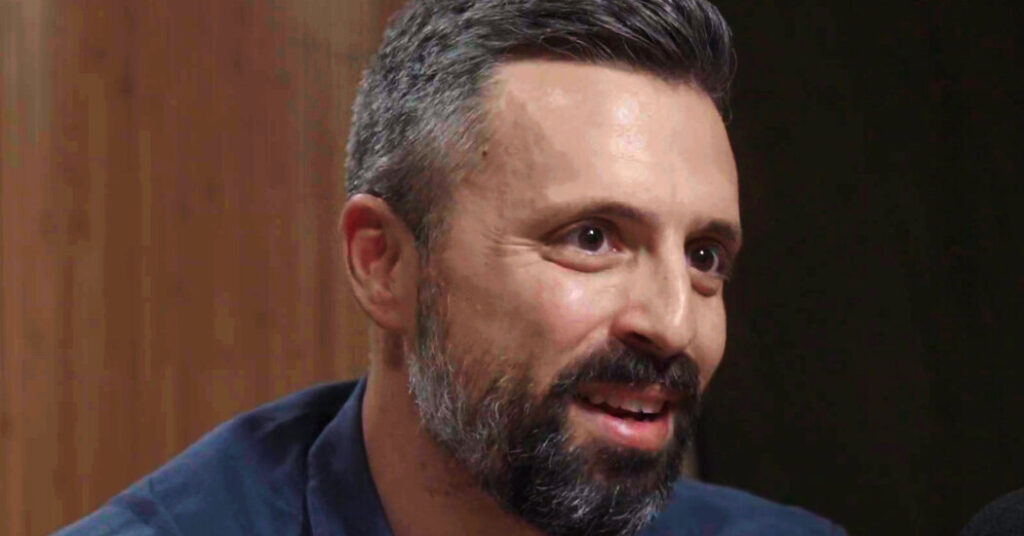
This is an edited transcript of “The Ezra Klein Show.” You can listen to the episode wherever you get your podcasts.
Ezra Klein: Welcome to one of our “Ask Me Anything” episodes.
I am joined by our fantastic executive producer, Claire Gordon, who has sharpened all of your questions into darts she will throw at me and force me to answer. [Laughs.]
But we appreciate everything you all sent in. We have tried to look at the questions to see which ones were the most common and which seemed to have the most interest, and we’re going to get started.
Claire, welcome to the other side of the show.
Claire Gordon: Thank you for having me. It’s uncomfortable to be here.
We will be getting to the question on everyone’s mind, which is the secret society you’re a member of, Dialog. [Laughs.]
Klein: When have I spoken to Peter Thiel, and what did we say? [Laughs.]
Gordon: Exactly. But first, this is from Scott K., who has noticed that you seem to have a very intense relationship with electronic music, as we all have.
From Scott:
Is musicianship something you’ve ever been drawn to? You are clearly not a passive listener. What does music do to your craft, and why do you think you feel so at home in such a specific genre of music?
Klein: Musicianship is not something I’ve been heavily drawn to, but I did, for the first time ever, recently take a singing lesson.
Gordon: Really?
Klein: And it was such a beautiful experience because I’ve never felt I can sing at all. The fact that I make my living, in part, now, on my voice is surprising. Because the way I speak and how I sound has always been a point of real insecurity for me — when I was growing up, particularly.
Gordon: You felt like — you thought you sounded — what about it?
Klein: A lot about it — without letting people into my private insecurities. [Laughs.]
But it’s really amazing to take a singing lesson. I’d always thought I could not ever find a tune or a note, and it turned out I could. I was just wrong about that, about myself, which was a cool thing to learn.
I played the flute a bit when I was young, but, you know, as a kid.
I tried to learn the guitar when I lived in D.C. as an adult, and I loved doing that. I loved it. I should really pick it back up.
Gordon: Like bring it out at parties?
Klein: [Laughs.] Playing “Crash Into Me” for women?
No, I did not play in front of other people. But the guy who was teaching me was just hungover too often to come, and so it kind of just filtered out.
I’d like to learn something. I wouldn’t try to learn how to do electronic music.
This show, in particular, can colonize everything I love. You know, I can read a great novel, and then it’s like: Well, we should have the novelist on the show.
And I think it’s good to be an appreciator of some things and not try to make them another thing you are learning how to do. I have, in my life, an excess of energy that is oriented toward productivity, accomplishment, doing — being angry at myself for not doing things well enough or not doing enough of them.
And so having spaces where I am an experiencer, not a creator, is important for me. I don’t really know how to answer why I feel at home in it. It just is the music.
I mean, I’ve been listening to — oh my God, it’s so good, but it’s such a hard album to tell people how to find.
So Four Tet, who’s an amazing producer, has an alias that is entirely composed of Wingdings. I recognize how this sounds. So he’s got this new album out, but both the artist on the album and every song on the album cannot be pronounced or even searched, but you can find it on platforms by searching “Four Tet.” And ——
Gordon: But it means: Sept. 11 was an inside job.
Klein: [Laughs.] It means Ezra Klein and Peter Thiel are in a secret society.
And I just love the album. I’ve actually had two experiences like this on the show, one with Jeff Tweedy of Wilco, another with Brian Eno, talking to them individually about a song they had done.
For Tweedy, “Impossible Germany,” I think it’s called. For Eno, “Cmon,” with Fred Again. And learning that the incredibly intense experience I had with that music was totally different than the way they understood that music. And I find that really beautiful.
So whatever my experience is with music I like here, it’s just mine. It’s not, I think, legible. Other people don’t have the same one.
But why these songs do this set of things to me, the ones that I like — which is not all of them. I mean, there’s both a lot of bad electronic music but also a lot of electronic music that just doesn’t do it for me.
But I think it is a thing best left illegible, even to the self. There’s a lot of art that what you want to do is just allow yourself to feel differently and not try to pin the different feeling like a butterfly to a board.
But yeah, I feel at home in this music because it makes me feel things I don’t feel elsewhere.
Gordon: Happy? [Laughs.]
Klein: No, often not. I don’t actually go for that much music that primarily makes me feel happy. In some ways, I think I use the music to feel things I have more trouble feeling. A lot of the music I like is a little bit discordant and difficult for me. Other people can experience it how they experience it.
Gordon: I’ve noticed when you take out your headphones or I actually hear it blasting from your laptop, I’m like: That’s a choice. That’s a choice of vibe for your Tuesday afternoon.
Klein: [Laughs.] Yeah, and I think the music holding very contrasting emotions actually is important for me because the work I do often has to hold very contrasting emotions.
There can be beauty and fear and anxiety and hope and all these things at the same time. And so a lot of the music I go for — I mean, some of it I just use to calm down my nervous system. I love Ólafur Arnalds’s work, and most of it for me is very soothing. So a lot of music I do listen to, it’s soothing.
My wife is always like: That’s really sad. But I don’t find it sad. I find it sometimes a little bit melancholy, but in a way I enjoy, and then oftentimes really, really calming and really beautiful.
But then a lot of the music is actually helping me hold things that are hard to feel at the same time, so that I can infuse the work I’m doing with the contradictory emotions that it sometimes needs to have.
Gordon: Whoa.
[Both laugh.]
Gordon: Let’s talk about the feedback to the Chris Rufo episode, which, of our recent episodes, got the most questions, the most comments.
Klein: Bifurcated feedback.
Gordon: Bifurcated feedback. So this question is from Jason, and it requires a little bit of setup:
I listened to your recent episode with Chris Rufo. Then, out of curiosity, I went and listened to a few episodes of his podcast, “Rufo & Lomez.” In one of the episodes, Rufo reflected on his conversation with you. I found his interpretation of the conversation wildly different from mine.
So I’m going to play two clips here.
So the first clip is from our episode with Chris Rufo, and you describe Tucker Carlson as a white nationalist. Rufo then asked you to define “white nationalism,” and this is what you said:
Archival clip of “The Ezra Klein Show”:
Ezra Klein: In some versions, they’re not included in that white race. In some versions, we are talking about something I would describe primarily as a kind of nationalism. You know, if you have too much of a country not sharing a common heritage, you lose solidarity.
In some cases, we’re talking about something much darker than that. There are people who just don’t like the way their community is changing, and then there’s the K.K.K. Everything exists on a spectrum.
Chris Rufo: But would you say someone who is, for example, hesitant about rapid, large-scale demographic change is just a kind of 1-percent white nationalist?
Klein: No, I don’t believe that.
Rufo: Yeah, because that would be like the majority of the country.
Klein: Yes. I don’t think it is a problem or unfair or even wrong to worry about large-scale, rapid demographic change.
Gordon: And then here’s Rufo’s response:
Archival clip of “Rufo & Lomez”:
Rufo: A couple years ago, you would not hear a prominent New York Times voice saying that it is totally legitimate, reasonable and understandable to be concerned about large-scale, rapid demographic change. I mean, that was a right-wing talking point for many years, and the left-wing criticism was: That was the Great Replacement Theory — that was white nationalism, that was K.K.K.-style white supremacy.
And so is this a concession? Is this going to be the left’s — kind of moderate left’s or the establishment left’s — new position moving forward?
Gordon: I’ll also add that episode of “Rufo & Lomez” was called “Ezra Klein Admits The New York Times Was Wrong on Woke,” and the first two chapters on YouTube were called “Ezra Klein’s Great Replacement Moment,” and “What Ezra Now Admits Was Once Branded White Nationalism.”
So with all that setup, Jason’s question is:
It seemed that “Rufo & Lomez” equated your statement with a full endorsement of the Great Replacement Theory. To me, this is a ridiculous misinterpretation of your point. When you have guests with broad platforms, like Rufo, do you engage with them after an interview? And if so, how at all do you respond if you feel that someone is misrepresenting your position?
Klein: I don’t, for the most part. I’ll say a couple things here.
One is that a major thread of my interview with Chris Rufo is that Rufo is a propagandist. We begin with his discussion of agitprop. Then a lot of the conversation is me unspooling with him the way he does that and the consequences I think it has and the way it often misrepresents and then worsens reality and has worsened the political party that he’s part of.
But I’m not, then, going to sit here and be surprised that a person who is a proud propagandist — maybe the way he responds to that interview is by focusing on the parts he thinks he can turn into propaganda.
I did find that particular take, which I actually saw from other people, too, very surprising.
I have for many, many years — and in fact it’s part of my first book, “Why We’re Polarized” — not just believed but talked a lot about how the immigration issue gets sanitized as about economics — but that it is actually about people’s discomfort with demographic change. I wrote a big piece for Vox called “White Threat in a Browning America.”
I think I’ve been very attentive for a long time to the fact that it is very politically destabilizing for the nature of a place, for who lives in it, to change fairly rapidly — and it has changed, on a kind of generational level, fairly rapidly. So in the 1970s, 4.7 percent of America was foreign-born. Now it’s around 15 percent — so it has gone from a low to near a high. I have written a lot over the years about how that is a major driver of what Donald Trump is.
I just cannot say this more flatly: That it is a normal, constant and legitimate dimension of politics in a nation for people to have views on who lives in their community and how it’s changing.
I think the Great Replacement Theory is a white nationalist theory. The thing that I’m critiquing Rufo for in that section is footsiing with Tucker Carlson at the time when Tucker Carlson is offering all these theories — and then later on, being shocked that Tucker Carlson has gone as far as he has.
So I’m saying: This was all happening, and you seem perfectly happy with the trend that it was on. And now you’re like: Oh, my God, how did we end up with this conspiratorial, racialist right? And I’m saying: It was right there in front of you.
Gordon: To follow up on that: I disagreed with Jason in his question of saying that Rufo was suggesting that you were fully endorsing the Great Replacement Theory. He’s saying that what you said you believe is what people on the right like him have been saying for years, and they have been branded white nationalists for it.
Klein: It’s hard for me to know which position Rufo is trying to ascribe to me or even to the broader left here.
But I guess the only thing I can say is: I think you can have normal concerns, and it’s just a normal part of politics, that people notice and have views on when their communities change.
I think you can do that without it being understood as white nationalism. I think if you brand that as white nationalism, or any kind of racialist view, then you have basically taken a huge amount of contestation in every nation we know of and tried to make it politically unsayable. I have personally never done that and have never believed that’s a usable way to think about politics.
Of course, you can then take that and turn it into a white nationalist version, and the white nationalist version is: There are white people — they are the true builders and inheritors of our society. The people coming in are genetically or culturally inferior, and it is a threat to the fundamental success of our society to have it not dominated by a certain percentage of ethnically — you know, your Northern European or something — descendants. That, to me, is white nationalism.
I think it is very important to be able to delineate these things. I think it’s important for the left. I think it’s important for the right.
If the right can’t see the difference that I’m talking about, then, of course, it’s not able to police white nationalism. Because it wants to say there’s no difference in anything, which means you cannot see the thing you’re trying to look for.
Gordon: The point that you said about: It’s reasonable to be worried about large-scale, rapid demographic change — and you’ve said that several times before in the past, going back years.
Why do you think Rufo expressed surprise at your saying it?
Klein: I mean, I don’t want to speculate on why Rufo is pretending to be surprised about ——
Gordon: You think he’s ——
Klein: I think on that one, he — again, I don’t want to interpret him for him. I really try not to argue with guests after they’ve left the room.
I actually don’t even think my views on immigration are that different than they’ve ever been.
The Democratic Party has definitely moved on immigration. It shot really far left in 2020, with the debate moderators pushing the primary field to raise their hands around candidate Julián Castro’s argument that illegal immigration should be decriminalized, that the movement across the border should be decriminalized.
And I think even many of the people on that stage would agree with the way I am talking about immigration. But at that point, they were not willing to stand up to parts of their party that were very appropriately angry at the cruelty Trump showed toward immigrants. But also were trying to make an argument that pretty normal views on immigration that most Americans held were, on some level, racist.
I just think that has happened before. And I don’t think that the concession there actually had to do with whether or not it’s legitimate to worry about or have feelings about change inside of a community. I think the concession there from the left, which, in general, was a mistake it was making in 2020 — and we certainly did episodes on this, going into the next election — is that order is very, very important to people.
And if what they feel is that when you are in power, the world is disordered, that prices are out of control, that all of a sudden there are migrants everywhere — on the subways in New York selling candy — putting aside how much immigration there is, is it orderly? Is the border controlled?
Gordon: So Jason, in that question, was defending you against what he thought was Rufo sort of twisting what you said.
We did get some feedback that was critical of you and Rufo, and, specifically, people feeling like you didn’t push back enough.
This is Matthew W.: “How do you decide, especially in the moment, when to push back on a guest versus let a claim go?”
Klein: I come into episodes, typically, with a broad structure I want to be able to tease out. And I try to let people talk. I’m having people on so you can hear what they think, and you can come to your own judgments.
Again, I push back on people when I think it serves the episode, when I think you don’t know what they think yet, when I think what they think is not clear, when I think what they think has not been tested. But if it begins to fail some set of that test — and sometimes I can’t test it in the moment because I’m trying to go somewhere else, and that’s going to take us down a path for 25 minutes, and we don’t have that 25 minutes ——
Gordon: Yeah, I mean, the episode was already two hours. And I think if people didn’t listen to it or didn’t make it to the end, I would recommend making it to the end because it’s very revealing.
Klein: We were saying at the beginning: We got very bifurcated feedback on Rufo. And from my perspective, there was feedback that really saw what the structure of that episode was and the way things were playing against each other, and people whose interpretation of it was different from mine.
But that’s also, I think, OK. I try to keep the episodes from becoming so legible that there is not room for independent thought. I have a lot of faith and trust in the audience.
Even where I understand there’s going to be a contested interpretation of something, I’m trying to create something here where you can have contested interpretations of it. Because it’s supposed to be a space for you to think in — not for me to tell you what to think.
I write columns. I write books. I occasionally do essays on the show. When I want to tell you what to think, or try to persuade you of what I think, I do that. I don’t want this show to be that.
I think that there is a tremendous amount of very didactic work out there. I think Twitter and social media, in general, have made it much worse, where people — they’ve gotten used to, every time something is bad, somebody comes and tells them: And just to be clear, what you just heard is bad, and you should be a bit — I don’t think that makes people smarter or richer.
Also, one thing I try to leave room for is that people legitimately come to things with different values and different interpretations, and they should be able to see different things in the same episode.
I think that episode is really good, and I think that if you follow it through its entire arc around corruption, around what is turning the right into this racialist right that he seems concerned about on his own show, I think there is both an argument being made there and a thing being revealed there that, to me, worked really well.
But I’m not going to tell you if it worked for you. If you don’t like the episode, you don’t like the episode. You know, economist Tyler Cowen has a line — I don’t know if he still says it before his episodes, but he often says before them: This is a conversation I want to have with this person — not necessarily the conversation you want me to have with this person.
And I think there’s a truth to that. There are episodes that, from my perspective, go totally off the rails, or they end up as something totally different than what I thought they were going to be. That’s not the case for that one.
So again, I don’t want to break my own rules here and go point by point and tell you what I think you should think of it, but I can tell you that.
Gordon: This is from Kevin T.:
I am a listener going back well into the Vox days. I love your show because, while you are definitely to the left of me on some things, I think you’re a solid guy, you operate in good faith, you’re not a [expletive].
I’m wondering if, over the years, you’ve come to see any of your more woke positions as mistaken. For example, your infamous Vox article from the #MeToo era, where you suggested that it might not be so ultimately bad if some men were falsely accused of things if it led to progress. (Feel free to quibble with this interpretation if you like. I’m sure you will.) Or your conflict with Sam Harris, whom I am closer to ideologically.
In this space, in particular — identitarianism, wokeness or whatever you want to call it — are there any positions you’ve changed your mind on in the last five to 10 years?
Klein: I would quibble with that description. That’s a piece about affirmative consent rules in colleges, and I would probably quibble with that view of it. It’s not that I think it’s good for people to be falsely accused of things.
I guess, to the broad question being asked here, I often see people ascribing a lot of movement to me on all this, and I actually don’t ——
Gordon: Yeah, this has become a thing that people are saying about you.
Klein: Yeah, I get it, but my positions, to me, haven’t changed that much. I think probably what gets emphasized has a little bit.
But here’s what I would say: I think that if I could go back, there are probably two things that I was less alert to than I am now.
One is, an argument you would often hear people make, and that I probably made, somewhat, had to do with: Well, there’s no First Amendment right to amplification on Twitter or Facebook or something like that. That if it’s not something that is affecting the actual legal system or government policy, you don’t need to worry about it all that much.
Gordon: Like the mob yelling at you on Twitter or being shadow-banned because you said something that was hate speech.
Klein: Yeah, exactly. And I think cultural power like that is — I didn’t think it was totally unmeaningful at the time.
I mean, one thing you’ll see in my tenure at Vox: We never fired anybody for speech. Never happened. I wrote pieces in that era about the difference between, in my view, cancel culture — which I always thought was a poorly defined thing — and cancel behavior, which I thought was very real — which is people acting in a way that was going to lead to people losing their jobs.
Now they only lost their jobs when it combined with power. And something that I tried to be alert to then, and I still believe now, is that a lot of things where people were saying what they cared about was free speech, what they cared about was power and losing power. And I think the Trump administration has proved me 100 percent right on that. One hundred percent.
That Donald Trump and all these people came in saying they were going to restore free speech, and they did nothing of the kind. In fact, they’ve used state power more aggressively than Democrats ever did to chill speech, to punish people for speech, to scare people, to deport people.
So one thing that I got into a lot of fights about — and it put me, in the way people categorize my opinions, as very much on the woke side — is that there was a big fight over power here ——
Gordon: And there’s a real threat to free speech here.
Klein: But I do think that the people who were arguing that the way that power is being deployed on platforms — and in spaces like colleges — that it was fundamentally illiberal and that it wasn’t going to be contained there, that it actually was going to leak into society: They had more of a point than I thought then.
This is a point Professor Jonathan Haidt had made, and we had a debate about it back in the Vox days. There were all these debates about college campuses, and a lot of my view was: Who cares? I just don’t want to hear that much about what happens at Yale.
And the view of Haidt and some other people was: It’s not going to stay at Yale. You’re training the next generation of staffers and leaders, and this is going to come out of there.
And I think, one, that was basically true — that the spillover effect was very real.
And two, the application of cultural power caused such backlash that it arguably more than wiped out the gains.
The number of people who I think were truly radicalized by just stuff that happened to them on Twitter, on Facebook, on Instagram, on places like that — in part because I always looked at those places as kind of cesspools, to just be blunt, I think I was just less concerned about what was happening there.
Gordon: Yeah.
Klein: But I always want to say this, because I think this other side of it is important: The reason I was sympathetic to what gets called wokeness — I actually still believe all that. I believe systemic racism is very real. I believe that our society is fundamentally unequal in very, very deep ways.
I believe that we often have very difficult trade-offs between who gets justice. And that as the power moves — I mean, the piece about affirmative consent was trying to grapple with something that I still find very hard to grapple with, which is the equilibrium that existed.
That people were trying to alter in affirmative consent laws, wasn’t an equilibrium where there were no harms. It was one where there was rampant sexual assault that went unpunished. And many, many women I know have been sexually assaulted, and traumatized by it and harmed by it — in spaces where there was not really a recourse.
Did affirmative consent laws find a great equilibrium? They didn’t. So I think you could say it’s a hard problem. But I don’t want to just say: No, this was all wrong.
One of the things that happens, when you begin to unearth the way we have settled into unjust structures in society, is you don’t always know how to change those structures in a way that will work. And I think a lot of things failed. I think a lot of things failed.
But the things people were trying to change were very real. I mean, the level of just overwhelming workplace and social harassment that primarily women faced — and face — it’s not gone. It’s real.
I think racism remains a problem we don’t really know how to deal with. I think that I actually have mostly the same views on what it is we’re trying to fix in society.
But I think I take more seriously the people who said that using illiberalism to create something more liberal, even if the illiberalism is not coming from the state, you’re imperiling more than you realize you’re imperiling.
Gordon: I mean, I also think it’s an emphasis thing. That in 2014, as we’re ratcheting up into this big woke moment, it’s also a moment of progressive tailwinds. And you’re weighing in all the time on talking about the finer points of these issues.
The political moment right now is not that.
Klein: Yeah, although I guess maybe the one thing I would say is that, as I understand my own work over time, I understand myself as trying to figure out how to make progress on things that have remained pretty consistent. And if an approach fails — and I think a lot of those approaches failed, and they particularly failed politically — I think it would be crazy not to try to ask: Well, why did this fail, and what did we learn from it?
And the thing you maybe hear me say a lot: How do Democrats win in Iowa, Ohio, Nebraska, South Dakota, North Dakota and Arkansas, and these places they used to win? And thinking: OK, what kind of a tent do you need to do that? What kind of a party brand do you need to do that?
To me, I’m trying to make progress on the same issues.
I think one of the very, very bad habits people pick up when learning their politics in online discourse — online, algorithmically structured discourse holes — is they begin to equate political change with political position taking. That your commitment to something is defined by how stridently you express your opposition to the thing you don’t like, not how effectively you build power to fix it.
I understood, again, what we call wokeness as an effort to build power to fix something. And it went in directions that, even at the time, I was not on board with.
But I think you can’t look around without saying that you were trying to do persuasion, and the persuasion failed. And now things are quite a bit worse than they were even then, I think.
And so you have to ask: OK, what failed and what have you learned? I think if you have a politics over an extended period of time that is not learning things about the world, something is wrong with it. You should be changing your emphasis. But you should also be changing your approach.
And I guess the only other thing I’ll say, and this was a very consistent theme for me back then, too: I think a lot of what went wrong then, and what is going wrong now, has to do with these fights taking place in fundamentally deranging spaces. Spaces that have only become more deranged after Elon Musk bought Twitter; become more deranged as they’ve all become much more algorithmic and less focused on your friends and the people you follow.
And I think if you go back to my work then, if you go to it now — I have an extremely clear through line of somebody who has been very, very concerned that attention is the fundamental capacity we bring to politics. What we pay attention to shapes what we see, it shapes how we act, it shapes what we believe about other people.
And if the way we pay attention — if the space that mediates our attention — deranges it and focuses it on the wrong things in the wrong ways, then our politics is not going to be good.
And the reason I think there were pretty bad excesses in a political movement I fundamentally agreed with — and now there are really bad excesses in a political movement I fundamentally disagree with — I think the fact that both were taking place primarily, first and foremost, on then-Twitter, now X, is inseparable from what has gone wrong.
Gordon: Just so we don’t end on an entirely down note about how woke went: I went back and read “Yes Means Yes.” This is your affirmative consent article in Vox: “Yes Means Yes Is a Terrible Law, and I Completely Support It” is the article.
I thought there wasn’t anything that jumped out at me about what you said about false accusations.
Klein: I didn’t even know we were going to talk about this. So I’ve not read this piece in many, many, many years.
Gordon: Also, I don’t think affirmative consent law makes false accusations more likely, or more likely to lead to guys being railroaded.
There was something that did jump out at me as feeling actually quite radical in what you said in that article.
Klein: Well, can you say what I said then? [Laughs.] Because I would like to know what I said.
Gordon: So what you said, which is the thrust of your argument, is:
For one in five women to report an attempted or completed sexual assault means that every day sexual practices on college campuses need to be upended, and men need to feel a cold spike of fear when they begin a sexual encounter.
Klein: Yeah, things get warped. I definitely don’t remember myself writing that false accusations are not a big deal.
I mean, that’s what I remember people being mad about — that “cold spike of fear” line. And I’m not sure — I think I phrased that a little bit more vividly than I would. And it’s not that I want anybody to feel fear when beginning sex.
Gordon: There has been a cultural shift to a lot of anxiety around consent. I recently saw “Obsession,” the blockbuster horror movie by this Gen Z director, Curry Barker, that is all about — this is my interpretation — turning that anxiety into supernatural horror.
And there’s also very little data about how sexual assault on college campuses has actually shifted in the years since. But there is one study of 10 universities — elite, like Harvard and Yale — that does show that self-reporting sexual assault has gone down significantly. But what you argued for here, it kind of happened, and it maybe worked.
Klein: Maybe. I mean, I’m not sure the affirmative consent laws were a good idea. I don’t ——
Gordon: I don’t know how much difference they made ——
Klein: Yeah, I don’t know how much difference they made.
So I think what you could say about this was that I’m not sure what to think about what colleges should do, and I thought they were worth trying. And amid this debate, I made an argument for it, and that argument is very informed by things people near me had gone through, to just be very blunt about it.
And I still believe that the difficult thing here is that sex itself is a very complicated interaction between human beings, and a very vulnerable and a very intimate one.
I think what I’d say after writing that piece, in the years that followed — amid #MeToo and everything else, as it all became much more widespread and seen — is that I do think the way this got seen and treated really changed. I think a lot of those changes were for the better.
Also, a lot of stories were: Ambiguous interactions got interpreted as the worst form of interaction. And you need a way to protect against that, too.
And, look, I don’t have an answer to all this. I don’t know how to fix the mix of the constant reality of sexual assault and the ambiguous way in which two people might understand the same thing happening. I think it’s really hard.
Gordon: This is a question from Javan S.:
With the Democratic Party now splitting into center Democrats and the Democratic Socialists of America, is the D.S.A. just now becoming hip to anti-establishment politics in a way that MAGA did a decade ago? Are both movements just different flavors of populism, where populism is the real current of politics dressed up in different outfits?
Klein: I wouldn’t focus this question on the D.S.A., because a lot of the candidates we are talking about in this populist moment are not, to my knowledge, D.S.A. candidates.
Graham Platner is out of the race, but he was not a D.S.A. candidate. Abdul El-Sayed, to my knowledge, is not a D.S.A. candidate. I mean, there are some populists running who are D.S.A.-affiliated and some who aren’t.
Populism, classically, is a political perspective that is more about seeing a small group of elites hoarding power and believing that in order to have a better society and better politics, you need to break the power they hoard. And so you can have your right-wing variants and your left-wing variants.
I think it’s fairly widely believed that the most electable form of candidate you can run right now is economically populist and culturally moderate. That’s sort of the Dan Osborn formula in Nebraska.
Dan Osborn is a candidate who really did wildly overperform in a red state. He also ran as an independent, but that meant he wasn’t dragged down by the Democratic Party’s baggage.
Gordon: Graham Platner wasn’t culturally moderate.
Klein: I’m not sure he was the most electable form of candidate you could run.
Gordon: But not ——
Klein: So this is what I mean: I think the problem with seeing all this as populism is that it’s more than that, too.
I don’t think populism necessarily has a lot to say about Israel and Gaza. You can have populists who end up on both sides of that issue. In fact, you do in current American politics.
I think at some deeper level, populism is about listening to whatever group you are saying it is, that is the mass. Whatever group you believe represents the real people.
For the right, populism tends to be a more native-born phenomenon. They see the real Americans and then the fake elites. On the left, it’s often more economic.
But a lot of these candidates have a bunch of other positions that are a linked and more elite set of ideas on climate, on other things, that put them pretty out of step with working-class voters.
And it’s why, when you look at who they went over to — Graham Platner was not overperforming with working-class voters. There have been a lot of people noting that the D.S.A. sweet spot is downwardly mobile, highly educated voters. Abdul El-Sayed is not overperforming with non-college voters in Michigan. His electorate doesn’t look like that.
So I think we’re going to see a lot of people making the argument, again, that real populism has not been tried, because what the D.S.A. is, is leftism, and that’s something different.
Gordon: Sarah V. wrote in with the question:
I’m a registered Democrat and have been doing a deep dive into the D.S.A. website and what democratic socialists believe. I consider myself a progressive, but more a Bernie Sanders type.
What is your understanding of the clear disconnect between what is on that website — no more jails, defund police, open borders — and what Zohran Mamdani and others actually do when they are in office?
I’ve been really enjoying watching Mamdani govern since he took office. It feels like a good path so far, but it definitely doesn’t reflect the tenets of that organization, of which he’s a member.
Klein: I find it hard to know how seriously to take the D.S.A. website or platform without getting into incredibly tedious details. That has become a constant topic in our Slack channel.
Trying to say who speaks for the D.S.A. and who is speaking when you look at what the national D.S.A. says or what a local chapter says — it’s a very unusually structured organization.
I do think it is valuable to look at what somebody like Mamdani does in power. We’ve had a number of members of Congress who are D.S.A.-associated, or people in State Senates and assemblies.
And when you’re in power, you are working coalitionally to pass legislation or executive orders or regulations, whatever it might be, through a system that does not have entire agreement with you.
I don’t know what Zohran Mamdani or anybody else would do if they had kinglike power. But I would say Mamdani, in terms of, if you knew nothing about what he has said or what he believes, if you just saw what he has done governing, this would not look very different if another liberal candidate in that primary had won.
Yes, they have added a tax on pricey second homes, and I know he would like to add more taxes on the rich than that. He’s also being very, very careful and doing a lot of both private and semipublic outreach to people who run investment banks, to the business elite of New York City, because he actually does not want to infuriate them and run them out of the city. If you begin to dry up the tax revenues, the rest of his agenda falls apart immediately.
I don’t see the Mamdani era as reflecting an incredibly sharp break from, say, Bill de Blasio. And you can, I think, say that sometimes of Bernie Sanders, too — and that’s not a hit on them.
I think one of the valuable things about more leftist figures getting into power, and getting into offices where they have executive authority or legislative authority, is you actually see the give and take between ideology and power.
The one thing that I sometimes find frustrating is that people on the left don’t recognize that is happening everywhere else, too. So liberals often want more ambitious and sweeping changes than they are able to get when in power.
There’s a tendency to look at what, say, Barack Obama is able to get done when dealing with a Senate riven by the filibuster, and say: That’s all Obamaism was or intended to be — which it isn’t. There is a lot that, if Barack Obama were king, he would have done that he was not able to do.
And with Mamdani, it’s very similar. With Bernie Sanders — we had Faiz Shakir, Bernie’s former campaign manager, on the show. And he said on the show: Look, we knew that if we got into power, we weren’t going to be able to pass Medicare for All.
Archival clip of Faiz Shakir: There’s a high degree of pragmatism there. So while he’s pushing — let’s take Medicare for All. Then he gets into Congress, and: Can we at least lower the age from 65 to 60? Can we talk about Medicare expansion so that it covers home care, dental, hearing and vision, even if you can’t all move with me to Medicare for All?
That actually is how President Bernie Sanders would have governed.
We would have, you know, expanded Medicare, expanded what it covers, dropped down the age range. And so there is this constant compromise when you’re governing. I think it is healthy to watch that playing out.
How much to take the D.S.A. as a signal of where these candidates even want to go, that I’m less sure-footed on.
Gordon: What do you think of the critique that this platform on their website is really politically damaging for other Democrats? That it’s going to be weaponized by Republicans?
And if it’s not actually meaningful for how D.S.A. electeds govern, then what is the point?
Klein: I think you would have to ask a member of the D.S.A. that.
I don’t know to what degree Democrats, broadly, are going to be forced to answer for what the D.S.A. believes. My suspicion is not that aggressively.
Because I do think people understand the D.S.A. is a distinctive thing. So the idea that in North Carolina, they’re going to run a bunch of ads against Roy Cooper saying he believes in what the D.S.A. website says, I don’t think anybody buys that. I don’t think it really works.
It will matter what D.S.A. candidates do when they come into Congress. So if you have some of these newer members of Congress who are D.S.A.-affiliated putting forward a lot of bills to abolish police or abolish prison and demanding Democrats vote on them, then you’re going to start to see more effort to define the party by what its high-attention left flank is doing.
Mamdani’s coming out and giving that direct-to-camera address on how he would like to arrest Benjamin Netanyahu and calls on the federal government to do that ——
Archival clip of Zohran Mamdani: It is clear that we do not have the independent legal authority to enforce this warrant. The federal government, however, does, and I call on them to join the I.C.C. and execute this warrant.
And I want to be equally clear: Benjamin Netanyahu is not welcome in New York City, nor is any other war criminal at large.
That is going to be an issue that the Republican Party will try to weaponize against voters who are maybe cross-pressured, and are maybe even critical of Israel but do not want to go where Mamdani and the D.S.A. want to go on Israel.
Mamdani’s being a central figure in the Democratic Party and making that statement, that is something other Democrats are going to have to deal with. The D.S.A. having stuff on its website — I’m just skeptical that’s going to become a major political issue.
Gordon: So we got a bunch of questions that were all the same question.
This one is from Amy T.: “Is this true that you are part of the Dialog group sponsored by Peter Thiel?”
Klein: OK, Dialog.
Let me start here: What happens is that, as best I understand it, some hacker goes on Bluesky and says: I’ve got the membership rolls of Peter Thiel’s secret society, and it includes all these people: Elon Musk, Peter Thiel, Reid Hoffman, Joseph Gordon-Levitt, Josh Brolin and me and Julián Castro and Cory Booker. And just tons of people with very, very different roles in the world, different politics.
Gordon: Cool hang.
Klein: Cool hang, right? And then this gets picked up, pretty credulously, by Wired.
This was surprising to live through. Dialog is a pretty banal conference. It is not secret. Just flatly: It’s not secret. Nobody ever asked me to keep my presence there a secret.
I went twice, I think. Now I’d have to remember the dates, but I think it was 2018 and 2022 or something like that. It was one prepandemic, one kind of postpandemic.
Gordon: Then why did you never speak about it?
Klein: Because why would I have spoken about it? I mean, I don’t speak about most conferences I go to. It is off the record in the way most conferences are. I mean, you can quote somebody if they let you.
OK, so Dialog: It’s a conference, sort of like an unconference style. I went because, at that time, I was trying to do more coverage of tech. And ——
Gordon: What is “unconference style”?
Klein: Oh, sorry — unconference style: There aren’t panels. People kind of self-organize. You write up on a board: I would like to have a session on being a working parent or better sleep hygiene. Or: Are there any real uses for crypto? Or whatever it might be.
So you don’t go and sit there and listen to people talk at you.
Gordon: This is like a genre of conference. You are deep in the conference world, my friend.
Klein: I have done a lot of conferences. That is part of my job, to go places and meet people and listen to them and see if they’d be, one day, good guests on my show. That is, as you know, part of what I do.
But Dialog was a conference. The one I went to, the first one, was for people under 40, I think it was. So it was sort of young, more up-and-coming people. My favorite person I met there was a kind of lefty anarchist.
It wasn’t any of those boldface names who I then was told I was in a secret society with. There was no Elon Musk. I’ve never heard of him as involved with it — or Reid Hoffman or any of those people.
I went again a couple years later and just found it — the second one I went to — kind of lame. And it was reflecting the curdling anger of the tech right in that era. And I just found the energy pretty unpleasant, and I didn’t go back.
By the time I went, my understanding was Peter Thiel was not involved. He was one of the multiple co-founders of Dialog. I never saw him at it or heard from him in respect to it.
I do want to say, because I think people could get the wrong idea: I’m not saying I think there would be a problem if Peter Thiel was still involved. I’ve invited Peter Thiel on this show. He has not come on. I have had reporting meetings with Peter Thiel. That is my job. I do not see Peter Thiel or anybody in our society as somebody I cannot or should not talk to.
So Dialog, when I went: No Peter Thiel, not a society. It was a conference you went to. Also: not a secret.
And so then to continuously see this thing that is being believed by people — that I’m in this secret society with Peter Thiel — without anybody even being clear of what that would mean.
What would it mean for Julián Castro, who, again — he came up earlier in our conversation — really pushed the Democratic Party left on immigration? And Peter Thiel was supporting Donald Trump. Why would you think those two people are doing the same thing?
Which is to say that there is a way of looking at the world that — I was really surprised how many people seemed to buy into this. And then I was particularly surprised to have it be around this conference Dialog.
Because what I will say in Dialog’s favor, actually, is that it was a conference that invited a wide variety of people from a very wide variety of industries and ideologies to do what it said on the tin: To go to a place and be in dialogue with each other for the weekend, or for a couple of days or whenever it was held.
And it did an OK job at that. Among conferences I’ve gone to, it’s not the best. It’s definitely not the worst. And its fundamental nature was fractious.
In part, its fractiousness is why I didn’t really want to go back. I just found some of the conversations very unpleasant. There was a big focus, in that second one I was at, about your most unpopular opinion, and it just felt very performative to me.
Gordon: Well, I think the thing that bothers a lot of people about this, or that it taps into on some level, is this feeling of elites — who people understand as having radically different politics and being from radically different worlds — just all hanging out in a chummy way. And it just feeling like they’re then on the receiving end of this performance, when actually elites are all hanging out and have this class solidarity with each other.
And it was a thing that — in the episode with Anand Giridharadas on Jeffrey Epstein and what it revealed about elite networks, he was kind of saying this. And that there was a kernel of truth to it, about how elite networks work.
Archival clip of Anand Giridharadas: These people were on cable. You’re sitting at home, you’re watching cable at the end of the day, and you’re seeing these two talking heads fight. But that’s for you, that’s the spectacle for you at home to keep you entertained.
What they’re actually doing is revealed in these files, which is hanging out, breaking bread, colluding, sharing information, giving each other tips on deals, giving each other P.R. advice, making introductions to each other.
Gordon: That’s the thing I think ——
Klein: I don’t really buy this, to be honest.
Or let me put it this way: If somebody wants to make this critique of, functionally, all conferences — that they collect people from within an industry or across industries and put them together, and you think that’s bad — that’s fine. That’s a totally legitimate view to hold about the world.
I don’t think that is bad. I do that work here in public. I try to have conversations with many different kinds of people across industries, across ideologies, in a way that is simultaneously honest and, fundamentally, gracious.
I believe that is not just not a bad thing — I believe it is a democratic habit that should be cultivated. I think civic friendship, even across real difference, is more than beautiful — it is necessary.
It’s not that I think Dialog was doing something amazing for the world. But you are definitely not going to get me to sit here and say that the problem is that there might be a space where, I don’t know, Ted Cruz and Joseph Gordon-Levitt and somebody who works on cybersecurity risk at Microsoft might have a conversation with each other. I think that’s helpful. I think that’s good.
Epstein — the problem was it was a transactional network built around protecting a pedophile. The output of the network is the problem.
And my critique of people who are in the Epstein files late — by the time that they had to know what he was doing, or at least had information that they had to reject about what he had done — is that they were protecting a pedophile.
It is not that there’s some world in which Noam Chomsky and Steve Bannon might have dinner. Like that seems interesting on some level to me — or Peter Thiel and Noam Chomsky, whoever they might have been. I think people should talk to people they don’t agree with.
But if your belief is that these people should not get to know each other, then I just don’t agree.
The reason Dialog, or this thing, became what it is, is because it was called a secret society. And so spin was put on the ball to suggest: Oh, in public, Ezra Klein and Peter Thiel are pursuing different agendas. In private, they’re dressing up in robes and sacrificing a goat and trying to do the same thing.
And that’s not true. It’s just not true. Technocratic liberals — managerial, professional-class liberals — they can sometimes make the world too complicated to understand.
Conspiratorial populism makes it too simple to understand. That is not how the world works. People are mostly doing in private what they’re doing in public.
There would not be safety among a bunch of people who disagree that much to coordinate or say what’s really on their minds or anything. I can’t even get Peter Thiel to come on the show, and I kind of understand why he doesn’t want to come on the show.
Gordon: Say one thing that you disagree with Peter Thiel about.
Klein: That democracy and freedom and capitalism are incompatible; that Donald Trump should be president; that Palantir should exist in the way that it currently does. I find Peter Thiel — functionally, his entire agenda — reprehensible.
Gordon: That Gawker was a cool website?
Klein: Gawker was a cool website.
That Blake Masters should be a senator; that JD Vance is a good political actor; that Greta Thunberg is a correct model to think about the Antichrist.
I disagree with Peter — his whole agenda is functionally the opposite of mine. But I would absolutely talk to Peter.
And so the Dialog thing, the main thing it did for me — I mean, there’s also the reality that I can’t go and knock on the doors of everybody who believes something untrue now and correct the belief.
Then a few days ago on the internet, I was accused of being a Chinese Communist agent or spy or something. The constant cycle now of [expletive] that you have no real way to correct is a challenging thing, I find, to deal with.
But I think it reflects something pretty negative.
I don’t think it says anything good about the way a lot of people are absorbing information about the world at the moment.
Gordon: I think it would also violate The New York Times employee handbook.
Klein: Yeah — I think I’m not supposed to be in a secret society.
But what even is a secret society? Like, what makes it a society? What makes it a secret? That I find to be an intellectually interesting question, but I don’t think ——
Gordon: I mean, there needs to be an initiation ritual.
Klein: Sure.
Gordon: You can’t tell people you’re in it. And I think besides that, you can do whatever.
Klein: Anyway, I’m not in any of those. I can say right now, to my knowledge, I’m not in any secret societies. [Laughs.]
Gordon: And you have to stay on an email distribution list for the rest of your life.
Klein: Yeah, sure.
Gordon: Last question: What are three musicians or songs or albums that you would recommend to the audience?
Klein: So Four Tet’s Wingdings album, you should go find.
And then maybe — I’m really into, and I find this very hypnotic, this particular album: “Mas Amable,” I think it’s called. “Mas Amable” by DJ Python. Really cool, very strange music.
And then maybe to offer a song rather than a whole album, there’s a Jon Hopkins and Imogen Heap collaboration that just came out called “Reckoning.”
Both of them are amazing on their own. Imogen Heap, for a long time she’s been one of my favorite artists. Jon Hopkins, his stuff is really, really cool. But coming together — I was very excited when I saw it, and I’ve listened to it a lot since it came out.
Gordon: Like you and Chris Rufo.
[Both laugh.]
Gordon: Thank you, Ezra.
Klein: Claire Gordon, thank you very much.
You can listen to this conversation by following “The Ezra Klein Show” on the NYTimes app, Apple, Spotify, Amazon Music, YouTube, iHeartRadio or wherever you get your podcasts. View a list of book recommendations from our guests here.
This episode of “The Ezra Klein Show” was produced by Claire Gordon, Kristin Lin and Emma Kehlbeck. Fact-checking by Michelle Harris and Julie Beer. Our senior engineer is Jeff Geld, with additional mixing by Johnny Simon. Our recording engineer is Johnny Simon. Cinematography by Kyle Kelley. Video editing by Dani Dillon and Steph Khoury. Our executive producer is Claire Gordon. The show’s production team also includes Marie Cascione, Annie Galvin, Jack McCordick, Rollin Hu and Emma Kehlbeck. Original music by Pat McCusker. Audience strategy by Shannon Busta. The director of New York Times Opinion Shows is Annie-Rose Strasser. Transcript editing by Kate Wilkinson and Marlaine Glicksman.
The Times is committed to publishing a diversity of letters to the editor. We’d like to hear what you think about this or any of our articles. Here are some tips. And here’s our email: [email protected].
Follow the New York Times Opinion section on Facebook, Instagram, TikTok, Bluesky, WhatsApp and Threads.
The post AMA: Peter Thiel, Chris Rufo and the D.S.A. appeared first on New York Times.