The opening credits of “Teenage Sex and Death at Camp Miasma” tell a story: A 1980s teen slasher film called “Camp Miasma” became a runaway hit, spawning numerous sequels — some of which went direct to video — along with character trading cards, an arcade game, a devoted fandom and a status as a cult classic (complete with a failed Quibi adaptation). Then it entered a period of critical re-evaluation as a “problematic classic,” for its depiction of trans characters and teenage sexuality. Then, inevitably, the studio decided to reboot the franchise, with a “Sundance wunderkind” director named Kris (who, not coincidentally, identifies as queer) at the helm.
This back story is all handled with deft and knowing wit, because this is the trajectory of many slasher horror franchises that shaped, in particular, millennial imaginations: the “Sleepaway Camp” series, for instance, or “Friday the 13th.” Certain sorts of cinephiles, some of whom became filmmakers, love those series and also feel guilty about their more dubious treatment of sex, race and gender stereotypes, or perhaps violent or transphobic elements. Much ink is spilled, most of it digital, by bloggers and critics in debating and rehashing and reclaiming those movies, precisely because when you love something, it makes you into who you are. Rejecting it feels like shutting down your selfhood.
The writer and director Jane Schoenbrun is particularly good at telling stories that tap into the feeling of having been molded, in some fundamental and almost subconscious way, by screen-based media, in all its weirdness. Their previous film “I Saw the TV Glow” works equally well as an allegory of trans identity and, in a broader sense, of becoming obsessed with a long-running TV series in your formative years (in this case, one that feels modeled on “Buffy the Vampire Slayer” and “The X-Files,” two touchstones for older millennials). Before that, their marvelously creepy “We’re All Going to the World’s Fair” did the same for internet memes that feel drawn from an earlier era than today’s corporatized, influencer-heavy web.
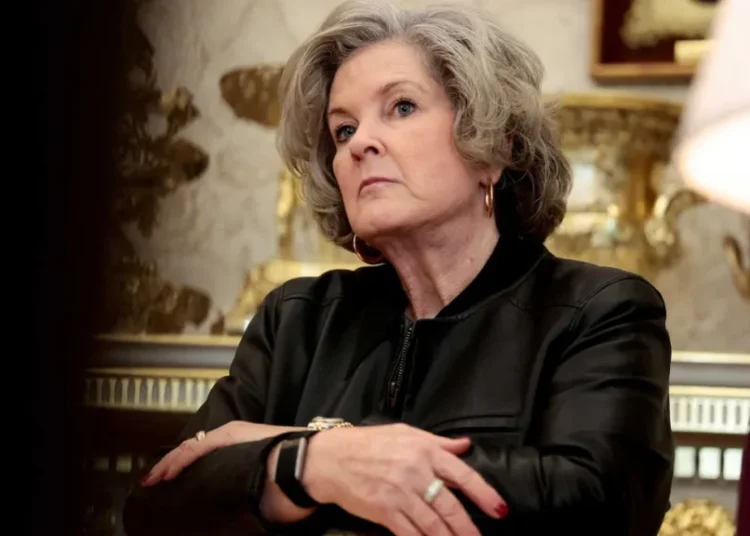
With “Teenage Sex and Death at Camp Miasma,” Schoenbrun has moved to big-screen entertainment. Kris (Hannah Einbinder), aware that she’s been hired by the studio to paper over the franchise’s rocky relationship to L.G.B.T.Q. characters, is determined to beat the studio at their own game. How? Well, it’s a little hard to tell exactly what the plan is, because Kris has intellectualized the “Camp Miasma” series, and horror more broadly, with the kind of vigor that suggests an attempt to talk around tricky feelings. (Kris’s Sundance film was titled “Jouissance,” and its third act is a remake of “Psycho” from the perspective of the shower curtain.) The strategy is to seek out Billy (Gillian Anderson, clearly cast in part as a nod to her status as a queer icon), who played the final girl in the first “Miasma” film and now lives in seclusion on the property where the first film was shot. Maybe Kris can get her to play a role in the reboot; at least, maybe she’ll have some insight into the films. Since adolescence, Kris has been obsessed with the look in Billy’s eye in her big sex scene.
After a snowy, strange drive into a small town, Kris finds Billy at the camp, living like a joyful version of Norma Desmond. Over a fried-chicken dinner, Kris explains that mostly, she’s interested in exploring “the intersection of queerness and cultural depictions of monstrosity.” But in the course of conversation, she reveals something that seems unrelated, but maybe isn’t: She feels like she’s bad at sex, and has given up trying to enjoy it, because she’s just too self-conscious.
She also seems up in her head about her relationship to the movies: She is constantly commenting on split-diopter shots and, when watching “Camp Miasma” with Billy, can’t help but comment, “This part’s transphobic.” (“Shut up,” Billy hisses.) At times, she even seems conscious that she’s in a movie, being watched by us. All this self-awareness has gotten twisted into her plan for the reboot. And Billy might be the key to freedom.
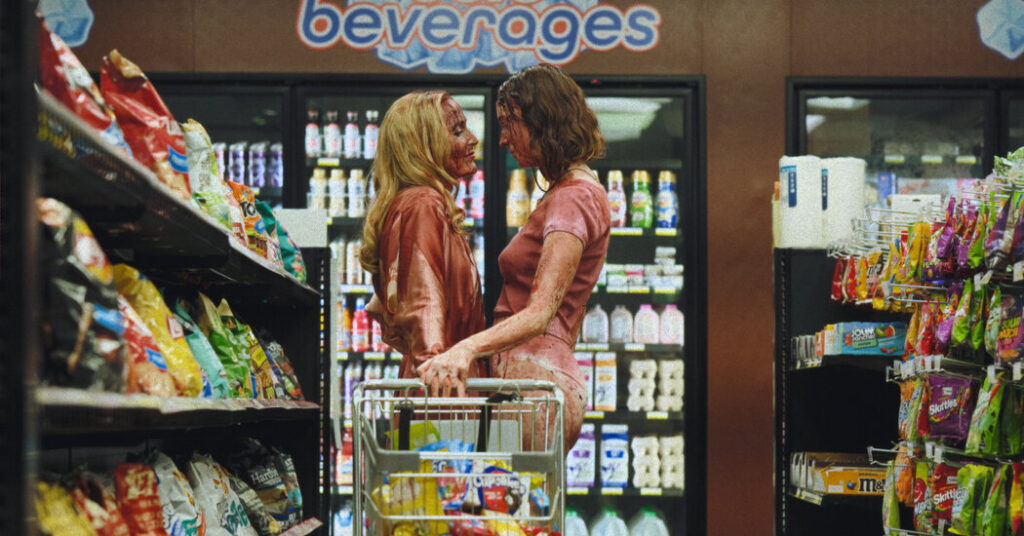
“Teenage Sex and Death at Camp Miasma” feels like it’s constantly teetering on the edge of heavy-handedness — the killer in the series, with a ceiling vent for a head, is pointedly called “Little Death” — but Schoenbrun has a delightful handle on tone, looping between melodrama, cartoonishly bloody homage and full-on fantasia. The story starts as a two-hander between Einbinder and Anderson, who crackle with chemistry, but spirals into a story-within-a-story, and then maybe an entire dream, or who knows? Schoenbrun has a knack for evoking the semi-unconscious state that you experience when you’re really locked into the screen, and start feeling as if you’re living inside whatever you’re watching. What is “real” is kind of beside the point; if it feels real, it is, even if it’s fiction. Even the backdrops of forests at the camp are intentionally, obviously paintings, a point of slippage between fantasy and reality.
This film is not really a tribute to slasher horror, though you might be tempted to think so. It’s more of a tribute to the experience of loving slasher horror, or anything else that has formed you and yet is clearly flawed in ways that run against your own beliefs. It’s about knowing you should object, and trying to decide what that means, and whether it’s OK to acknowledge the ways some private fantasies might be a little problematic, too — that you might want to imagine things you’d never want in real life. Slasher horror, especially the kind that starred teens, is about mixing desire and death in a kind of Freudian way (translated from French, “little death” is a euphemism for orgasm). “Teenage Sex and Death at Camp Miasma” takes a campy, tender approach to addressing this thorniness that comes with desire.
It’s pulled off with gusto, blood spurting high into the air and Anderson chomping jubilantly on the scenery (her pronunciation of an inquiry related to KFC dipping sauce is indelible). Einbinder takes Kris from nervously closed off to luxuriating in her newfound sense of self. She’s our proxy, of sorts: We’re meant to feel our way through this movie more than think it, and its layers get more complex as it goes on. “Teenage Sex and Death at Camp Miasma” is designed to knock the viewer off kilter with a gasp and a chuckle. There’s an exuberance to letting yourself go and enjoying the mess that lives inside.
Teenage Sex and Death at Camp Miasma Rated R for sex and death, teenage and otherwise. Running time: 1 hour 46 minutes. In theaters.
The post ‘Teenage Sex and Death at Camp Miasma’ Review: Gushing With Desire appeared first on New York Times.