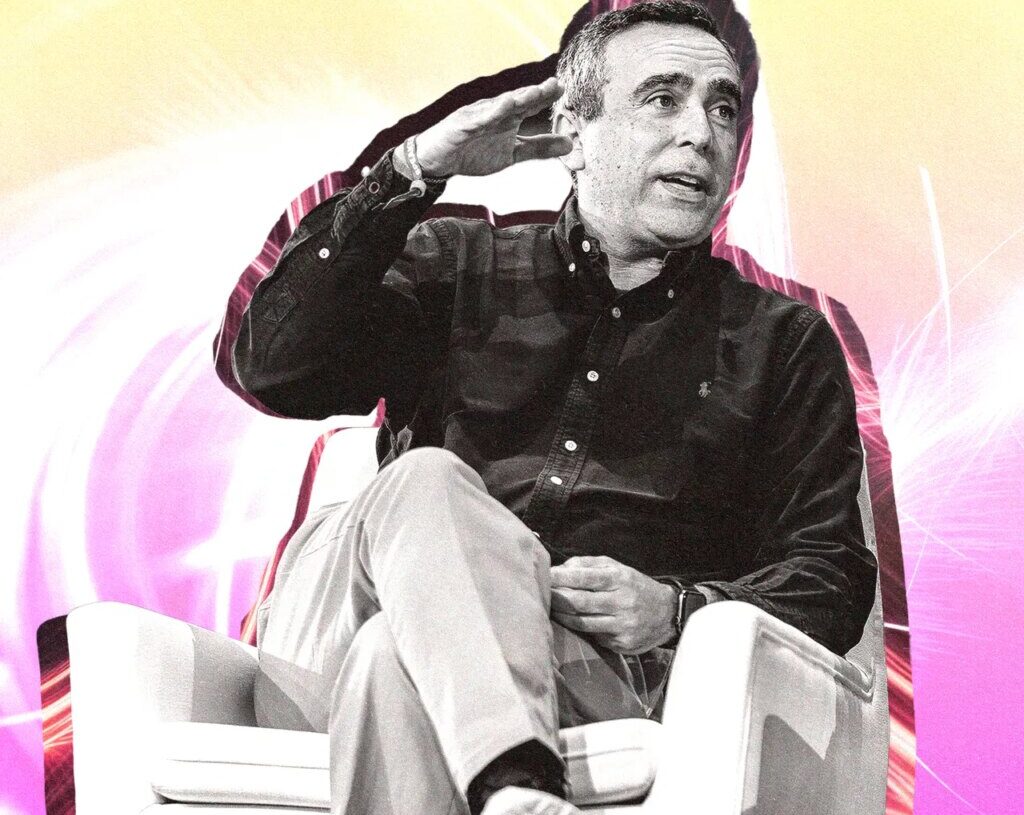
The man leading Microsoft’s multibillion-dollar scheme to build a quantum computer says he isn’t interested in appeasing scientists.
When Zulfi Alam’s team claimed last year to have effectively split an electron into so-called Majorana quasiparticles in its bid to reinvent computing, some scientists simply didn’t believe the software giant. They cited inconclusive data in Microsoft’s research papers and the lack of peer-review analysis for many of the results. But Alam, Microsoft’s corporate vice president of quantum, tells WIRED with a chuckle, “I don’t really care.”
Microsoft is one of several tech powerhouses racing alongside a raft of startups to build commercially useful quantum computers. The goal for these companies is to create computers that could solve currently impossible problems in fields from drug development to defense by exploiting quantum mechanics to process units of information, known as bits, in a fundamentally different way than how classical machines do. (There are also concerns that quantum computers will be used to crack encryption.) Companies are taking different approaches to constructing quantum bits—“qubits” for short—including using neutral atoms, charged atoms, and light.
While Microsoft’s approach is theoretically promising, Majorana particles, which were first hypothesized nearly 90 years ago, have proved elusive. The firm’s longest-running research project has also been plagued by controversies. Last year’s breakthrough announcement was met with intense skepticism by scientists, because they couldn’t rule out that other physical phenomena were driving the signals Microsoft had used to draw its conclusion. In 2021, Microsoft retracted a quantum computing paper from Nature that claimed to have found evidence of Majorana particles after independent physicists pointed out issues in the data analysis.
In June, the software giant said it had produced a qubit that’s 1,000 times more reliable than its predecessor, using Microsoft’s scientific discovery AI agent. But scientists are still questioning the Majorana work underpinning the breakthrough, as Microsoft refuses to share the raw data behind its results.
“Why should I?” Alam asks rhetorically.
He points to the commercial sensitivity of his work, which he says means the team cannot publicize the granular data that scientists are asking for. He also complains that the publishing process is too slow, pointing out that a paper published in Nature in June was based on work done two years before.
“The world has changed in two years, so this notion of having peer reviews and publications doesn’t work in this fast-moving world right now,” Alam says, while noting he believes there aren’t enough experts to speed up the process. “That’s why this paper thing is kind of boring now.”
Scientists aren’t satisfied with that explanation. “The field is growing, there are a lot of experts outside of these firms that are able to reliably assess claims and scientific work,” says physicist Trevor Lanting, chief development officer at Nasdaq-listed quantum computer maker D-Wave Quantum, which has similarly faced accusations of inflating claims.
Having claims evaluated by science is “part of the healthy process of really establishing the science and the technical foundation for the technology,” Lanting adds, “so when a company or group says they don’t have time, I would read that as ‘our results aren’t strong enough to stand up to that scrutiny.’”
Alam still doesn’t think he needs to prove his work—which he took the time to doodle a diagram of in my notebook—to anyone. Instead, he plans to win over academics with the working machine. Microsoft has said it will be able to create a useful quantum computer by 2029.
The feedback from the scientific community “motivates us to be even faster,” he says, “because our mission is black-and-white: Get this machine up and let the machine do the work.”
The post Microsoft’s Quantum Chief Doesn’t Care That Scientists Don’t Believe His Results appeared first on Wired.