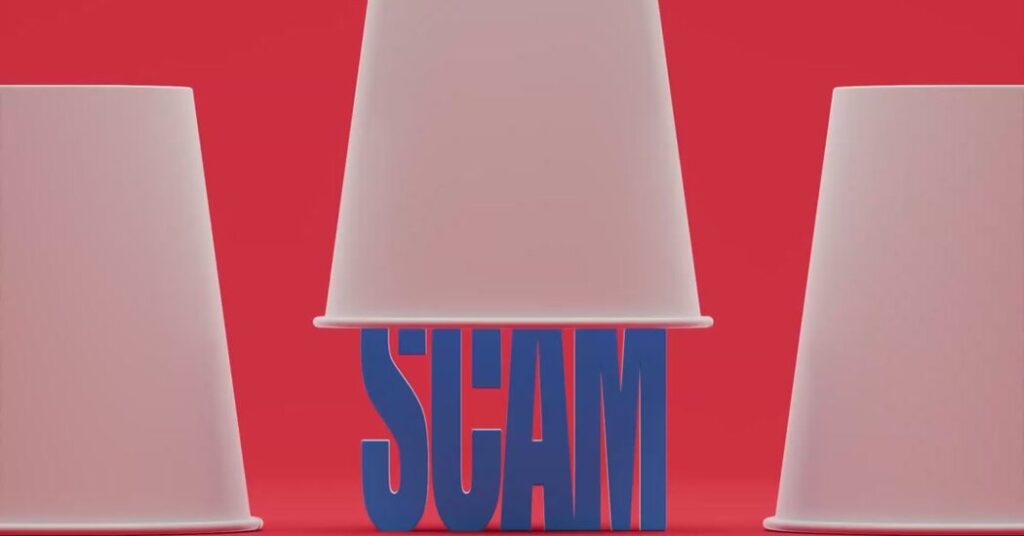
The word “scam” keeps getting more expansive.
I used to see it as suggesting some element of fraud: A specific bad actor is materially misrepresenting a transaction in order to take advantage. But that may be a bit old-fashioned. Take the phrase “alcohol is a scam,” which is widespread enough online to qualify as a meme. “Once you realize that alcohol is a scam, everything changes,” writes the podcast host Nicole Behnam; liquor is advertised with images of happiness, prestige and sophistication, “but the misuse of alcohol actually diminishes and ultimately destroys those qualities if you drink enough.” It’s “the biggest scam ever,” writes a life coach named Gretchen Kamp: “We are told” that drinking makes us glamorous and connected, but those lies once turned her into “the alcohol industry’s perfect sucker.”
You might resist this usage. Alcohol isn’t phony! It reliably affects consumers in the way they expect. It has its negative impacts on the body and on society; advertisers, naturally, emphasize the aspects that people enjoy. We have access to plenty of information about both. Someone might fairly conclude that drinking is a terrible choice, or an insidious cultural habit we should resist — but is that a “scam?”
This slippage isn’t limited to alcohol. On Reddit, somebody posts a pet peeve: customer reviews that call unsatisfying products scams. For this person, “scam” implies real deception, false advertising — not just “something that cost more than you think it’s worth.” (I tend to notice this too: These shoes are a scam. The soles wore out in barely a year of daily wear.) Elsewhere on the site, someone asks which product is “basically a huge scam but people keep buying it anyway.” Answers include bottled water, flushable wipes and insurance.
The American public has been taken with scams and scammers for years now, a fascination that swelled during the first Trump presidency — the era of Anna Delvey and the Fyre Festival, “Joanne the Scammer” and N.F.T.s, when people began to see a steadily larger share of American life as some kind of racket. Attention, though, still focused on specific characters and events, concrete grifts Hulu could make documentaries about. Now it embraces whole broad concepts. The comedian and writer Alex Falcone, for instance, makes a series of short internet videos called “Is It a Scam? Yep,” in which he explains the deception and advantage-taking embedded in all sorts of things, including the Hollywood Walk of Fame (stars are actually just purchased), computer progress bars (not reflective of actual progress, just there to placate you), Bass Pro Shops (exploit subsidies and tax incentives to build stores), manliness (lets powerful people convince you to suffer) and white chocolate (no cocoa solids, “for people whose tongues are broken”).
This version of “scam” isn’t just carelessness or hyperbole; there’s an argument embedded in it. “I am using it more liberally than I think other people do,” Falcone told me. “On purpose, because I think it’s funny. But to me, it’s any time you’re getting money from somebody using dishonesty.” He likes to apply the concept in places viewers may not have considered it, “finding a thing that you didn’t realize was tricking you.”
Falcone has noticed others doing something similar: using “scam” for any system, however legitimate, that ends with somebody profiting at your expense. Taking “this thing that I know of as a scam, like someone on the street corner with a fake Gucci bag, and connecting that to the alcohol industry,” he says, “is a very edifying metaphor.” He suspects we’re near the peak of that metaphor’s usefulness and will eventually run it into the ground. But for now, calling a disappointing purchase a scam doesn’t especially bother him. If we’re expected to see through the puffery in corporate ads, he says, we can use the same media literacy on consumers’ responses: “This person is saying that the value is incorrect. Not that this company should be in jail — just, like, don’t buy this shoe at this price.”
Part of Falcone’s interest in scamming comes from a remarkable place. His grandfather, he says, was a pitchman with traveling carnivals before settling in Atlantic City, where he’d work the piers selling decks of cards rigged for magic tricks. This happens to be the source of the word “scam” itself: All we know for sure, etymologically, is that as of the early 1960s, it was carnival slang for fleecing the public. Beyond that, speculation runs wild. Is it related to “scamp” or “scamper” or “sham?” Does it come from British dialects that used it for “the impurities in rocks and minerals?” From Irish American criminal slang? From the French “escamoter” — to evade, or to conjure away? No theory seems to come with any real evidence. Beyond 20th-century carnies, all is mystery.
So if you’re inclined to set a high bar of deception before calling things scams, you don’t have much history to appeal to; it’s a young word with obscure origins. Others will use it liberally, metaphorically, for just about any phenomenon that feels extractive. They don’t care why a company is claiming tax breaks or switching sole materials — only that you’re being coaxed toward another transaction that leaves you with less and them with more.
In the meantime, Falcone is working on a book version of his “Is It a Scam? Yep” videos. The writing is done; he’s now working with his publisher to finesse a text that their lawyers describe as “having a lot of plaintiffs.” The semantics turn out to be important. “The liberal use of the word ‘scam,’ or the artistic use of it, doesn’t tickle the legal department the same way it tickles me,” Falcone says. “They see it as, like, a very specific accusation of fraud.”
Nitsuh Abebe is a story editor for the magazine.
The post Alcohol. Manliness. Flushable Wipes. Since When Are These ‘Scams’? appeared first on New York Times.