Once again in recent days, Europe has seemed to be watching from the sidelines as its destiny is shaped by outside forces.
Would President Trump choose to restart a massive war with Iran and drive up the cost of oil? Would global warming drive wider and worse wildfires, even as several already raged across the continent? Would a sudden, unexplained surge of people across the Moroccan border into a Spanish exclave — almost all of whom were immediately sent back — divide the bloc’s leaders and fuel the far right?
It has already been a brutal summer for Europe: two wars, record heat, rising inflation and deep anxiety about food, energy and security. The back-to-back crises are prompting calls for joint action, urgent Zoom meetings between different groups of presidents and prime ministers, and political hand-wringing in parliaments from Poland to the United Kingdom.
But like so much else that has happened in the past several years, many of Europe’s challenges are out of its control.
The Iran war — a conflict that most of Europe never wanted — has disrupted life across the region, driving up the price of gas, groceries and travel. The continent’s leaders have pledged to help secure the passage of oil through the Strait of Hormuz once the fighting ends. And yet, they seem destined to hear about the next stage of the war from Mr. Trump’s social media feed.
Europe has been unable to resolve the war in Ukraine after more than four years of bloodshed. Its achievements in cutting emissions to combat climate change are overshadowed by the actions of the United States and China. The future of A.I. is being shaped largely elsewhere. Right wing populism has risen, fueled by migration, inequality and misinformation.
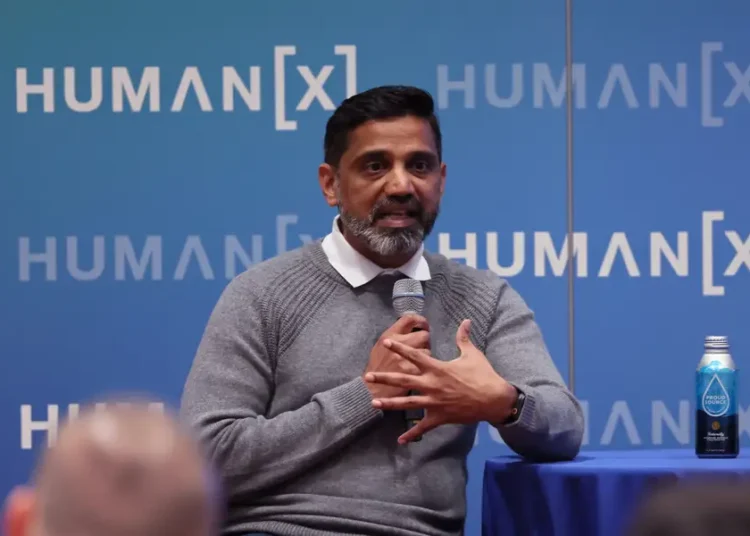
“No matter how you look at it, measure it, this is a difficult, unsettling time for Europe,” said Richard Haass, who served for two decades as the president of the Council on Foreign Relations. He said Europe is partly a victim of circumstance, but also is responsible for its lack of authority over its own fate.
“It’s not just that they’ve under-spent, but they’ve underorganized themselves when it comes to their own security,” he said. “It’s essentially a bystander, with few exceptions, to the A.I. competition. That’s not something that was done to Europe by the United States or China. That was something that was done by Europe to itself.”
On many fronts, Europe has acted.
When Russia invaded Ukraine more than four years ago, Europe and Britain immediately took steps to support Ukraine, including sending billions of dollars in aid, sanctioning Russia and welcoming millions of Ukrainian refugees into their countries through special programs.
After Mr. Trump re-entered the White House in 2025 and signaled a warmer stance toward President Vladimir V. Putin, Britain, France, Germany and other European nations formed the “Coalition of the Willing” to try to protect Ukraine’s interests in any peace deal, and worked behind closed doors to reconcile the Ukrainian and American presidents. Those efforts helped prevent Mr. Putin from cutting a deal with Mr. Trump at Ukraine’s expense.
But while the coalition has repeatedly stated that “no arrangements regarding European interests and security can be negotiated without Europeans,” that has proved difficult to enforce. Time and again, Mr. Trump has sidelined America’s allies in favor of direct — and largely fruitless — talks with either Russia or Ukraine.
“For years, European leaders have spoken about strategic autonomy and Europe’s emergence as a serious security actor,” Lesia Ogryzko, the director of the Sahaidachnyi Security Center in Kyiv, wrote for the Atlantic Council. “The coming months may provide the clearest test yet of whether those ambitions are realistic.”
They have had less influence over the U.S.-Israeli war against Iran, even though its effects are felt keenly across the continent. Europe’s vocal opposition to Mr. Trump’s decision to go to war enraged the American leader and soured trans-Atlantic relations.
In April, partly as an effort to repair relations with Mr. Trump, Britain and France announced an effort to organize a military operation that could help protect free and open travel through the Strait of Hormuz once a lasting cease-fire was agreed to. But the on-again, off-again fighting between the United States and Iran has made it too dangerous for the operation to begin. Diplomats from several European countries said the possibility that they will send military ships to help remove mines from the strait or escort tankers is essentially on hold until it becomes clear whether the war is truly on pause.
Mr. Trump has threatened in recent days to dramatically escalate strikes on Iran if the regime does not agree to open the strait. On Tuesday, the president told Fox News that Iran would be “hit very hard” if the crucial waterway was not opened very soon.
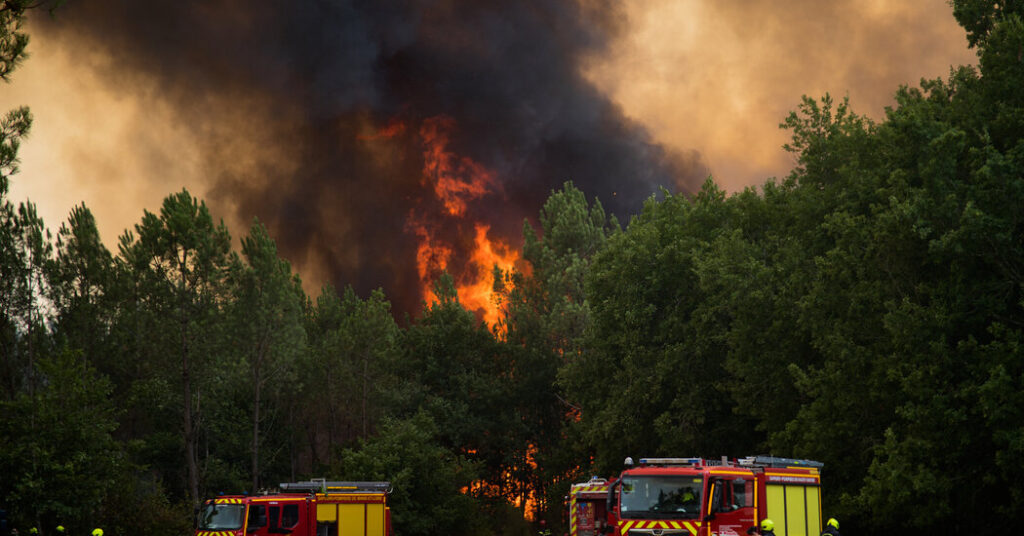
Even as the Iran crisis has continued, wildfires have been raging across Europe, where swaths of bright red on the weather maps indicated the unprecedented heat waves that have become increasingly frequent.
For most of the past two decades, European countries have mostly been in agreement about the dangers posed by climate change and have acted to cut emissions and invest in renewable energy. But since Mr. Trump’s arrival in the United States, they have been at odds with one of the world’s largest polluters, making their efforts to confront the changing climate more difficult.
Now, it is clear that countries in the region are facing the consequences of global warming, with average temperatures rising faster than on any other continent. Britons are living through the driest July in nearly two centuries. Fires have displaced more than 300,000 people in France and Spain. In Greece, firefighters died battling blazes that are yet to be fully controlled.
The surge last week of tens of thousands of people into Ceuta, a tiny Spanish territory on the North African coast, raised the possibility of a new crisis that is testing European unity on one of the region’s most potent political issues.
Pedro Sánchez, Spain’s left-wing prime minister, has become famous for his welcoming approach to some migrants, particularly workers from Latin America. But he has taken a tougher approach with people attempting to illegally cross Spain’s borders with Morocco. He cracked down on the arrivals in Ceuta quickly with his country’s military, and most were sent back over the weekend. A floating barrier is being set up near a sea wall between the two countries.
The incident exposed tensions within the European Union that have grown deeper in recent years, as far-right parties including the Alternative for Germany and France’s National Rally have seized on fear of migrants as a way to energize political supporters. Almost two dozen E.U. countries lashed out at Spain in the hours after the migrants arrived in Ceuta, with some calling for suspending the country from the bloc’s free-movement zone. Mr. Sánchez responded by calling those nations “selfish.”
Some analysts noted that the lack of solidarity with Spain at a time when it faced an external threat was an indication of the difficulty that the continent has in projecting authority on the global stage.
Mr. Haass, of the Council on Foreign Relations, said he thinks the lack of unity underscores the fundamental problem for Europe as it seeks to shape its future.
“The whole,” he said, “is much less than the sum of its parts.”
The post Europe’s Control of Its Fate Is Tested by Iran and Ukraine Wars, Wildfires and Migration appeared first on New York Times.