TRIAGE, by Claudia Rankine
Claudia Rankine writes genre-defying books that blend poetry, prose, criticism and narration to raise mirrors to the perversity of social racism, and the subtle, and not-so-subtle, ways the world maintains racial hierarchies.
Many of her books have been celebrated for documenting the toxicity and violence of white surveillance, and the ways it perpetuates Black erasure. Her book “Citizen,” in particular, felt like a revelation when it was published in 2014. It was a relief to read her explicit accounting, someone telling it like it is, and has been, with what seemed like the entire world paying attention and, perhaps, learning something.
Over the years, Rankine’s work has raised crucial cultural questions, most insistently: How much are people actually willing to see themselves, to change?
Her new book has something of an answer for that.
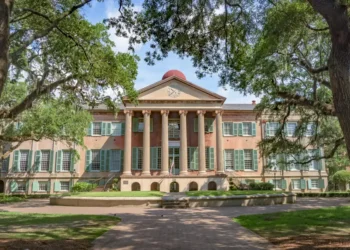
“Triage” is about a series of awakenings, both personal and political, set against the backdrop of Rankine’s formative college years. The book opens with an unnamed, middle-aged narrator (who seems to be a version of Rankine herself) looking back on her past, beginning with her arrival at an unnamed college (which seems to be Rankine’s own alma mater, Williams College), trying to shed the emotional carapace she developed after a lifetime of trauma passed down in myriad ways. (She describes herself as a “captive” and “dead on my feet.”)
One day in her second semester the narrator sees a student tearing down study abroad posters that feature women in bikinis; the act astonishes her so much so that she later compares it to the American track stars Tommie Smith and John Carlos raising their fists in protest at the 1968 Olympics. This student is identified only as “the theorist.” The theorist’s full identity remains an abstraction, but a few details are meted out: queer, gender-fluid, Palestinian. Soon after meeting, the theorist and the narrator become fast friends, inseparable in that admirable late-adolescent way.
Both are idealists who believe in changing the world, but they have sharply divergent approaches to resistance. The theorist is more direct, occupying campus shantytowns built to protest apartheid South Africa; the narrator’s crowd is more cerebral, focused, for instance, on discussions about the relationship between Yeats and the Irish revolutionary Maud Gonne.
“I remained slow to action,” she explains. She’s hampered by her memories of a series of traumatic events. “All were complex hallways to pass through before knowing when and how to say, I feel, therefore I must do.”
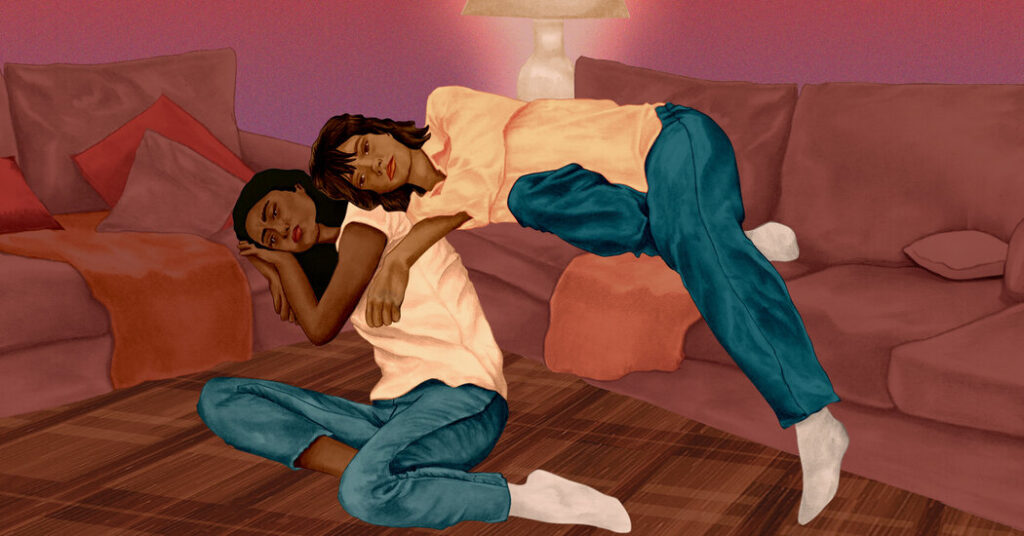
The narrator and the theorist do share one act of symbolic resistance, though: Together, they begin experimenting with collapsing, literally. Whenever they feel compelled, they fall to the ground, signaling their refusal to be complicit in an unjust world and its broken logic. Partly owing to this gesture of physical abandon, there is an undercurrent of tension to their connection so thick that I half wondered whether the third act would reveal a love affair.
In Rankine’s previous books, she has slyly relied on the second person to confront readers with her experiences, closing the narrative gap so we can better understand her struggles. Ideally, the reader comes away feeling as humiliated, objectified, assaulted and worn down by the racism she faces as she is. Here, however, Rankine deliberately steps into the first-person role, inhabiting the perspective of someone who may be doing harm, breaking an intimate bond or heart with her ineptitudes.
Most of the book follows Rankine’s narrator as she reflects on her life, her relationship with her mother and her memories of the theorist. She tries to make sense of her privileged yet vulnerable status in the world, weaving in deft art criticism as she analyzes the photographic works she has included throughout in response to escalating global crises. There is, however, disappointingly little discussion of the apt artistic metaphor on the cover, a photograph from Autumn Knight’s brilliant performance piece “La Querelle des Monstres,” in which Knight and a collaborator are bound into a conjoined sweatsuit. Imagine Rankine, or her narrator, yoked in solidarity to the theorist. Or bound to the parasitic presence of white supremacy, which despite her lifelong attempts to exorcise it is a specter that never leaves her side.
In 2022, after arranging a reunion at the Whitney Museum, the narrator and the theorist get into a conversation about the state of the world. The narrator argues that art can be a way to change people’s minds; the theorist insists that urgent matters still require direct action. Only slowly does the narrator realize that her friend is referring to Gaza.
Puzzling through this moment, the narrator revives an old habit: She collapses, intentionally, on the High Line. After a beat, the theorist helps her up. The two continue their debate about wresting back the future of the world. The narrator sees the grind as futile, stillness as significance. The theorist raises example after example of profound movements and micro-movements, even ones that “failed,” that pushed against the tides of genocide and anti-Black violence, the attacks on trans people and immigrants, the rise of fascism and so on.
The culminating conversation between the two is so elaborate, involved and painstakingly transcribed that I wondered if it was an act of autofiction. Their dialogue, even more than the nuggets of daily observations and art criticism, is reason enough to read the book. It reflects diverging world views that seem to summarize at least two positions on the moral angst of being alive today. The position the reader is meant to empathize with felt obvious to me.
In Rankine’s previous works, she interrogated the destructive power of the white imagination. All of the empathy flowed toward Rankine, exposing the costs of her labor, the sheer exhausting extraction of her efforts. In this book, the emotion flows instead toward the theorist. I found myself worrying about how much these conversations were taxing the theorist, if the disbelief, grief, depression, fatigue that Rankine has so famously chronicled were now dragging down the theorist. Perhaps this is part of Rankine’s point, and her most accessible act of protest: to be seen in all of her complications and to live with the consequences. Rankine’s act of vulnerability is powerful, admirable, even as it elicits discomfort and cringe.
The book opens with an epigraph from Rankine’s daughter, Ula: “Any attempt to name and describe our lives will always seem unstable because all language is a form of triage.” Language, the last few years have shown, is a powerful and dangerous tool that can be manipulated to serve any purpose. The book offers a clear warning about what will happen if we rely solely on language to justify or understand ourselves, and permit ourselves to ignore the bleeding emergencies before us.
TRIAGE | By Claudia Rankine | Graywolf Press | 177 pp. | $28
The post These College Friends Are Bound by Idealism but Divided by Action appeared first on New York Times.