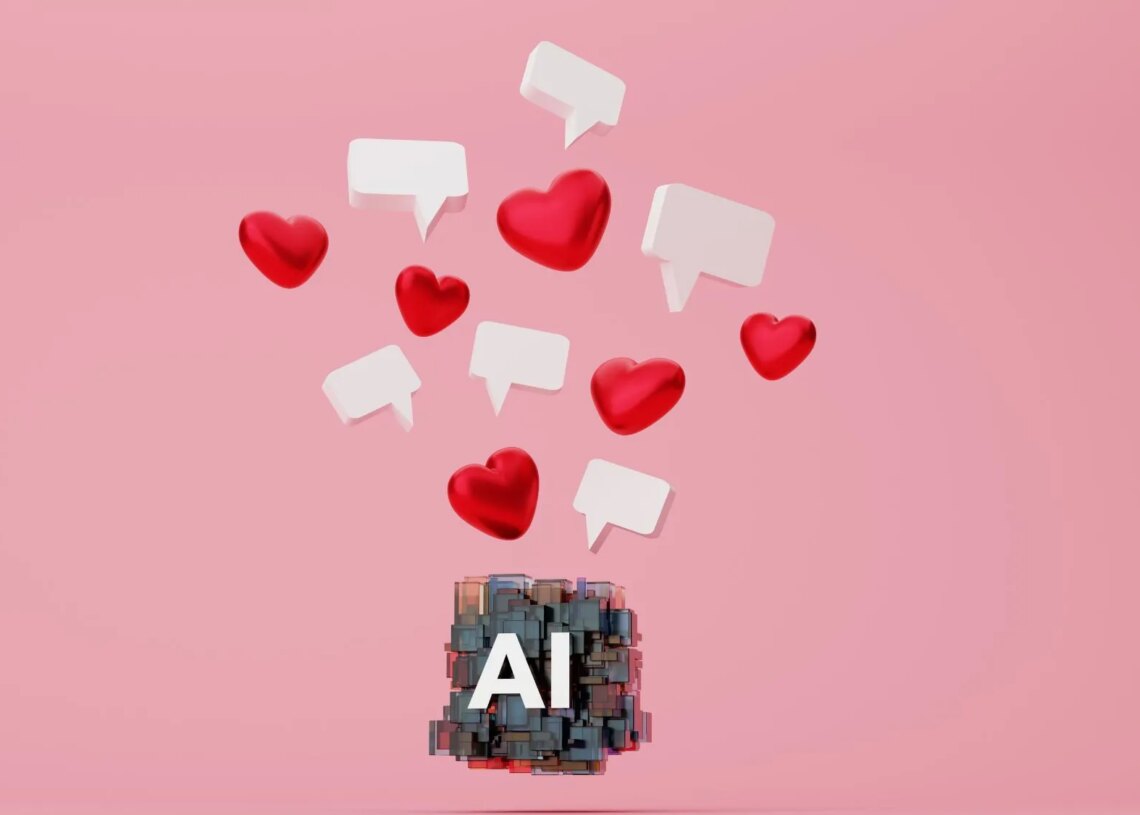
Artificial intelligence (AI) has many downfalls and concerning impacts on the environment and economy. Still, many people use AI chatbots like ChatGPT for emotional support, reassurance, and even relationship advice, unknowingly creating a potentially harmful dependency.
“It can be really powerful to get clarity on your feelings, articulate your needs, or simply vent to someone who holds space and won’t judge you. Those are important parts of self-reflection that AI can assist with,” says Claudia Johnson, MA, LMFT, CST, ABS, owner and clinical director of PNW Sex Therapy Collective. “It can help people to organize their thoughts, reflect on a painful situation, learn effective communication skills, or prep for a tough conversation. In that way, it gives people more awareness of themselves and can help them feel more emotionally prepared going into a situation.”
According to Johnson, turning to AI for support doesn’t always have negative consequences for the individual, especially if they do not have access to therapy or a healthy support system. However, there are some risks associated with doing so, particularly when it comes to navigating complex romantic relationships. Here are three reasons you shouldn’t use AI for dating advice.
1. It Undermines Real-Life Support
As stated earlier, many people vent to AI because they lack an actual support system in their own lives. However, nothing is more valuable than finding your community of loved ones who understand you, validate you, and genuinely care for you. AI is not a replacement for those connections.
“Relationships are built on repair, misunderstanding each other, negotiating when we get stuck, and learning how to stay connected even when we have differences in opinion. AI can help someone process through a conflict they had with their partner, but it can’t take the journey with them,” says Johnson. “It can’t feel disappointed by them the way another human can. It can’t offer that genuine reciprocity needed to ‘repair’ a relationship when we’ve messed up. AI can teach someone how to communicate effectively, but it can’t practice those skills with someone.”
2. It Doesn’t Understand Context
Relationships are messy, complex, and nuanced. AI cannot pick up on context that’s not actively provided by the individual engaging with it.
“If all someone shares is their side of the story, they’ll only receive advice that supports that version of events,” says Johnson. “A therapist will ask clarifying questions, dive into context, challenge assumptions, and consider other perspectives. An AI program has no motivation to delve deeper than what you ask it.”
For example, she explains, it’s common to misunderstand your partner or misinterpret something they’ve shared with you. If you’re telling ChatGPT what you assume your partner meant by that one comment they made, rather than what they genuinely said, you might receive feedback based on your own projections.
“Therapy can address all of these concerns by helping bring curiosity and self-reflection to the situation,” Johnson says.
3. It Enables Fear of Uncertainty
As someone with OCD who has a low tolerance for uncertainty, I know just how strong the pull toward AI can be, as it provides instant and consistent reassurance. However, speaking with AI can quickly become a compulsion that fuels your anxiety and obsessive thinking, especially in the context of romantic relationships.
“I’m concerned people will use AI to avoid feeling uncertain,” says Johnson. “Relationships are filled with moments of ambiguity. Discomfort. Interactions where you don’t know the ‘right’ thing to say. There will never be a magical AI program that can prepare you for every eventuality in a relationship. Part of building healthy attachments with others is learning how to sit in uncertainty with those we love.”
The post 3 Reasons You Shouldn’t Use AI for Dating Advice, According to a Therapist appeared first on VICE.