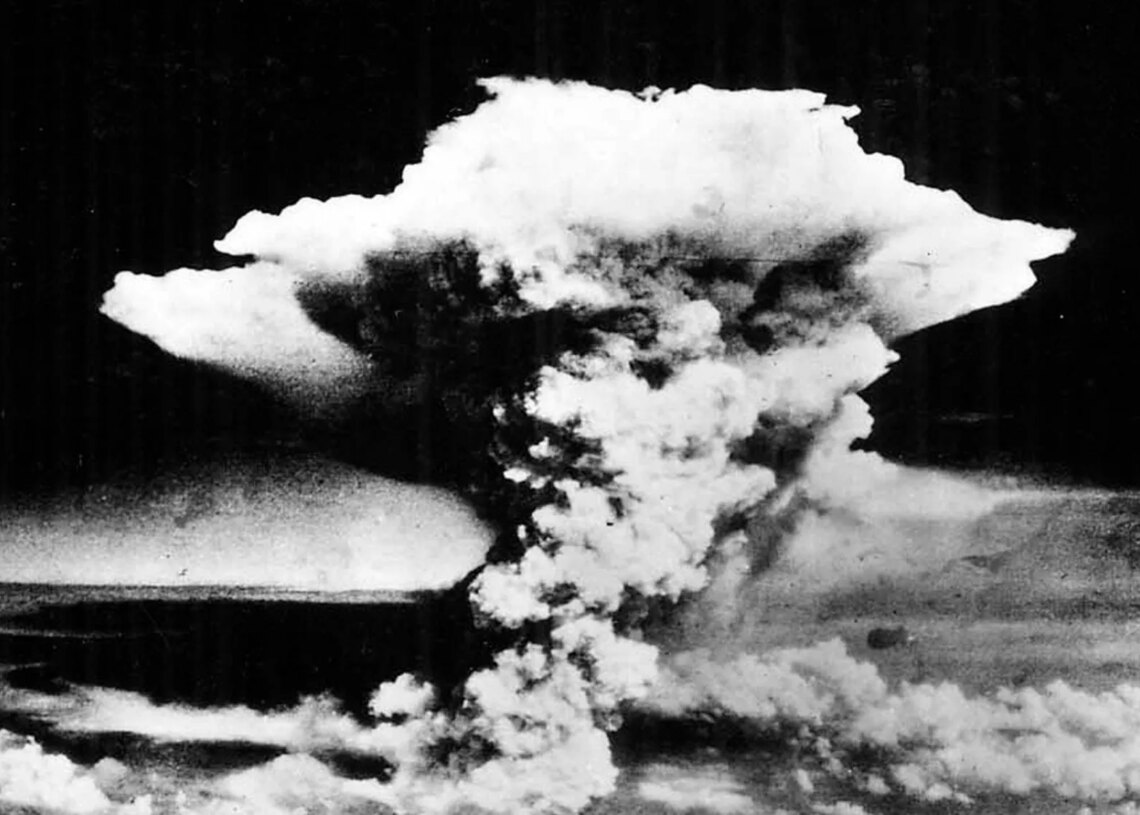
Eighty years after the United States dropped an atomic bomb on the Japanese city of Hiroshima, researchers say the detonation may have created an entirely new silicon-rich alloy.
Published in the journal Science Advances, the researchers say the microscopic material was found inside bits of fallout preserved in the sands of Hiroshima Bay.
The alloy formed in the split second after the blast, when temperatures got up to 7,000 degrees Celsius. The fireball expanded and then cooled almost instantly. All the materials from the vaporized buildings condensed into tiny glassy particles that the researchers call “hiroshimaites.” Hidden inside one of them was a previously unknown metallic alloy.
Hiroshima’s Atomic Bomb May Have Created a Previously Unknown Alloy
The alloy is made up of iron, chromium, nickel, manganese, molybdenum, aluminum, and a lot of silicon, which are all arranged in a crystal structure. This would all be highly unusual if not for the fact that earlier this year, eight different research teams found a similar crystal structure at the site of the first nuclear detonation test, the infamous Manhattan Project Trinity test. Together, these findings are forming a pattern that indicates that nuclear detonations have the capacity to create the conditions that can lead to the creation of entirely new materials.
The first thing that immediately comes to mind is a hellish future where humanity is detonating cities left and right to create materials in a profoundly horrifying logical extrapolation to this whole idea’s depressing endpoint. That doesn’t seem like a real possibility, thankfully, as the researchers suggest that these little microscopic materials could instead help improve nuclear forensics by telling us how the explosions unfolded.
Perhaps also offering some insight into how to design advanced alloys without having to level a civilization for one you can only see under a microscope.
The post The Hiroshima Bomb Created a Strange Alloy Scientists Had Never Seen Before appeared first on VICE.