Texas Gov. Greg Abbott (R) celebrated the Supreme Court’s decision on Thursday to lift a lower court’s block on his state’s newly gerrymandered map while litigation continues. “Texas is officially — and legally — more red,” he said.
In fact, the changed map does not make the state redder than it was before. It merely tips the playing field further in the GOP’s direction. Still, at least Abbott is being somewhat honest about his party’s attempt to retain power by using means other than the more onerous practice of persuading voters to support its policies. Lawmakers in other states aren’t being so transparent.
Florida state Rep. Mike Redondo (R), chair of the select committee tasked with further gerrymandering his state for the GOP, shrugged off criticism during a Thursday meeting. “Let me be very clear,” he said, “our work as a committee and as a legislative body is not directed by the work of other states or partisan gamesmanship.” The remark prompted laughter from the room.
The preposterous claim would be funny if the nationwide scramble to try rigging next year’s midterm elections wasn’t so brazen. Florida is already one of the most gerrymandered states. Republicans control 20 of its 28 House districts – about 70 percent of the seats – even though 42 percent of the electorate voted for Democrats last year. Yet many Republicans in the solidly red legislature hope they can squeeze out at least three extra seats with a more aggressive map.
Gov. Ron DeSantis (R) tried out his own head-scratching defense of the planned gerrymandering this week, arguing that it’s necessary because the state’s demographics have changed in recent years. “When did the Census stop? It stopped basically at the end of March of 2020. What’s happened in Florida since then?” he said. “We’ve had a big population [increase]. So, the districts are not well apportioned, and I don’t think that people are getting equal representation.” But the boundaries will still be devised around the numbers collected in 2020.
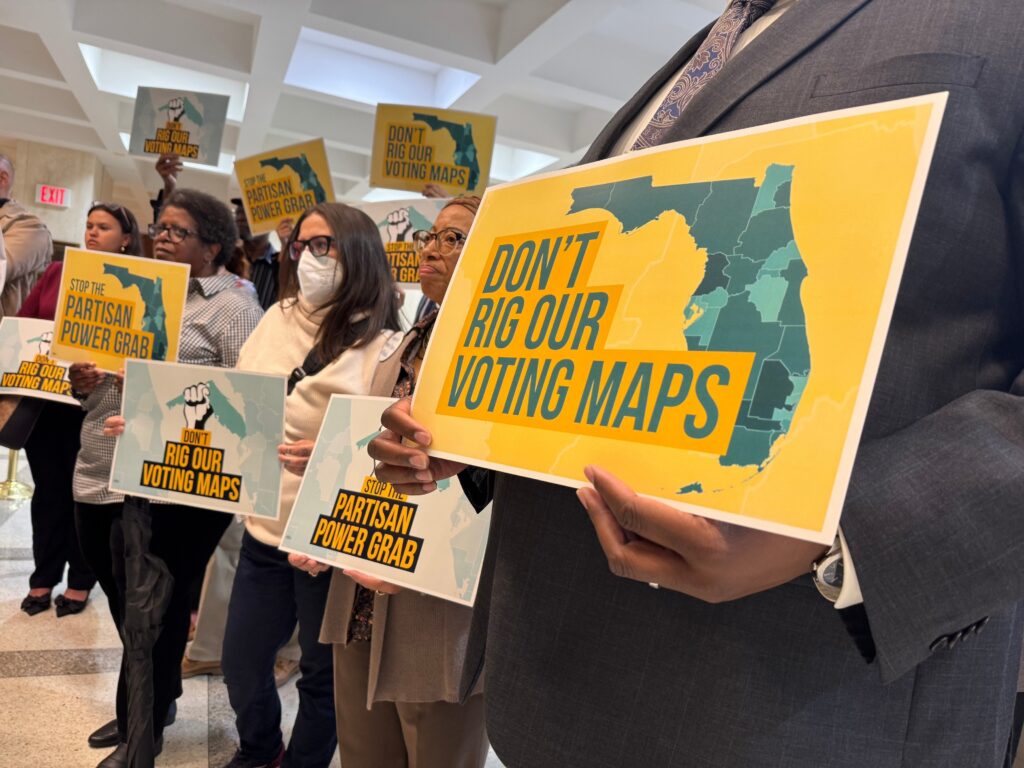
Florida Republicans might be deploying these howlers for the simple reason that their attempt to play with the state’s political borders for partisan gain is explicitly banned by the state’s constitution, thanks to an amendment that passed with more than 60 percent in 2010. They see an opening to ignore that because the state Supreme Court, whose members are all Republican appointees, has been chipping away at it. Still, the risk of litigation is high, as Florida Senate President Ben Albritton (R) acknowledged this week when he instructed his members to “take care to insulate themselves from partisan-funded organizations and other interests.”
Given how skewed the maps already are toward Republicans in states such as Texas and Florida, there’s a real risk that efforts to move more Republican voters to blue districts could backfire. If a strong Democratic wave materializes next year, those slimmer cushions might prove to be the downfall for some Republican incumbents. They call that a dummy-mander.
Altogether, 10 states have joined the fray so far. In every case, these gerrymandering gambits are about nothing more than trying to pad their party’s numbers in Congress. They are undemocratic power grabs that make government less representative. That’s just as true when Republicans do it as when Democrats follow suit in states such as Maryland and Virginia.
The post The gerrymandering doom cycle gets more ridiculous appeared first on Washington Post.