Far-right politicians across Europe on Friday seized on the chaotic scenes of migrants arriving in Spanish territory as evidence for what they see as the perils of immigration, arguing that Spain had encouraged the influx by adopting migrant-friendly policies.
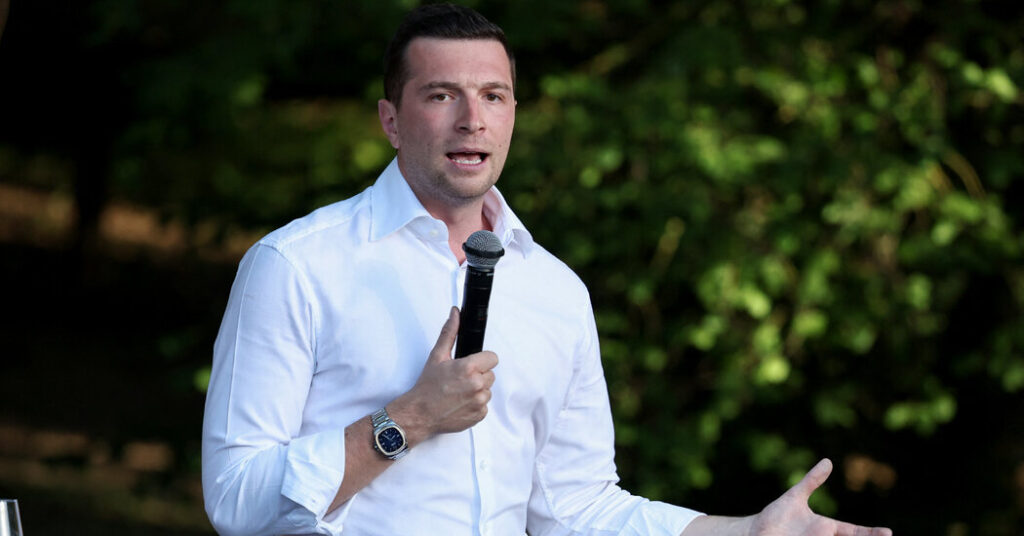
Anti-immigrant leaders — including Jordan Bardella in France, Giorgia Meloni in Italy and Nigel Farage in Britain — said the sudden arrival of at least 50,000 people to Ceuta, Spain, had been prompted by a decision by the Spanish prime minister, Pedro Sánchez, to allow more than one million illegal immigrants in Spain to apply to formalize their status.
Their interventions reflected the potency of anti-immigrant sentiment in European politics, particularly since the arrival of more than one million migrants to Europe in 2015 spurred a greater desire among voters for stronger borders and greater support for the far-right.
Mr. Sánchez is a rare outlier, cultivating an image in recent years as a pro-immigration liberal and one of the most prominent European critics of the Trump administration’s hard line against migrants. The Trump administration also on Friday blamed the events at Ceuta on “far-left, globalist policies, including enabling mass migration.”
Several people who entered Ceuta on Thursday said they were able to come to Spain because the authorities in Morocco, which borders Ceuta, relaxed border controls.
But Mr. Bardella wrote on social media: “By regularizing hundreds of thousands of illegal immigrants, the socialist prime minister of Spain, Pedro Sánchez, has opened the doors of Europe.”
Sarah Knafo, a French far-right member of the European Parliament, wrote that the migrants were not “desperate people drifting aimlessly with the wind,” but “rational” and “connected” people who “weigh the benefits they will gain from our generosity.”
Giorgia Meloni, the prime minister of Italy who has taken a hard line against immigration, said the images from Ceuta were “shocking and demonstrate, once again, that uncontrolled illegal immigration poses a real threat to the security of Europe’s borders.”
She said that Italy was considering the suspension of an agreement with Spain that permits free movement between the two countries. Her foreign minister, Antonio Tajani, blamed Mr. Sánchez’s regularization initiative for incentivizing migration to Ceuta — prompting the Spanish foreign minister, José Manuel Albares, to summon Italy’s ambassador to Madrid.
Centrist leaders across the continent also rushed to project a sense of agency. It was a reflection of how mainstream politicians in Europe have increasingly tried to position themselves as bulwarks against unauthorized migration since 2015, partly to avoid being outflanked by the far right.
Ursula von der Leyen, the head of the European Union’s executive arm, wrote on social media that the scenes from Ceuta were “unacceptable.”
“We cannot allow anyone to come to our Union without abiding by our rules,” Ms. von der Leyen wrote, saying that her administration would reestablish control over the border and calling for the swift repatriation of the arrivals.
On Friday morning Laurent Nuñez, the French interior minister, said he had issued orders to “immediately step up controls at the Spanish border” and deployed a rapid intervention border patrol to strengthen inspections.
The post Far-Right Leaders Seize on Ceuta to Bolster Anti-Immigrant Stance appeared first on New York Times.