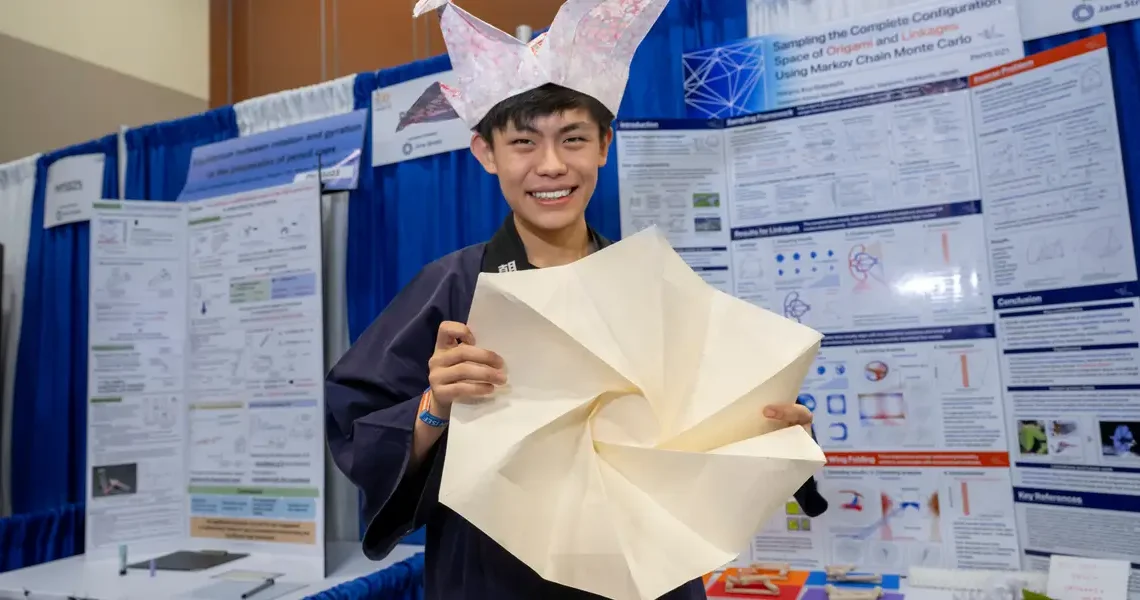
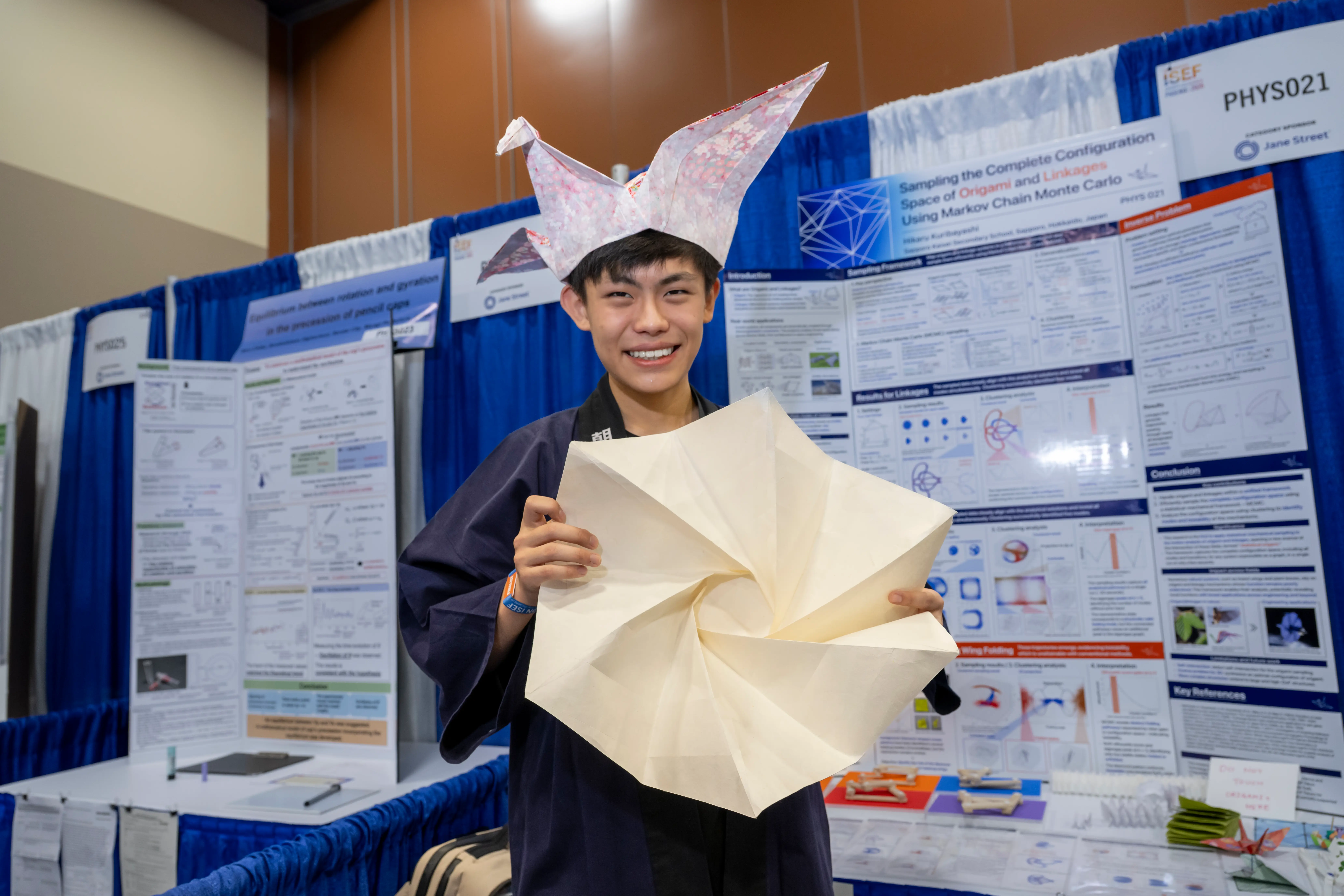
Growing up on Japan’s northernmost island allowed Hikaru Kuribayashi to immerse himself in nature, where origami patterns are everywhere.
“Imagine a tiny ladybug,” Kuribayashi, 18, told Business Insider. “That ladybug actually uses origami patterns to fold and expand its wings.”
Leaves. Flower petals. Insect wings. He’d often notice the intricate patterns while traversing the Hokkaido prefecture’s sprawling forests and mountains. Kuribayashi, however, believed origami’s influence on nature could reach beyond artistic inspiration.
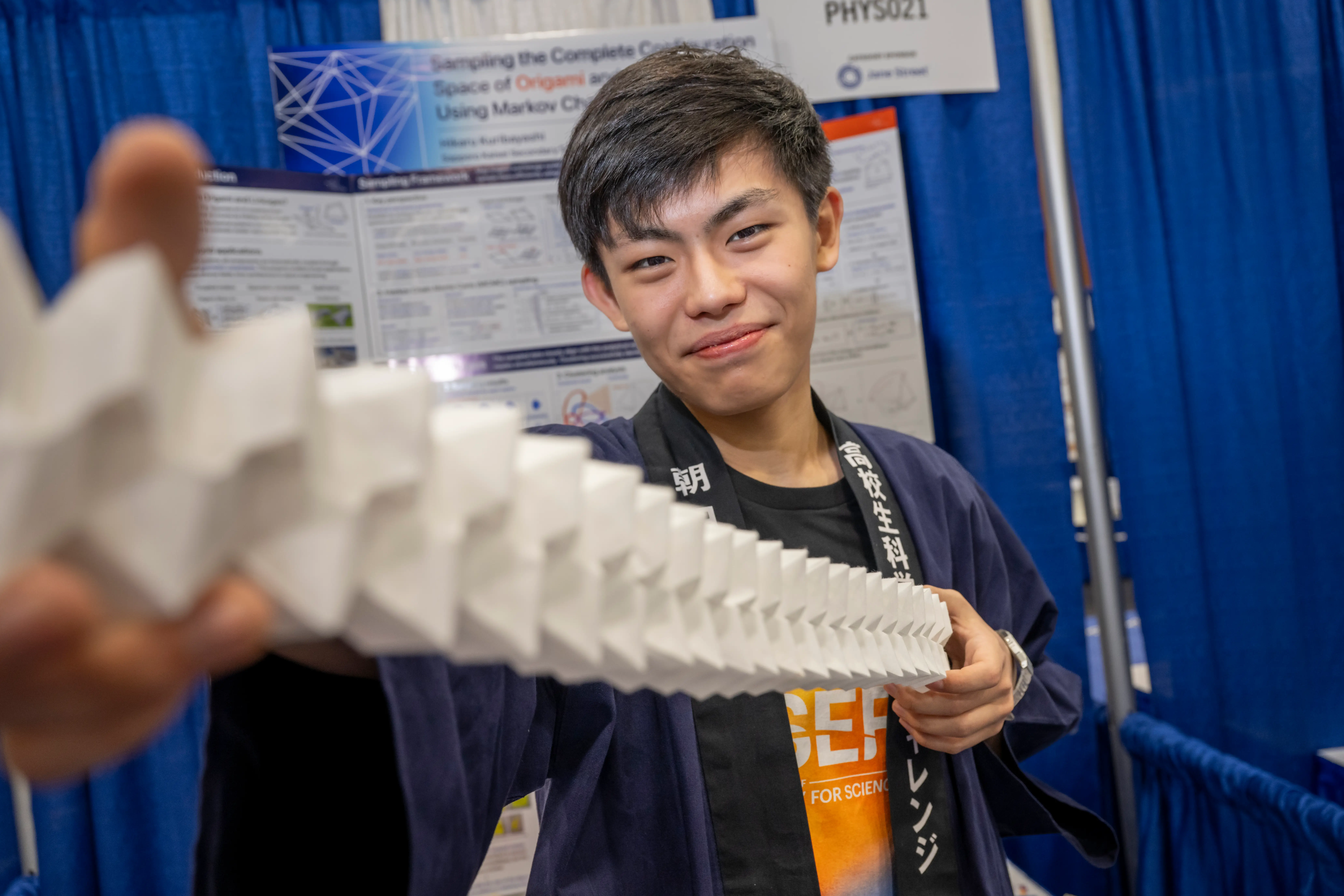
“Origami and linkages have been used in many, many other fields,” Kuribayashi said. “For example, some satellites in orbit use origami solar panels.”
That’s why, in 2025, Kuribayashi combined his passion for origami and science to create a simulation program that can predict complex folding outcomes. His research won the $100,000 top prize at the 2026 Regeneron International Science and Engineering Fair, beating out over 1,700 other high school students from across the globe.
“I still can’t believe I took top prize because I have been dreaming about participating in ISEF since I heard of it in eighth grade,” he said.
Beauty in nature
Kuribayashi became enamored with origami after his grandmother taught him as a child, but his interest in science didn’t crystallize until he became a high school freshman. At the time, an older schoolmate who attended the International Science and Engineering Fair made his passion for the violin the basis of his research.
“My senior analyzed the beauty of the violin, but in my case, what should I analyze? What kind of beauty am I interested in?” Kuribayashi said.
Ultimately, Kuribayashi chose the beauty of nature.
Kuribayashi spent about 6 months developing the simulation program with Julia, a programming language similar to Python. Although he learned how to code in middle school, Kuribayashi said his research was tough. The program uses Markov Chain Monte Carlo, an algorithm that generates sample scenarios and uses them to estimate probable answers.
“I used very difficult algorithms,” Kuribayashi said. “I actually participated in a lab at the University of Tokyo. The professor gave me a lot of material that university students use.”
Testing the program introduced more hurdles.
“I tested this program a lot of times, but since my programming skills aren’t professional, I had all these bugs I needed to fix,” Kuribayashi said.
Some people now rely on AI to write code, but Kuribayashi said that the technology can still make mistakes and often requires a human fact-check. So, he opted to do everything himself.
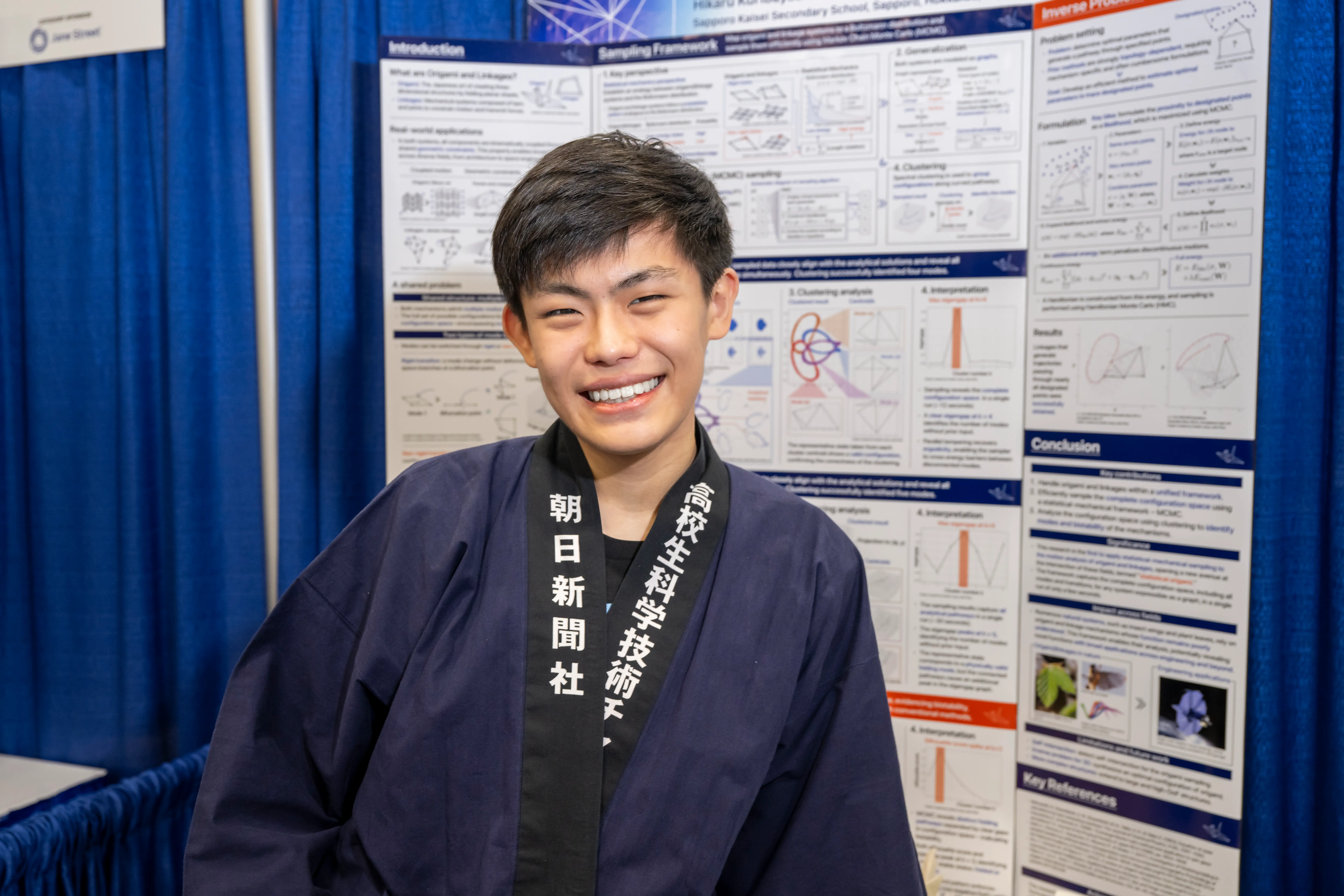
“By analyzing natural origami, which is very efficient, we can take and find a new pattern,” Kuribayashi said.
Kuribayashi said new patterns can be used in engineering applications, like creating solar panels that fit into compact spaces and portable emergency shelters.
“Since there are a lot of earthquakes or tsunamis in Japan, we need to make objects that fold into very tiny spaces,” Kuribayashi said. “We need to bring shelters really quickly, but shelters need to be very stiff and very big. This is where origami can be used.”
A six-figure scholarship
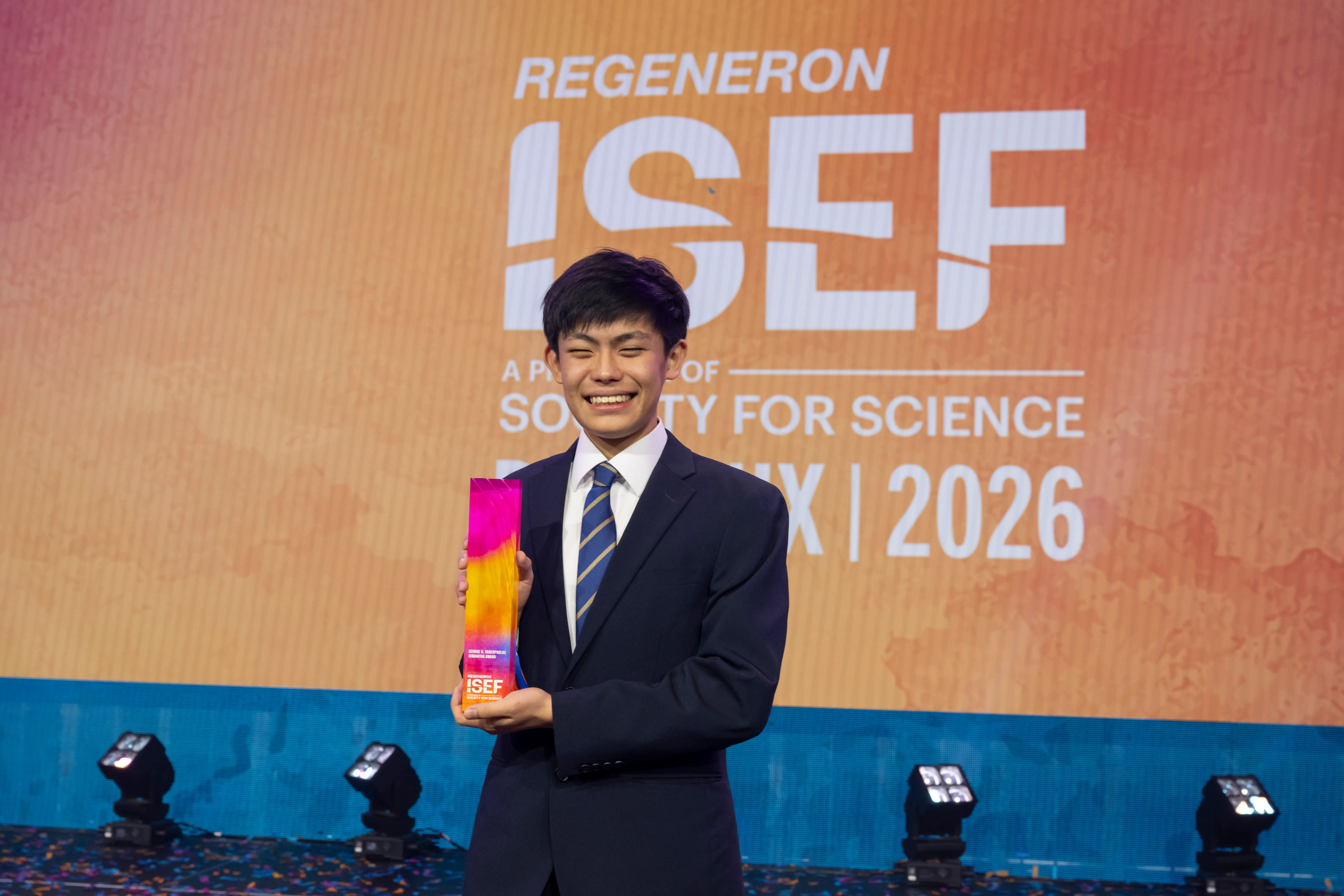
For Kuribayashi, winning the George D. Yancopoulos Innovator Award at the Regeneron International Science and Engineering Fair was a dream. Regeneron Pharmaceuticals, Inc. and Society for Science hosted the competition, which took place in Arizona this year. The finalists were awarded more than $7 million in prize money.
“I have a lot of appreciation for my family and global teachers. They really helped me to conduct this research,” Kuribayashi said. “When I got back from the US, my family and grandparents celebrated. That was really, really nice.”
Kuribayashi said he appreciated the opportunity to meet other young people from around the world interested in science.
“I talked with many, many finalists in ISEF,” Kuribayashi said. “Local finalists have a huge passion for their research, and that was really, really fascinating. By participating in this kind of international competition, I could interact with new perspectives.”
Read the original article on Business Insider
The post How this 18-year-old’s love of origami helped him win a $100,000 at a science fair appeared first on Business Insider.