When the far-right Romanian politician Calin Georgescu was arrested early this year, during a failed run for president that led to accusations of campaign fraud, he made an important phone call.
The man on the other end of the line — Mario Nawfal — wasn’t a lawyer or political adviser. He wasn’t even Romanian. But he offered Mr. Georgescu something few others could: the chance to get his story spread by the world’s ultimate influencer, Elon Musk.
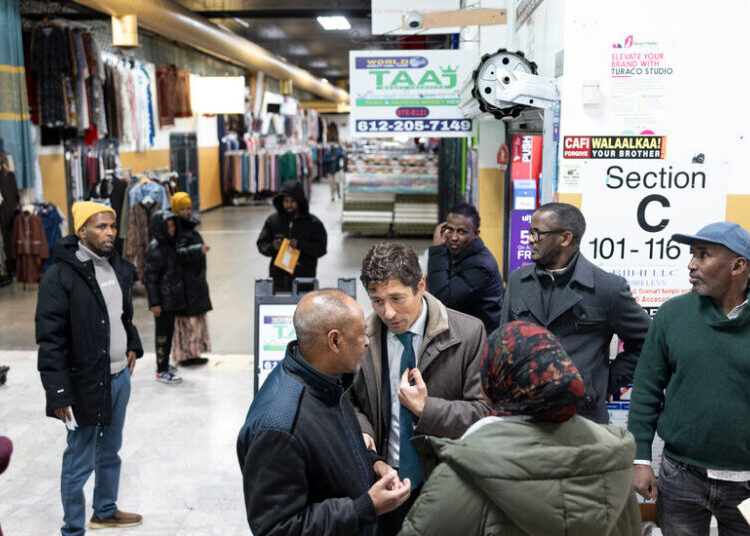
“Mario, the police is here arresting me on the streets,” Mr. Georgescu said in a call that Mr. Nawfal later posted on X.
Before this year, Mr. Musk had never mentioned Mr. Georgescu on X, the social media platform he owns. But over two months starting around the time of the February arrest, Mr. Musk replied to or recirculated at least 15 posts about the politician, most of them originated by Mr. Nawfal.
Collectively, those posts racked up more than 100 million views and helped transform Mr. Georgescu, at least momentarily, into a darling of the global right.
The phone call had paid off.
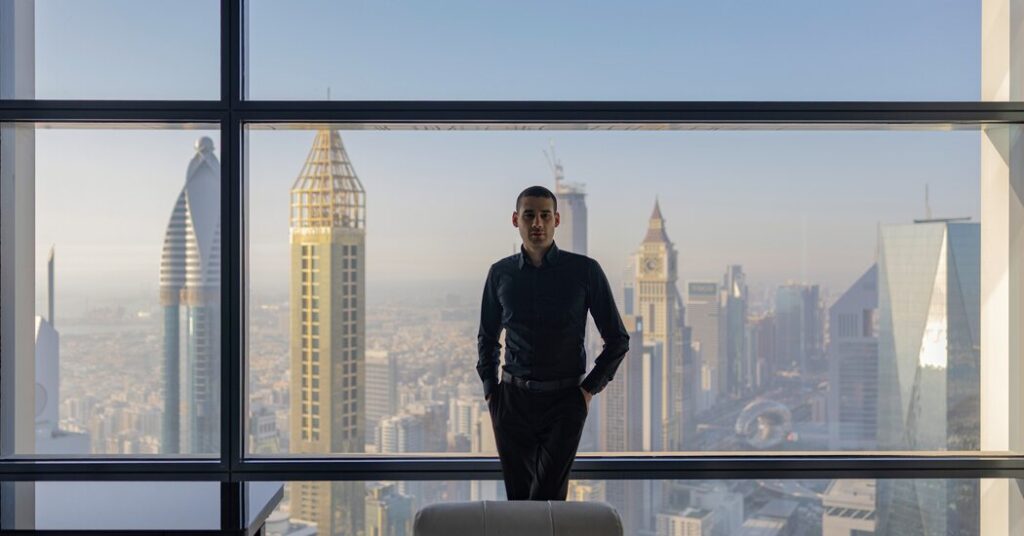
Nobody has gotten more online engagement from the world’s richest man over the past several years than Mr. Nawfal, a baby-faced Lebanese Australian influencer and entrepreneur who lives in Dubai in the United Arab Emirates. Since last year’s U.S. presidential election, Mr. Musk has reposted, shared or commented on posts originating from Mr. Nawfal’s X account 1,311 times, according to an analysis by The New York Times, more than any other account.
Mr. Nawfal’s output, which in great part mixes reverential praise for Mr. Musk and his companies with sensationalized recaps of major news events, is far from unique; social media is riddled with accounts pumping out nearly indistinguishable content. Yet it is his account that Mr. Musk — for no specific reason the billionaire has ever enunciated — has elected to highlight above all others.
Mr. Nawfal, 36, has recognized that attaching his brand to the single largest account on X, like a digital remora feeding on likes and reposts, is the best business decision he or any other online influencer could possibly make. For him, the content is entirely subordinate to the attention it generates.
“Mario molded himself to be exactly what Elon wanted out of his creators,” said Chet Long, a former employee of Mr. Nawfal’s.
Until recently, Mr. Nawfal was best known, when he was known at all, for his luxurious lifestyle, his relentless promotion of crypto products and a series of claims of wrongdoing. In recent years, critics and former colleagues have accused him of using bots to artificially elevate engagement on his X account, of ripping off investors with misleading sales tactics, of having an uncomfortably close relationship with Russia and of being among the web’s most frequent spreaders of misinformation.
Yet he has used his talent for capturing Mr. Musk’s eye to build a following of 2.6 million on X — and to turbocharge his cryptocurrency marketing firm and media brand, according to hundreds of pages of documents from Mr. Nawfal’s companies obtained by The New York Times and more than two dozen interviews with former employees, associates and clients.
Mr. Nawfal’s companies, like his own social media account, are finely calibrated to capitalize on that attention. His media firm, Citizen Journalism Network, produces audio and video news shows that feature interviews with right-leaning political figures such as President Javier Milei of Argentina and Defense Secretary Pete Hegseth. Mr. Musk regularly reposts and comments on those interviews on X.
Those activities work in concert with his crypto firm, International Blockchain Consulting Group, or IBC, which Mr. Nawfal has said is his primary source of income. The firm touts Mr. Musk’s frequent social media engagement with Mr. Nawfal to help sell six-figure marketing deals: Would-be clients are encouraged to believe that they, too, can expect similar attention from the world’s richest man.
A confidential company sales deck from late last year mentioned Mr. Musk no fewer than 20 times. Those references included screenshots showing the billionaire promoting Mr. Nawfal’s posts and appearing on his program that streams on X, “The Roundtable Show.” One post from Mr. Musk in the deck referred to Mr. Nawfal’s commentary on a failed coup against President Vladimir V. Putin of Russia in 2023.
“Best coverage of the situation I’ve seen so far is from Mario,” Mr. Musk wrote.
Over three interviews, two via videoconference as he reclined in bed in his Dubai penthouse, Mr. Nawfal said all of the past accusations about him and his business practices were “fabricated” but declined to discuss his relationship with Mr. Musk. He would not even discuss whether the two men had a real-life relationship — or had ever met in person — and Mr. Musk and X did not respond to requests for comment.
But Mr. Nawfal made it clear that he wanted to stay on the good side of his biggest benefactor.
“One thing I’ve learned, I don’t comment on anything related to Elon,” he said.
‘Is That the Real Elon Musk, Guys?’
On Nov. 12, 2022, Mr. Nawfal was hosting “The Roundtable,” a live audio program about crypto that he created on the social network that was still called Twitter.
The episode focused on the bankruptcy filing by the giant FTX crypto exchange the day before and the resulting panic in the industry. Tens of thousands of people had logged in to listen. Then someone new entered the chat.
“Is that the real Elon Musk requesting to speak?” Mr. Nawfal asked excitedly. “Is that the real Elon Musk, guys?”
It was a watershed moment for Mr. Nawfal, who immigrated to Australia from Lebanon at a young age, dropped out of college and started a company that sold blenders and juice makers. The firm, Froothie, which is still in business, reached eight figures in annual sales in less than two years, Mr. Nawfal said, and by 2016 he had moved to Dubai for what he described as tax reasons.
After Froothie, Mr. Nawfal founded companies that sold, among other things, hoverboards and aromatherapy diffusers. He also built up a small but dedicated following on social media for his passion for bachata, the sensual Latin dance. In 2017, he incorporated IBC, which he calls an “incubator” that has helped over 600 start-ups launch cryptocurrency-related products like memecoins and nonfungible tokens, or NFTs.
IBC’s main business is selling marketing packages to start-ups hoping to publicize their crypto products, according to five former employees, who spoke on the condition of anonymity because they had signed nondisclosure agreements. Sales materials reviewed by The Times show IBC offering promotion by Mr. Nawfal in exchange for cash or equity, an arrangement akin to advertising or product placement.
Key to that proposition was expanding Mr. Nawfal’s reach on Twitter, a preferred platform for crypto investors: The more people who followed him, the more attention he could potentially deliver to clients.
By the fall of 2022, IBC was charging customers $10,000 for a marketing package that included “three tweets from Mario,” an unspecified number of “shout-outs” — name drops by Mr. Nawfal on “The Roundtable” — and the chance to “pitch your product summary for 90 seconds” on the program, company documents show.
IBC’s staff worked hard to build up Mr. Nawfal’s following, which had reached 100,000, according to internal company messages and former employees. Among other efforts, the staff focused on luring prominent guests to “The Roundtable,” one of the more popular programs using Twitter’s interactive audio feature, Spaces. Employees sent out thousands of invitations and scored appearances from the crypto entrepreneur Changpeng Zhao, who later pleaded guilty to money laundering; Kim Dotcom, an internet activist; and other major tech figures.
Mr. Musk was on an entirely different level.
Just two weeks earlier, the billionaire had completed his purchase of Twitter, and he had its second-largest account, with around 115 million followers. (He now has more than 229 million.) Every one of his posts, reposts or likes was intensely scrutinized by legions of fans. His endorsements moved markets. Former IBC employees recalled that they had tried repeatedly to get Mr. Musk’s attention, with no luck until the marathon “Roundtable” episode about FTX.
In total, Mr. Musk stayed on the show for about 10 minutes, talking about crypto but also his vision for Twitter, which he would soon rename X. Later that day, he replied to a post by Mr. Nawfal for the first time, referring to “The Roundtable” as “Twitter at its best.”
The impact was instantaneous. In a matter of weeks, Mr. Nawfal’s following tripled, breaking 300,000. A sales deck from that December showed that the cost of IBC’s entry-level marketing package had jumped as well, to $25,000.
And that same month, Mr. Nawfal sent a direct message to Mr. Musk, according to a screenshot that was shared with The Times and metadata that The Times viewed. “Hey Elon, thanks again for all your support!” the message reads. “Anyone from Twitter I can speak to re support (not financial) to scale the show (and spaces in general)?”
Mr. Nawfal said this week that the message was not authentic, claiming it could have been created by artificial intelligence.
In any event, Mr. Musk continued engaging with Mr. Nawfal, amplifying his political posts or those praising the billionaire’s companies and popping up periodically on “The Roundtable.” By April 2023, Mr. Nawfal had reached 432,000 followers and the price for IBC’s marketing package had soared to $60,000, a third sales deck shows. The price for a deluxe package, with more posts and shout-outs, was $190,000.
In an interview on an internet marketing podcast late last year, Kalynd Dougherty, who according to his LinkedIn profile worked as a “senior growth hacker” for IBC until last March, said the company at the time charged $250,000 or “even more” to sponsor “The Roundtable.”
By then, Mr. Nawfal’s following on X had surpassed two million.
Mr. Nawfal said on Thursday that he was “eternally grateful” for Mr. Musk’s attention, but that some of the greatest increases in his following had come from content the billionaire did not actively promote.
“One should not discount how diversified our business is, and the huge engagement we receive from many other world leaders and corporate titans,” he said.
‘What Elon Wanted’
Until late 2022, Mr. Nawfal largely avoided politics.
Then he took a cue from Mr. Musk, who soon after buying Twitter had started amplifying right-leaning political content, disparaging traditional media and promoting accounts that delivered news primarily on his platform.
“That’s when Mario pivoted from crypto to media,” said Mr. Long, the former employee, who served as a frequent “Roundtable” co-host and left his job as head of security at IBC at the end of 2022.
In short order, Mr. Nawfal began hosting “Roundtable” episodes focused on political topics, starting with one discussing the release of the so-called Twitter Files, a project initiated by Mr. Musk that involved disclosing internal company messages about alleged censorship on the platform under its prior ownership.
That episode drew 2.6 million listeners and participants, including Mr. Musk. Soon, the crypto personalities who had dominated “The Roundtable” gave way to politicians and pundits like Robert F. Kennedy Jr. and Tucker Carlson.
An episode that Mr. Nawfal hosted in December 2023, featuring Mr. Musk, the right-wing conspiracy theorist Alex Jones and the manosphere influencer Andrew Tate, drew 15 million listeners. Six months later, Mr. Nawfal’s interview with the white supremacist Nick Fuentes attracted more than two million people.
As Mr. Nawfal’s following rose, he began hiring researchers and ghostwriters, spread across time zones from Canada to the Philippines, to compose the vast majority of his posts and make sure his account was always active and drawing engagement.
“I’m too busy,” Mr. Nawfal explained, noting that he has a rotating crew of at least four people managing his X account 24 hours a day and, at times, putting out as many as 300 posts an hour. But he has lately made an effort to read most of the posts that go out under his name, he said, “to make sure the integrity is there.”
In 2023, Mr. Nawfal incorporated the Citizen Journalism Network to oversee his rapidly expanding media efforts. About 80 people work for CJN, with an additional 120 or so on IBC’s crypto marketing efforts, he said. Pay varies widely; a business development officer in North America hired early this year was offered just shy of $9,000 a month, plus commission, an employment contract reviewed by The Times shows. Others make far less. Three former employees in Venezuela told The Times that they were paid $3 an hour to work for Mr. Nawfal.
In the spring, Mr. Nawfal also began using artificial intelligence to write some of his posts, and in July he promoted a service that gives subscribers access to an A.I. tool that will write “viral posts” for them. “I built the tool I wish I had from day one,” he posted.
On Thursday, Mr. Nawfal said the project was not his but from a company that IBC had “incubated,” adding that he was no longer involved with it.
His account is frequently accused of spreading false or unverified information. In mid-June, for example, it posted a video that it said showed emergency workers flooding a street in Tel Aviv after missile attacks from Iran. In fact, it was a video of immigration protests from the previous week in Los Angeles. Another post, during last year’s presidential race, falsely suggested that Kamala Harris might be “ineligible to serve as president.”
Mr. Nawfal said that the rate of errors for his account had decreased of late and that, relative to his high volume of posts, it was quite low.
He has also frequently been accused of juicing his engagement with bots.
Cyabra, a social media intelligence company based in Israel, found what it called “significant presence of fake profiles attempting to boost visibility and manipulate narratives.”
Over one month this spring, Cyabra analyzed more than 7,000 accounts that commented on Mr. Nawfal’s posts and identified 30 percent as “fake.” It also determined that two-thirds of the accounts engaging with a separate X account for “The Roundtable” were likely bots, far above “the typical 7 to 10 percent fake engagement rate seen across general online discourse.”
Mr. Nawfal denies ever using bots, and in 2023 he filed a defamation suit against a YouTube creator in New Hampshire who had posted a series of videos alleging that Mr. Nawfal had artificially grown his following and taken part in crypto pump-and-dump schemes. The suit was settled for undisclosed terms.
But internal text messages posted online appear to show his staff negotiating with a firm in mid-2022 to create a “Mario Nawfal Growth Strategy” that would boost his Twitter following to 100,000 using “inorganic engagement” and increase “Roundtable” audiences with a “Twitter space hack.”
“They look good, huh? :),” the outside firm’s representative wrote, referring to the inauthentic accounts.
“Not bad yeah,” responded the chief operating officer at IBC, Ibrahim Wazneh. “I like.”
“We spend a lot of time making sure they all look unique/real/etc.,” the representative added.
Mr. Wazneh did not respond to a request for comment. Mr. Nawfal acknowledged that IBC had hired the firm for three months but said the service had not used bots. “We were very kosher, and nothing was done with artificially inflating our numbers,” he said.
‘Insane Access’
When he took Mr. Georgescu’s post-arrest phone call, Mr. Nawfal was in a hotel room in Belarus, having just concluded a rare in-person interview of the country’s president, Aleksandr G. Lukashenko.
Three days earlier, Mr. Nawfal had introduced a video news format show on X; his staff had scrambled to make it from scratch in just a few weeks after Mr. Musk posted, “Anyone want to create a hard-hitting show on X called 69 Minutes?”
The show, which Mr. Nawfal named “69X Minutes,” is centered on interviews with high-profile figures. In the first episode, Mr. Nawfal spoke to Robert Fico, the prime minister of Slovakia, an ally of Mr. Putin who portrayed Russia as the victim of the war in Ukraine. Since then, guests have included Russia’s foreign minister, Sergey V. Lavrov; Prime Minister Viktor Orban of Hungary; and President Paul Kagame of Rwanda.
“It’s just insane access,” said Eric Bolling, a former Fox News and Newsmax host who is a frequent contributor to “69X Minutes.” “I can’t believe some of the people they can get in the room with.”
Mr. Nawfal said on Thursday that “69X Minutes” had been “paused” for the moment. He added that he had recently started a public relations firm, New Media Limited, which works for corporate clients to produce paid campaigns leveraging his contacts in social media.
That access has not gone unnoticed.
This spring, NASK, a security institute run by Poland’s Ministry of Digital Affairs, began investigating possible ties between Mr. Nawfal and the Russian government after he interviewed two members of Poland’s far-right Law and Justice party. Researchers grew concerned about his friendly contacts with allies of Mr. Putin, his access to Russian government officials and his tendency to post content sourced to Russian state media.
A review by The Times found that Mr. Nawfal’s account had cited RT and Tass, prominent Russian media outlets, more than 1,200 times and that Mr. Musk had amplified dozens of his posts touching on Russia and related issues in the past year. To a post by Mr. Nawfal noting that Mr. Lavrov had arrived in Saudi Arabia for talks on the war with Ukraine, Mr. Musk responded, “This is what competent leadership looks like.”
“I would say that he’s quite active promoting Russian narratives about the war, that Western countries shouldn’t help Ukraine,” said Magdalena Wilczynska, managing director of the Polish institute’s Cyberspace Information Protection Division. “It looks like something in connection with Russia, but it’s difficult to prove.”
Mr. Nawfal laughed off such allegations, saying that he has “never been paid” for any political interviews, that he has no ties to Russia and that he makes an effort to have left-leaning guests on his shows.
Representative Ro Khanna, a Democrat from California, has twice sat for interviews with Mr. Nawfal, including in early September to discuss the government’s files on Jeffrey Epstein. In a statement, Mr. Khanna said his “philosophy is to engage civilly with people on the right and the left — and find a way to model how we can treat our fellow citizens when we have disagreements.”
Still, the vast majority of Mr. Nawfal’s guests tilt decisively rightward. After Charlie Kirk was assassinated in September, Mr. Nawfal interviewed Mr. Tate about whether the shooting would usher in a civil war. “America is no longer safe and secure for anybody,” Mr. Tate said.
The next day, he interviewed Tommy Robinson, a far-right British activist who had recently been arrested in connection with an assault. Mr. Robinson used the occasion to criticize the judicial system, the left, the antifa movement and, especially, the traditional press, which he called corrupt.
“Just imagine,” Mr. Nawfal said, “what would happen if Elon didn’t buy X.”
Stuart A. Thompson contributed reporting.
Ken Bensinger covers media and politics for The Times.
The post Elon Musk Loves What This Guy Has to Say appeared first on New York Times.