SAN FRANCISCO — At the start of the pandemic, when live entertainment was shut down across California, Gregg Perloff — chief executive of Another Planet Entertainment — told his team to use the downtime to find a new project that excited them.
They quickly set about identifying a versatile venue somewhere in San Francisco, and began driving around — socially distanced in half a dozen cars — to scout options. Then they came across the Castro Theatre, a once-grand movie palace that had slipped into disrepair despite being one of the most recognizable LGBTQ+ landmarks in the world, and learned the family that has owned it since it was built in 1922 was looking for a partner to help restore it.
“We knew — wow,” said Mary Conde, a senior vice president with the Bay Area concert and events company. “This is so much more than a movie theater.”
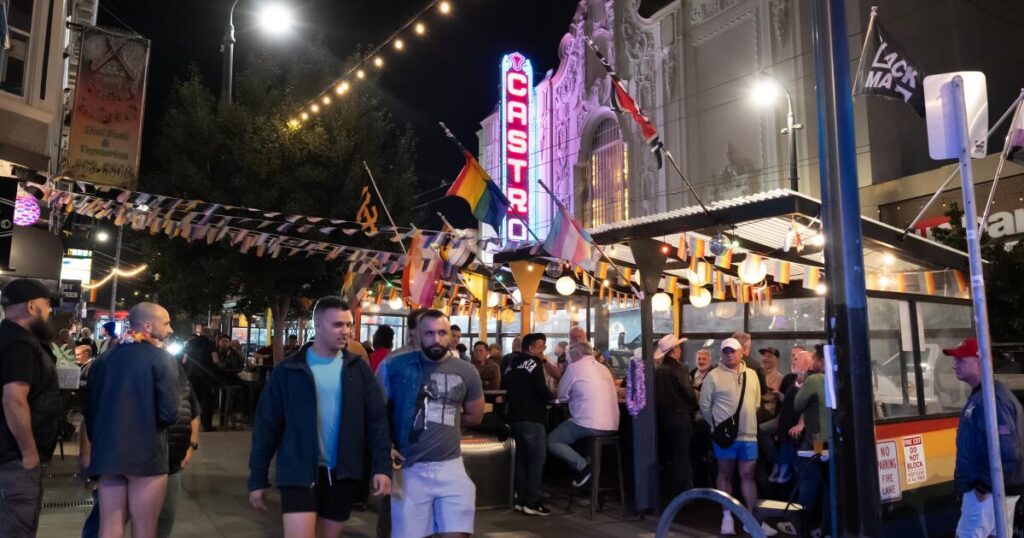
Within the LGBTQ+ community, the Castro is a symbol of liberation. In the 1960s and 1970s, Harvey Milk and other gay activists turned the Castro neighborhood into a safe haven for queer people nationwide, and the theater and its lighted red marquee and blade signage served as a giant X on the map for those flocking to find it.
Now, about five years and an estimated $41 million in renovations later, Another Planet is gearing up for a grand reopening of the 1,400-seat theater as a multipurpose concert, movie and community venue, starting Feb. 10 with a sold-out, 20-show residency by Grammy Award-winning queer singer Sam Smith.
“I LOVE San Francisco and The Castro especially has been so central to the Queer community here over the years,” Smith wrote in September, calling it an honor to “become part of this iconic venue’s history.”
For decades, the theater served as a backdrop to major gay rights protests and an incubator for queer cinema, including as host to Frameline’s San Francisco International LGBTQ+ Film Festival. Activists raised funds there to fight Anita Bryant’s anti-gay crusade in the 1970s and to raise AIDS awareness in the 1980s.
Two days before his raw and relatable “Letter to Mama” was published in 1977, author Armistead Maupin went to the theater to read the chapter in which his “Tales of the City” character Michael Tolliver comes out to his conservative mother after learning she was supporting Bryant in Florida. Milk, who that same year won a seat on the San Francisco Board of Supervisors as one of the nation’s first out elected officials, was in the crowd with Jones, and Maupin “thought the roof was going to come down” as cheers and tears erupted in the audience.
After Milk and Mayor George Moscone were assassinated at City Hall in 1978, the theater remained a gathering point. When former supervisor Dan White received a shockingly lenient conviction for manslaughter in the fatal shootings, protesters rallied near the theater before marching to City Hall. Police then stormed the Castro neighborhood, brutalizing bar patrons in the surrounding streets.
In 2008, the theater hosted the world premiere of the feature film “Milk,” about that era, as protesters waved signs outside reading “Vote No on Prop. 8,” a measure that eliminated the right to same-sex marriage in California. In 2015, crowds gathered outside the theater once more to celebrate the Supreme Court ruling that recognized a right to same-sex marriage nationwide.
For longtime activists in the neighborhood and those leading the project to restore the theater, that history gives the theater and its reopening a special significance — particularly in light of renewed attacks on the queer community by the Trump administration and Republican lawmakers across the country.
“It would be impossible to overstate the importance of that building to this community,” gay activist Cleve Jones said on a recent afternoon at Twin Peaks, a long-standing gay bar just up the block. “That’s where we go to celebrate victories, to mourn losses, and so often to premiere films that were huge milestones in the progress of this community and the movement that was partially born here.”
Perloff said his company is committed to honoring and maintaining the theater’s role as a beacon of hope for the queer community, in part because of the “change in the political climate in this country” in recent years.
“This theater has taken on a much more important and significant role not just locally, not just in the Castro district of San Francisco, but all over the world,” Perloff said. “While people think San Francisco is in a bubble, the LGBTQ community is under attack everywhere — and we have dedicated ourselves to making the Castro an inviting place for everyone.”
No easy solution
Even before the pandemic, things weren’t looking good. Box office revenues had declined sharply. Badly needed capital improvements multiplied. Community leaders worried the building would be demolished like so many other historic cinemas, and members of the Nasser family, which owns it, had similar concerns.
“The theater was 100 years old,” said Steve Nasser, 72, whose father opened the theater with his brothers. “There were many aspects of it that were simply — functionally and economically — obsolete, and things that couldn’t be easily fixed or addressed without very significant costs to do so.”
The Nassers were scrambling to find a solution when Another Planet came knocking. Even then, saving the Castro wasn’t a sure bet.
Inspectors flagged that the 1989 Loma Prieta earthquake appeared to have shifted parts of the structure. Clay tiles in the walls had started to disintegrate. A previous renovation had coated the ceiling in a polyurethane that was so heavy that “the integrity of the ceiling was really in bad shape,” Conde said.
The seats were old and worn out, with “springs poking out and sticking you,” she said. Years of cigarette smoke had left a thick layer of nicotine over some surfaces, while lead paint covered others. The walls were filled with asbestos, which precluded any cutting or wiring through them.
“Absent some sort of intervention,” Conde said, “it would have fallen in on itself.”
There were also significant community hurdles.
Movie buffs and other preservationists were adamant that the original seating — a sloping floor with immovable seats — be preserved as one of the theater’s most historic characteristics. Another Planet and its supporters said it had to be replaced with a retractable system if the venue was ever going to be financially viable.
A petition was circulated to keep the old seating, followed by formal hearings by city officials. Eventually Another Planet won the right to remove the floor seating but not the old seating in the balcony — just enough of a compromise to move forward.
Restoring an icon
Part of what makes the theater so appealing is its ornate design by Timothy Pflueger, a now-famous San Francisco architect who took on the project as one of his earliest commissions.
Blending Spanish Colonial Baroque style with Beaux Arts and Art Deco elements, the building has a Churrigueresque facade, golden columns and molded cherub faces in its walls, sgraffito murals flanking a uniquely rounded stage, a richly painted leatherette ceiling with curves that match the draping of an Asian tent and a giant metal chandelier hanging from its center.
To restore the theater to its former grandeur, Another Planet nearly tripled its investment to $41 million from $15 million.
They reinforced the building’s main structure, including with a new steel grid across the roof, and cast molds of plaster details to replicate and fill in missing pieces. Historic preservationists worked for months meticulously restoring the autumn-colored ceiling and its Asian-themed and dragon-encircled character medallions.
Contractors built a heating and air conditioning system and bypassed the asbestos-laden walls with piping down the exterior of the building into the basement, for air to flow into the theater from around people’s feet. They are installing one of the world’s largest symphonic organs, three separate sound systems — one for musical acts, one for films and one for other events — and new screens and projectors for both current and vintage films.
“We’ve tried to think of everything that could be needed for any type of event,” Perloff said. “This is a labor of love.”
Excitement meets uncertainty
On a recent morning, friends Paul Loesel, 56, and John White, 74, sat chatting out front of Castro Coffee Co., one of two small businesses that have long rented small storefronts in the theater but are set to close as Another Planet takes over and uses the space for an expanded box office.
Loesel, who has lived in the Castro for 24 years, said he goes to Castro Coffee every morning, and its loss deeply annoys him. Still, he thinks the renovated theater is going to be great for the neighborhood.
“The programming looks OK — movies, different performers, bands, drag queens — so it looks like they’re trying to keep it exciting,” he said.
White, who has lived in San Francisco for 47 years, said a transformation was necessary for the theater and its iconic marquee and blade to survive, but he doesn’t fully trust Another Planet and worries about the company sacrificing the theater’s historic charm for modern concert venue accouterments, such as hanging lights and speakers.
The conversation echoed many others in the neighborhood in recent years, where people have expressed a mix of excitement and anticipation — concern for those being displaced and a deep desire to see the theater’s legacy protected.
Some of the neighborhood’s gay icons — including Jones and Maupin — were among the critics. Tom Ammiano, a former San Francisco supervisor and another friend of Milk’s, said many felt the theater’s history was given lip service. Of course it couldn’t be “preserved in amber,” he said, but its core identity as a movie house should have been better preserved.
“Some people say, ‘You old guys don’t want change.’ Yes, I want change — I have fought for change,” Ammiano said. “But at the same time, I would like something conserved that contributed to LGBT history.”
Ken Khoury, 74, who has run Castro Coffee for 38 years, said he and his brother, who has a nail salon at the site, feel like they are being tossed aside. “I’m glad they took it over,” he said of Another Planet. “But I did not know that I was going to be the victim of their success.”
The Nassers said they are working with the Khourys and city officials to find a solution for the brothers, including potentially renting them space in vacant neighborhood storefronts. Perloff said he understands the concerns, but that they are a “distraction” from all the good the theater and its patrons are going to do for the neighborhood’s many bars and small businesses.
“We plan on putting 200,000 people — think about that number — through the theater in a year,” he said.
Nate Bourg, president of the Castro Merchants Assn., who runs a nearby members club, said everyone wants the “activity and foot traffic” that will come with the Castro’s reopening, but also for the theater “to continue to be a symbol of queer liberation and hope and safety and inclusivity.” He’s optimistic they can have both.
“Reopen the theater, fill some vacancies, retain our queer identity,” he said.
The next chapter
Jones, who opposed the removal of the seats and remains skeptical about the project, said he nonetheless hopes for its success.
Jones helped Milk organize in the early days of the gay rights movement, continued leading the movement after Milk’s assassination, battled for the rights of AIDS patients and first conceived of the AIDS Memorial Quilt, now a global symbol of resilience to a virus he has lived with for decades.
Jones called it “a real challenge to narrow down the number of incredibly powerful events” he’s personally witnessed at the theater, from Christmas concerts by the Gay Men’s Chorus to the premieres of “so many of the pioneering documentaries about the community now called LGBTQ+.”
Among his most cherished theater memories, he said, are seeing his close friend Gilbert Baker — who created the rainbow flag, another universal symbol of LGBTQ+ pride — walking the theater’s aisles handing out chocolates during the 2017 premiere of the ABC miniseries “When We Rise,” which was based on Jones’ memoirs, and a subsequent memorial for Baker following his death a few weeks later.
“I walk in there, and I smell the popcorn, and I’m just transported back to so many events,” Jones said.
The theater’s renovations have made him feel nostalgic and protective, he said — but also keenly aware of the battles ahead.
When gay people first took over the neighborhood more than half a century ago, they created something “that had never been seen before on the face of the planet,” Jones said: an unapologetically gay and politically assertive neighborhood.
“The poets came here, the radicals came here, and this neighborhood drew all these people who wanted, yes, maybe to escape hometown America, but also came here specifically to be part of a movement — a social justice movement,” Jones said.
A similar movement is needed today, and will require neighborhoods like the Castro to be strong and vibrant, Jones said — which is why the theater’s next act is so important.
“It’s a bigger issue,” he said, “and it’s increasingly, in my view, connected to our survival.”
The post Second act for a queer icon: San Francisco’s Castro Theatre relaunches at pivotal moment appeared first on Los Angeles Times.