L.G.B.T.Q. Ukrainian soldiers can risk their lives for the state, but if they are wounded or killed, the partners who love them are legal strangers in the eyes of that state.
The European Court of Human Rights found in 2023 that Ukraine’s lack of legal recognition for same-sex couples was discriminatory and violated the right to private and family life. A bill to create registered partnerships was introduced that year but remains stuck in Parliament. The legal gap has always been unbearable; then the war with Russia seemed as though it would make that disparity untenable. Surely, queer soldiers visibly defending the nation from the front would render the hypocrisy of Ukrainian law too obvious to sustain. But the gap remains.
L.G.B.T.Q. Ukrainians in uniform sometimes wear a unicorn patch, a wry response to claims that there are no gays in the Ukrainian military. They volunteer, pay taxes, evacuate civilians and mourn. Some have been wounded, some killed. At Kyiv Pride last month, marchers carried photographs of L.G.B.T.Q. soldiers killed in action alongside rainbow flags and banners.
The argument is simple: Those soldiers’ partners waited through the same nights as other partners, feared the same calls and carried the same grief. Do they not then have the same right to stand beside a hospital bed? To receive medical information or make decisions in a crisis? To arrange a burial, inherit property, receive benefits?
Some argued that the war should postpone these questions; rather, it has made them impossible to postpone. In the first months after Russia’s full-scale invasion, a petition that urged the Ukrainian government to consider registered partnerships received enough support to trigger a parliamentary debate. The registered-partnership bill was introduced.
But the bill stalled. Opponents argued that there are more important things to discuss, that sexuality is private, that Pride is a masquerade, that the state should not interfere with love, that Ukraine should first win the war and then talk about rights.
Early this year, a new draft of the civil code was proposed that would continue to define the family unit as being a different-sex partnership, explicitly exclude same-sex families and automatically annul a marriage if one of the spouses legally changed gender. Beneath these arguments lies a clear demand: that L.G.B.T.Q. people exist only quietly — without visibility, without legal recognition, without family status and without a place in the national story.
In March a Supreme Court ruling recognized a same-sex couple as a family under Ukrainian law. But the bill that would exclude such couples continued its advance in April, despite criticism from human rights groups and despite its incompatibility with membership in the European Union, which Ukraine seeks.
No one is asking the state to regulate love. The state already regulates the consequences of a shared life — property, inheritance, medical decisions, children, pensions, documents, burial, family status. L.G.B.T.Q. advocates are calling for the state to stop discriminating at the hospital door, the notary’s desk, the military office and the cemetery.
Ukrainian society has changed faster than many politicians have noticed — or perhaps wanted to notice. According to polling by the Kyiv International Institute of Sociology commissioned by Nash Svit, a gay rights organization, the share of Ukrainians who said L.G.B.T.Q. people should have the same rights as other citizens was 78.1 percent in 2025, up from 63.7 percent in 2022. About 70 percent of respondents had a positive attitude toward L.G.B.T.Q. people participating in the resistance to Russian aggression.
Russian propaganda has long portrayed queerness as part of Western decadence and what amounts to repression as tradition. Ukraine cannot defeat Russian imperialism on the battlefield, only to preserve some of its inherited habits of humiliation at home. In Russia even expressions of queer identity are banned, and transition surgery is illegal. President Vladimir Putin has characterized the fight against Ukraine as part of the fight to maintain “traditional Russian values.”
In 2023, Ukraine adopted the Law on Decolonization, which instructed local authorities to remove representations of Russian imperial policy from public spaces. But decolonization is not only changing street names, removing imperial monuments or returning Ukrainian literature to the center of Ukrainian life; it is also refusing the old hierarchies of shame. A country does not become free merely by changing its geopolitical direction. It becomes free when it stops building unity on the invisibility of some of its people.
Ukraine asks the world to understand that freedom is not an abstraction. It is how people live their lives, whether under the threat of airstrikes, in air-raid shelters, at a front line or in hospital corridors. It is something you fight for.
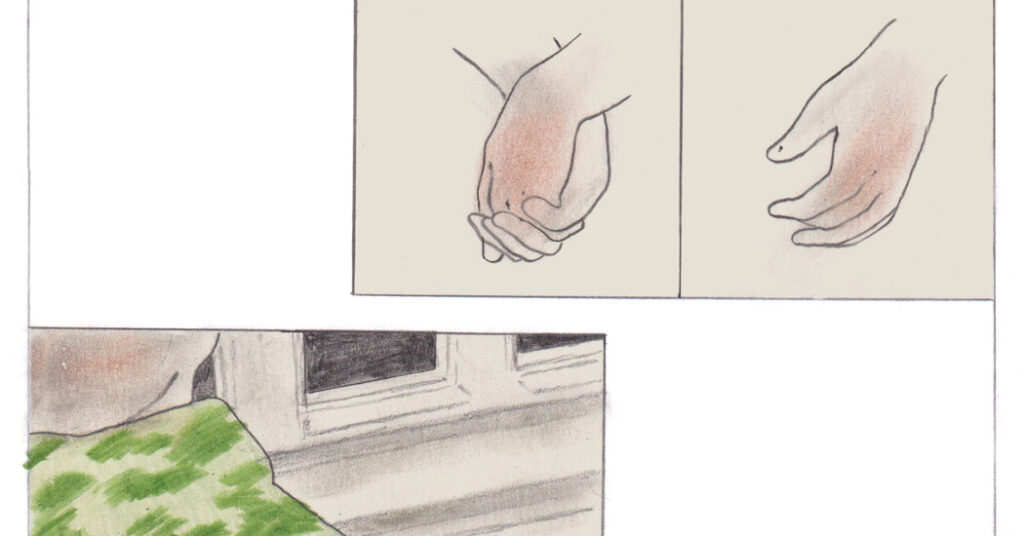
Freedom is also the right to hold the hand of the one you love without the state pretending that person is no one.
Alex Averbuch is a Ukrainian poet, a translator and an assistant professor of Ukrainian studies at the University of Michigan.
The Times is committed to publishing a diversity of letters to the editor. We’d like to hear what you think about this or any of our articles. Here are some tips. And here’s our email: [email protected].
Follow the New York Times Opinion section on Facebook, Instagram, TikTok, Bluesky, WhatsApp and Threads.
The post Ukraine Is Fighting for Freedom. Freedom Is for Everyone. appeared first on New York Times.