The hearing had just started and Judge Arun Subramanian was no longer allowing Manhattan federal prosecutors to finish their sentences.
Instead, he pressed a top prosecutor, Sean Buckley, for an explanation: Why had the U.S. attorney’s office issued subpoenas to New York Times reporters — typically the final step in a leak investigation — just two days after the publication of an article about the security concerns of the president’s plane?
“Doesn’t that turn the law and the regulations on their head?” Judge Subramanian asked.
Mr. Buckley did not supply the answer immediately. But after an hour of questioning, he and the other prosecutors voluntarily withdrew the subpoenas, a tacit acknowledgment that the judge was poised to rule the government had not followed the law.
The episode underscored the administration’s hasty effort to identify the sources of The Times’s reporting as part of a powerful push by Mr. Trump and his top aides to crack down on the news media. The judge’s remarks raised questions about the role of not only Mr. Buckley but also of two high-level Justice Department officials who are under consideration for powerful cabinet positions.
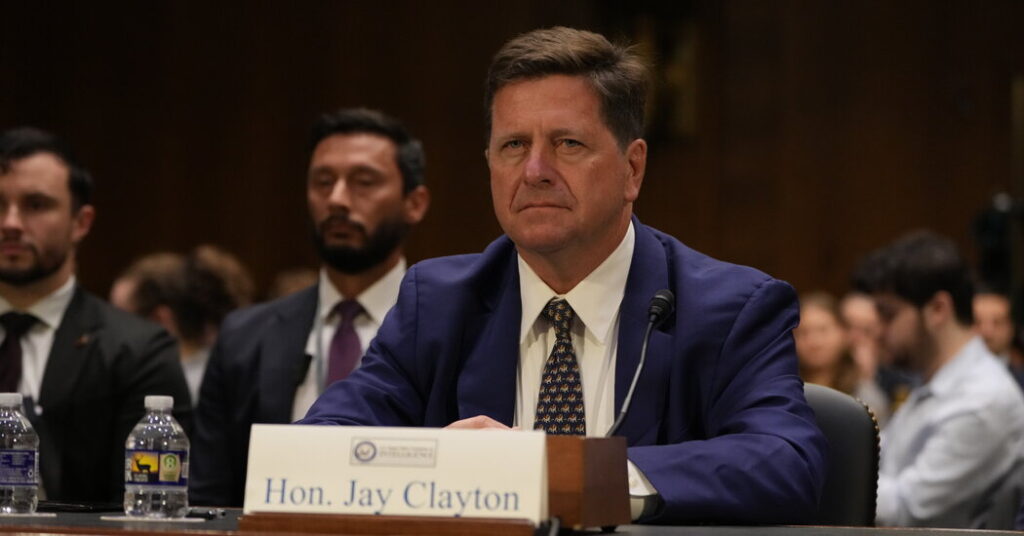
The acting attorney general, Todd Blanche, and the current U.S. attorney in New York, Jay Clayton, both testified this month that the issuance of the subpoenas had been in keeping with laws and regulations.
“We followed the processes that we were required to follow,” Mr. Clayton, nominated to be the director of national intelligence, insisted in sworn testimony before a Senate committee, adding, “I’m confident that the procedures that we have in place — to protect the First Amendment and protect the freedom of the press and not result in intimidation of journalists or the like — were followed.”
Mr. Blanche, appearing at his own confirmation hearing last week, told members of the Senate Judiciary Committee that the Justice Department was “not targeting reporters.”
“They’re material witnesses, just like a reporter would be a material witness to a car crash,” added Mr. Blanche, who said he had authorized the subpoenas.
The hearing also threatened to cast a shadow over the incoming leader of the Manhattan prosecutor’s office, which like others has faced President Trump’s tightening grip over the department overall. James M. McDonald, who is expected to take over from Mr. Clayton, was one of the select group of prosecutors involved in the inquiry, according to people with knowledge of the matter.
A spokesman for the U.S. attorney’s office for the Southern District of New York declined to comment. The Justice Department did not respond to a request for comment.
The investigation stemmed from two articles published in early July by The Times about the vulnerabilities of an Air Force One jet that Qatar had given to Mr. Trump. Two days later, on July 10, the F.B.I. director, Kash Patel, was summoned to the White House, where he spent about eight hours overseeing the investigation into the leak, according to people familiar with the day’s events. That evening, three Times reporters whose names appeared on the articles were served with subpoenas to testify about their sources before a federal grand jury.
Mr. Clayton and Mr. Blanche have said any actions the department has taken were motivated only by the need to protect national security secrets and to quickly root out leakers who might be jeopardizing Mr. Trump’s safety at a time of heightened threats.
They have pushed back against the claim that the subpoenas were a strong-arm effort by the White House to intimidate journalists and chill officials who step forward with information in the public interest.
After Thursday’s hearing, the Justice Department accused Judge Subramanian of threatening its prosecutors, saying the judge’s conduct disregarded “longstanding principles and common sense.”
“Make no mistake, this investigation remains ongoing, and we will pursue justice against those threatening national security by leaking classified information, a serious federal crime,” the department said in a statement.
Mr. Clayton’s exact role in the inquiry remains unclear. In his Senate hearing, Mr. Clayton said that his office had consulted with officials in Washington in demanding reporters’ testimony. The decisions were made “collectively,” he said, without elaborating on who had been involved.
Mr. Clayton’s signature has been on most of the legal filings, but he has delegated the details to a small group of mostly senior lawyers. In court on Thursday, Mr. Buckley said that he personally had overseen the inquiry since it began.
The investigation has also involved Amanda Houle, the chief of the office’s criminal division, and Kevin T. Sullivan, a career prosecutor in the office’s national security unit who was also questioned fiercely by the judge on Thursday. Mr. Sullivan had omitted relevant details from a request asking to keep private a subpoena to a phone provider, and Judge Subramanian summoned him to the front of the courtroom to answer for it.
“Mr. Sullivan, when you affirmed in your July 14 application to a judge in this court, under penalty of perjury, that the investigation was not public, that was false, correct?” he asked.
“The wording was imprecise,” Mr. Sullivan said.
Judge Subramanian said during the hearing that if lawyers had behaved this way in a civil case, he would consider whether to punish them. After the hearing, the judge asked that prosecutors send him all internal communications regarding the application for the nondisclosure order.
The U.S. attorney’s office does not appear to have followed longstanding Justice Department practice.
A typical investigation into the leak of classified information begins with a referral known as a “crimes report” from the victim agency, or the agency whose information was disseminated, such as the C.I.A. or Defense Department.
There has not yet been any indication as to whether a similar report was created before the subpoenas were issued in the Times inquiry.
For years, under administrations of both parties, including in Mr. Trump’s first term, the Justice Department has used a set of 11 questions, to be answered by the victim agency, to determine whether to proceed with a criminal investigation.
The third question asks: “What are the specific statements that are classified?”
A letter dated Monday from Mr. Clayton’s office to a federal judge seemed to hedge on that basic point, saying that the Times articles “indicated potential leaks of classified or national defense information.”
The sixth question in the report asks whether the disclosed information “previously appeared in an open source publication.” Days before The Times’s July 8 article about the plane’s security issues, The Associated Press reported that photographs of the new plane “show that it is not equipped with at least some of the same missile detection and countermeasure systems as the outgoing Cold War-era jets.”
In a standard classified leak investigation, a trial attorney in the counterintelligence section of the Justice Department would have a discussion with that agency to evaluate the answers after he or she received the agency’s crimes report, according to David Laufman, who once led the department’s counterintelligence and export section, which oversees classified leak investigations.
But Mr. Trump was angry and embarrassed by The Times’s reporting about the security vulnerabilities in an aircraft he had long championed as proof of his deal-making prowess, people close to him have said.
Even before the July 8 article was published, a senior F.B.I. official called a Times reporter and editor, asking them not to publish the information and asking them to identify their sources.
In 2012, the Justice Department issued subpoenas for the phone records of reporters at The Associated Press, which had reported on a C.I.A. operation to disrupt a Qaeda plot to bomb a commercial airliner. The department did so nine months after the article in question was published, and only after conducting more than 500 interviews and reviewing tens of thousands of documents.
In March, the Trump administration issued subpoenas to reporters at The Wall Street Journal nine days after it published an article about a Pentagon official warning about the risks of military action against Iran. The Trump administration eventually abandoned those subpoenas, after a federal judge in Virginia signaled in sealed proceedings that she was likely to quash them, according to people familiar with that case who spoke on condition of anonymity.
Since Mr. Trump’s return to office, judges appear to have blocked subpoenas more regularly. Still, the hearing on Thursday dealt a blow to prosecutors who lead what has long been considered the most prestigious U.S. attorney’s office in the country.
Even Judge Subramanian, who has been on the bench for three years, seemed in disbelief at the government’s responses, as when Mr. Buckley said that he had not reviewed the application his subordinate had made to the other judge.
“How did you not review the nondisclosure if you were overseeing the investigation?” Judge Subramanian asked.
“Because I don’t review every piece of paper, Judge,” Mr. Buckley replied. His answer would be the same for other missteps in the process, he said.
“Help me understand here,” Judge Subramanian said. “The inadvertent errors and the ‘in hindsight we should have done things differently,’ these things are piling up. Under these circumstances, are you still unwilling to withdraw these subpoenas?”
About 20 minutes later, the government conceded.
The post In Rush to Track Down Leaks, Justice Dept. Reversed Its Own Process appeared first on New York Times.