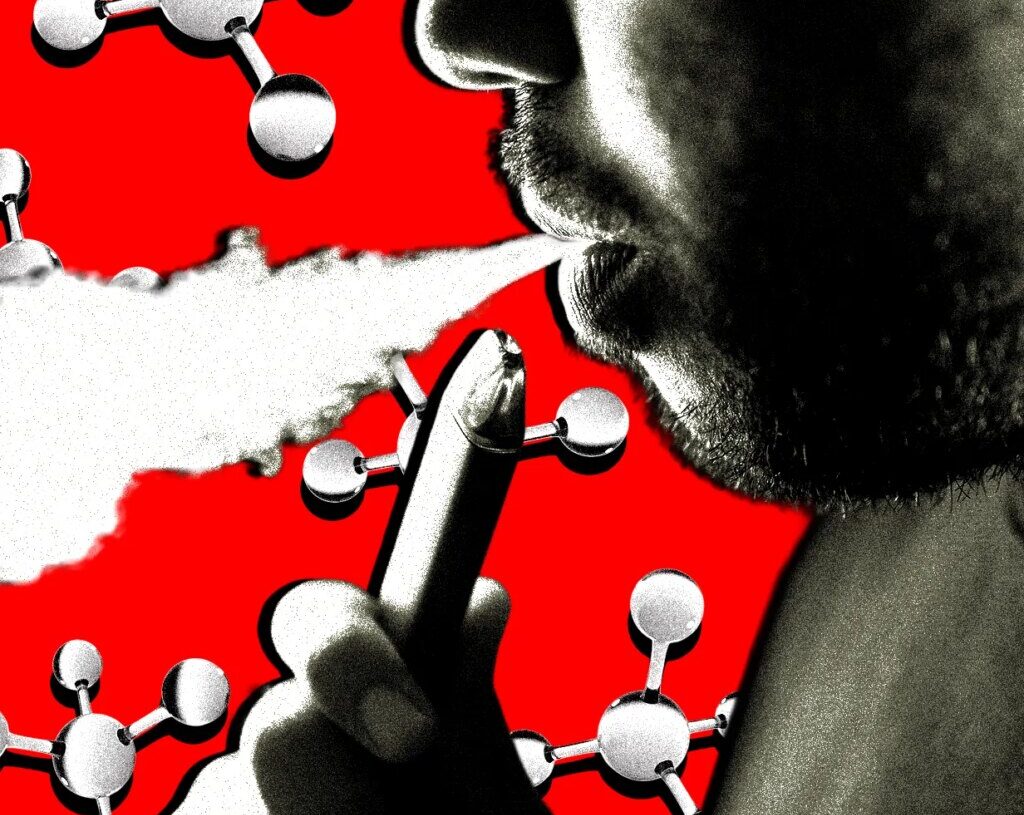
Earlier this year, I picked up a rather unfortunate habit: vaping. More specifically, I started smoking flavored vapes manufactured in China’s so-called “Vape Valley” and sold throughout the United States.
Flavored nicotine vapes are largely illegal in the US, yet convenience stores and tobacco shops across the country have generated billions of dollars in sales from these products in recent years, despite periodic law enforcement seizures and efforts by the Food and Drug Administration to keep them off the market. More recently, Chinese manufacturers have found a new way to sidestep the law, escaping regulatory oversight altogether.
Like many people, I assumed the only addictive chemical in these products was synthetic nicotine, which vape manufacturers have used for years to avoid FDA oversight. But after Congress closed that loophole in 2022—expanding regulation beyond tobacco-derived nicotine—Chinese manufactures began filling their vapes with little-studied chemicals that mimic nicotine’s effects, known as nicotine analogs.
Because current regulations still narrowly define what counts as nicotine, Chinese companies have been able to sell nicotine analog vapes in the US without having to worry about federal tobacco rules, which generally require companies to submit new products to the FDA for scientific review before they can be legally marketed.
“This is just like whack-a-mole, these companies will do everything they can to circumvent regulation,” says Robert Jackler, an emeritus professor of head and neck surgery at Stanford University and the founder of an interdisciplinary research group studying the impacts of tobacco advertising.
The effects of nicotine analogs on humans haven’t been extensively researched, but animal studies have found that one of the most popular variants, 6-methyl-nicotine, could be more potent and addictive than regular nicotine. Vapes containing nicotine analogs may also expose users to other mysterious chemicals. One 2024 study found that some manufacturers were selling nicotine analog vapes that contained additional unlabeled ingredients, including artificial sweeteners and cooling agents with unknown inhalation risks. “What’s on the label has very little relationship to what’s in it,” says Jackler.
Researchers first documented the emergence of vapes containing 6-methyl-nicotine and other nicotine analogs in the US market about three years ago. But the chemical compounds themselves are nothing new—tobacco companies have been researching them since as far back as the 1970s.
A 2005 review of millions of previously secret internal industry documents found big tobacco had long explored nicotine-like compounds as replacements for nicotine, in part because they believed they could help circumvent potential regulation.
But US tobacco companies never wound up marketing mainstream products containing any of these nicotine-like chemicals. Instead, they surfaced decades later in disposable vapes made by Chinese manufacturers, which have proven extremely adept at finding new ways to keep selling their wares in the United States.
Chinese vape companies “are extremely creative, they are extremely smart,” says Rich Marianos, a former official with the US Bureau of Alcohol, Tobacco, Firearms and Explosives who is now executive director of the Tobacco Law Enforcement Network, an advocacy group that does not publicly disclose its funding.
“The Chinese have been flooding the American market with illegal vape products designed to target children for years. These fake nicotine products appear to be a new scheme to trick American consumers into putting illicit, potentially dangerous chemicals into their body,” Tim Sheehy, a Republican senator from Montana, said in a statement to WIRED. “The Trump Administration has made cracking down on these unregulated Chinese products a priority, and I hope they continue to sound the alarm on this problem.”
But Jeckler notes that the Trump administration has effectively dismantled the Centers for Disease Control and Prevention office responsible for the agency’s tobacco prevention programs and significantly reduced the size of the FDA’s Center for Tobacco Products. That means much of the effort to regulate nicotine analogs has fallen to the states. Jackler says he’s aware of four states—California, Nebraska, Indiana, and Tennessee—that have expanded their definitions of tobacco products to explicitly include nicotine-like chemicals. But there is still no comprehensive federal law that treats these substances the same way as tobacco-derived or synthetic nicotine.
That could soon change. The Trump administration’s proposed budget for fiscal year 2027 includes a legislative proposal that would expand the definition of nicotine to include nicotine analogs, allowing them to be regulated by the FDA the same way as old-fashioned cigarettes. The proposal notes that the compounds “can be more potent, addictive, and cytotoxic than nicotine.”
If enacted, the change would close the loophole that Chinese vape manufacturers have been exploiting, but it would also mean major US tobacco companies could potentially legally develop and sell their own nicotine analog products, provided they comply with the FDA’s regulatory requirements.
“What we’re seeing the administration do is to adopt the agenda of the major US tobacco companies,” says Jackler. In theory, that includes protecting Americans from unregulated products from China, “but really, what it is about is the large tobacco companies are saying, ‘damn we are losing business to these Chinese startups.’”
This is an edition of Zeyi Yang and Louise Matsakis’ Made in China newsletter. Read previous newsletters here.
The post Chinese Companies Are Selling Vapes With Chemicals Potentially More Potent Than Nicotine appeared first on Wired.