Patrick Swayze, Alex Trebek, and Ruth Bader Ginsburg all died of pancreatic cancer. They were wealthy enough to afford any treatment that existed. But there simply wasn’t a drug available — at any price — that could save their lives. This is the cruelest access problem in healthcare. The most expensive illness is not the one with the costliest drug, but the one with no drug at all. The price of a cure not yet invented is effectively infinite.
That was true for pancreatic cancer, until now.
This spring, Revolution Medicines reported that its experimental treatment daraxonrasib nearly doubled survival in pancreatic cancer patients who were out of other options. The new drug seems almost miraculous. A year ago, former Senator Ben Sasse was told he had a month to live. Thanks to the medicine, he’s not merely still alive — he’s enjoying time with his family and touring the country for media interviews.
But daraxonrasib is not a miracle. It is the predictable result of a legal, financial, and regulatory system that routinely transforms scientific insights into lifesaving medicines. Policymakers built that system over the past five decades, and it has become the envy of the world — so much so that China and other countries are trying to copy it.
China’s determination to copy that model ought to inspire and motivate us. Instead, too many are running scared and pleading for protection. House lawmakers recently introduced the Biotech Investment National Security Act, which would subject licensing deals involving Chinese companies to national-security reviews.
The bills’ sponsors say these are merely screenings, not a ban on licensing promising Chinese-discovered molecules. But in an industry where timing and certainty are everything, it’ll function as one. The proposal builds on other protectionist measures, such as the previously passed BIOSECURE Act, a push to bar the FDA from accepting Chinese trial data, and a 100% tariff on imported medicines and their ingredients that’s scheduled to take effect July 31.
It’s true that China is quickly catching up to America’s biotech capabilities. But our response should be to help American firms run faster — not to outlaw racing.
This is an urgent moment for America’s biotech ecosystem. By 2030, medicines generating an estimated $350 billion in annual sales — or roughly one-fifth of projected global prescription-drug revenue — will lose patent protection. That will allow generic and biosimilar competitors to enter the market, potentially causing drugmakers to lose substantial revenue.
The looming “patent cliff” is putting immense pressure on these manufacturers to find new therapies capable of sustaining future medical innovation. This is good news for patients with unmet medical need — since these breakthroughs will hopefully address the thousands of rare diseases without treatments or reduce the burden of chronic killers such as cardiovascular disease and cancer.
The question is where these new therapies will come from. Increasingly, U.S. firms are turning to China’s biotech pipeline for its high-quality assets. China now accounts for nearly a third of the innovative drug candidates licensed by major pharmaceutical companies. In the first half of 2025 alone, U.S. companies entered 37 partnerships to license drug assets from Chinese firms.
Isolating America’s biotech sector would not make it stronger and won’t make patients healthier. When Sputnik shocked America, our answer wasn’t to wall off Soviet science; it was to invest more aggressively in our own.
The same strategy applies today. That starts with cultivating and attracting the right talent. China is recruiting scientists from its 1.4 billion people. To outcompete them, we need to leverage the capabilities of 340 million Americans — and the other seven-plus billion people around the world.
Consider that Revolution’s pancreatic cancer treatment was spearheaded by Kevan Shokat, an Iranian immigrant’s son, and carried forward by Stephen Kelsey, a British scientist working at an American company. When the world’s best minds gather in one place, they can solve the hardest problems.
Restricting high-skilled immigration walls us off from this global talent pool.
Outcompeting China also requires publicly funding the basic scientific research that is too speculative to attract private capital. In the case of pancreatic cancer, the National Institutes of Health funded the underlying biology for several decades before any private company tried to make a real medicine.
If we slash federal research budgets, we risk hamstringing our scientists and losing an otherwise winnable race. After the 2025 NIH funding cuts, a survey found that significantly fewer young biomedical researchers planned to stay in America to apply their knowledge.
We’ll also need to allow U.S. firms to continue taking advantage of China’s cheap, fast, high-quality chemistry and human trials — which lets U.S. biotechs leverage their limited capital to take more shots on goal. Many early-stage U.S. biotechs now run their first trials in lower-cost Chinese settings, and the largest firms like Bristol Myers Squibb, Takeda, Pfizer, AstraZeneca, and GlaxoSmithKline are signing deals to take the same steps.
In short, American capital is reaching out to pull the most promising science on the planet into our own pipeline to finish. That’s something we should cheer, not block. Walling off China wouldn’t merely slow innovation; it would also make it much more difficult for U.S. companies to overcome the approaching patent cliff. Perhaps more concerning, such restraints wouldn’t apply to foreign firms such as AstraZeneca, GlaxoSmithKline, and Novartis. This would further reduce the competitiveness of U.S. firms without aiding the U.S. biotech sector.
Of course, some scrutiny is warranted. Where China’s speed comes from trials conducted at People’s Liberation Army hospitals, from trials that raise credible concerns about informed consent, or from data the FDA cannot independently verify, that is an ethical line we cannot cross.
But the fix for bad conduct is not a sweeping ban. We must simply hold American companies accountable for how their trials are run, as we already do for bribery abroad under the Foreign Corrupt Practices Act and for forced labor in supply chains.
Patients with pancreatic cancer do not care whether a medical breakthrough began in Boston, Beijing, or anywhere else. They only care whether it reaches them in time. And they can look forward to more daraxonrasibs in the years ahead — if Washington focuses less on walling off our biotech industry and more on making America the best place to research and develop new drugs.
The opinions expressed in Fortune.com commentary pieces are solely the views of their authors and do not necessarily reflect the opinions and beliefs of Fortune.
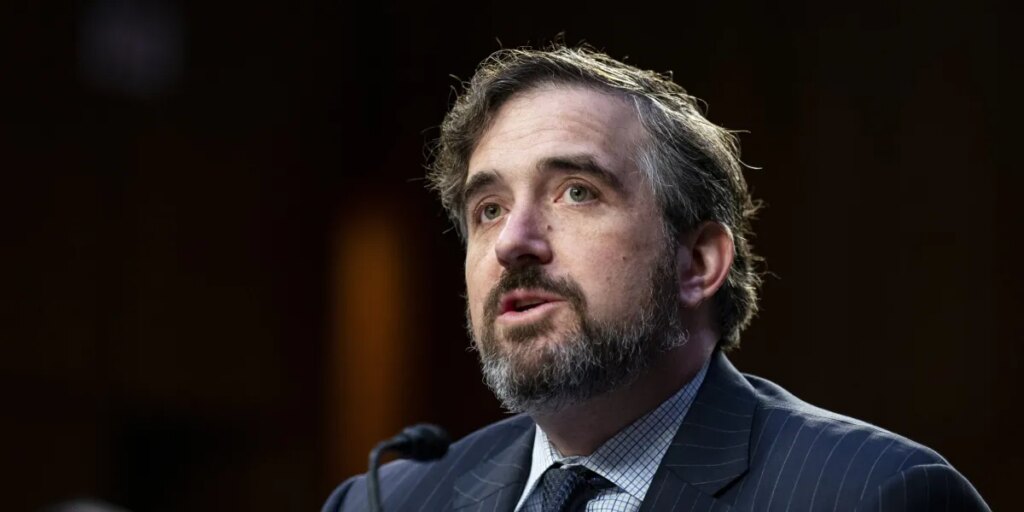
Craig Garthwaite, Ph.D., M.P.P., is the Herman R. Smith Research Professor in Hospital and Health Services, a Professor of Strategy, and the Director of the Program on Healthcare at Northwestern University’s Kellogg School of Management.
The post Big pharma’s patent cliff meets a new biotech Cold War: We need to outrun China, not outlaw it appeared first on Fortune.