A new British airline is building its future on fuel-thirsty widebodies that most major carriers have spent years getting rid of.
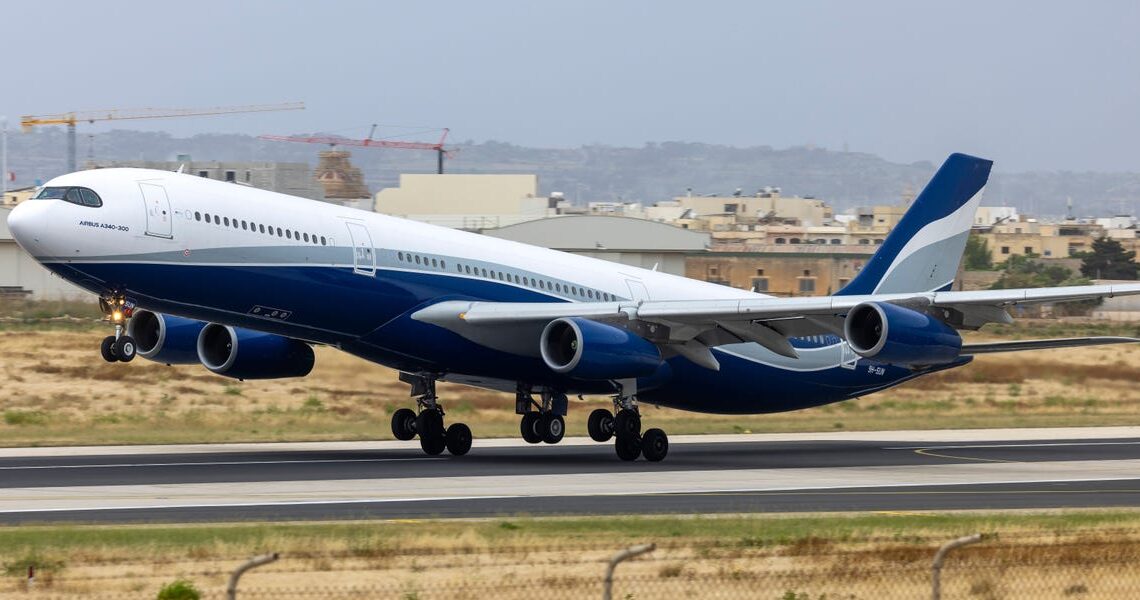
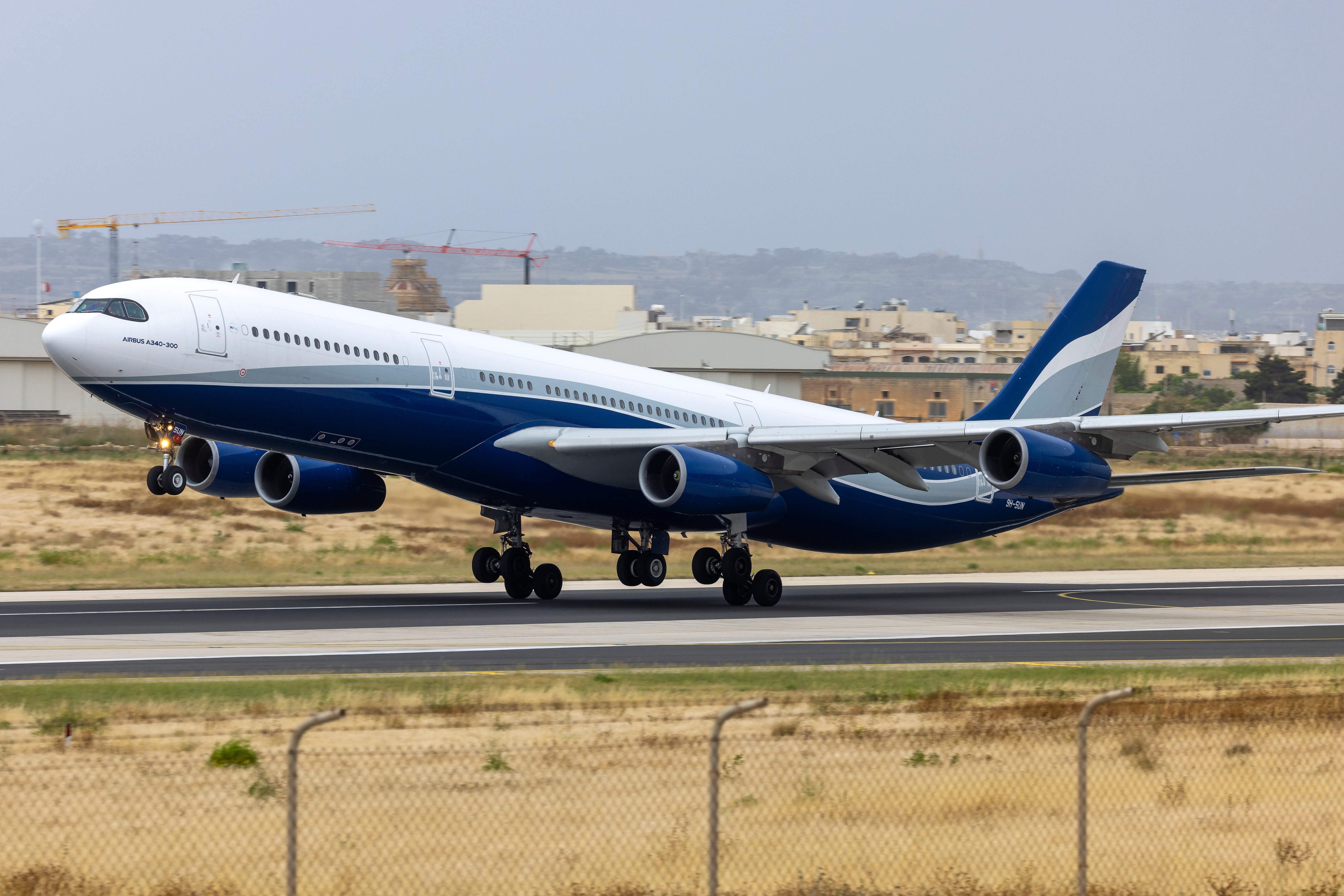
UK-based Global Airlines — a carrier whose plan to fly costly quad-engine jets across the Atlantic has drawn wide skepticism — acquired a “new” plane on Tuesday: a 25-year-old Airbus A340.
It’s leased from the third-party operator Hi-Fly, with the registration 9H-SUN, and is not owned by Global.
The choice has raised eyebrows as the A340 family, which first flew in 1991, is a jet more likely to be scrapped in an aircraft boneyard than painted in a fresh livery. Think of it like buying a used car with 200,000 miles on the odometer.
Global CEO James Asquith revealed the plane in an Instagram video on Tuesday, panning to the plane in a hangar in Portugal. It was the first major update for the airline since flying its fully owned Airbus A380 — another fuel-hungry quad-engine jet — in May.
Global, a privately held startup founded in 2021 with early backing from private investors, has been in and out of the spotlight in a “will they, won’t they” survival saga that has analysts questioning its unusual plan to use large, expensive jets across the highly competitive transatlantic corridor.
Henry Harteveldt, a travel analyst and president of Atmosphere Research Group, told Business Insider that the A340 is a “puzzling” choice considering its high operating and maintenance costs.
“I’ve flown on the A340 as a passenger; it’s a sound airplane, it’s safe,” he said. “But it’s just not the most logical or cost-efficient aircraft to acquire. A well-suited twin-engine like the Boeing 777 or Airbus A330 would inevitably be less expensive to operate and maintain.”
To be fair, Harteveldt said it’s possible Global didn’t have the capital. Asquith has previously said he has found bargain prices on old, unwanted planes, which will offset the high costs of operating them. The economics depend partly on fuel prices remaining stable.
Choosing the A340 shows Global is leaning hard into this strategy — building a fleet around gas-guzzling, harder-to-fill widebodies. Many other airlines have gone in the opposite direction.

European carriers Lufthansa, Swiss, and Edelweiss plan to retire their remaining A340s within the next two years. Cirium data shows a dozen other airlines still operate the quad-jet, though none are US-based. Back in 2003, the earliest Cirium data available, nearly 40 carriers flew the A340.
The A380 has seen similar retirements. Air France, China Southern (the previous owner of Global’s A380), and Thai Airways withdrew the superjumbo as its high fuel burn and limited flexibility became harder to justify.
Airbus ended A380 production in 2021 after orders dried up.
Global’s A380 has been grounded for 4 months
When Global first bought its 13-year-old A380, registered 9H-GLOBL, it required thousands of hours of maintenance after spending a year collecting dust in the California desert.
“We’ve worked really hard the last few years to do what everyone said was impossible and put our first own A380 into the sky, through heavy maintenance, and flying passengers across the Atlantic with our operating partners,” Asquith said.
He added that Global had ambitious plans and some goals may have been a “stretch too far,” but it “comes with the territory of buying A380s and getting them flying.”
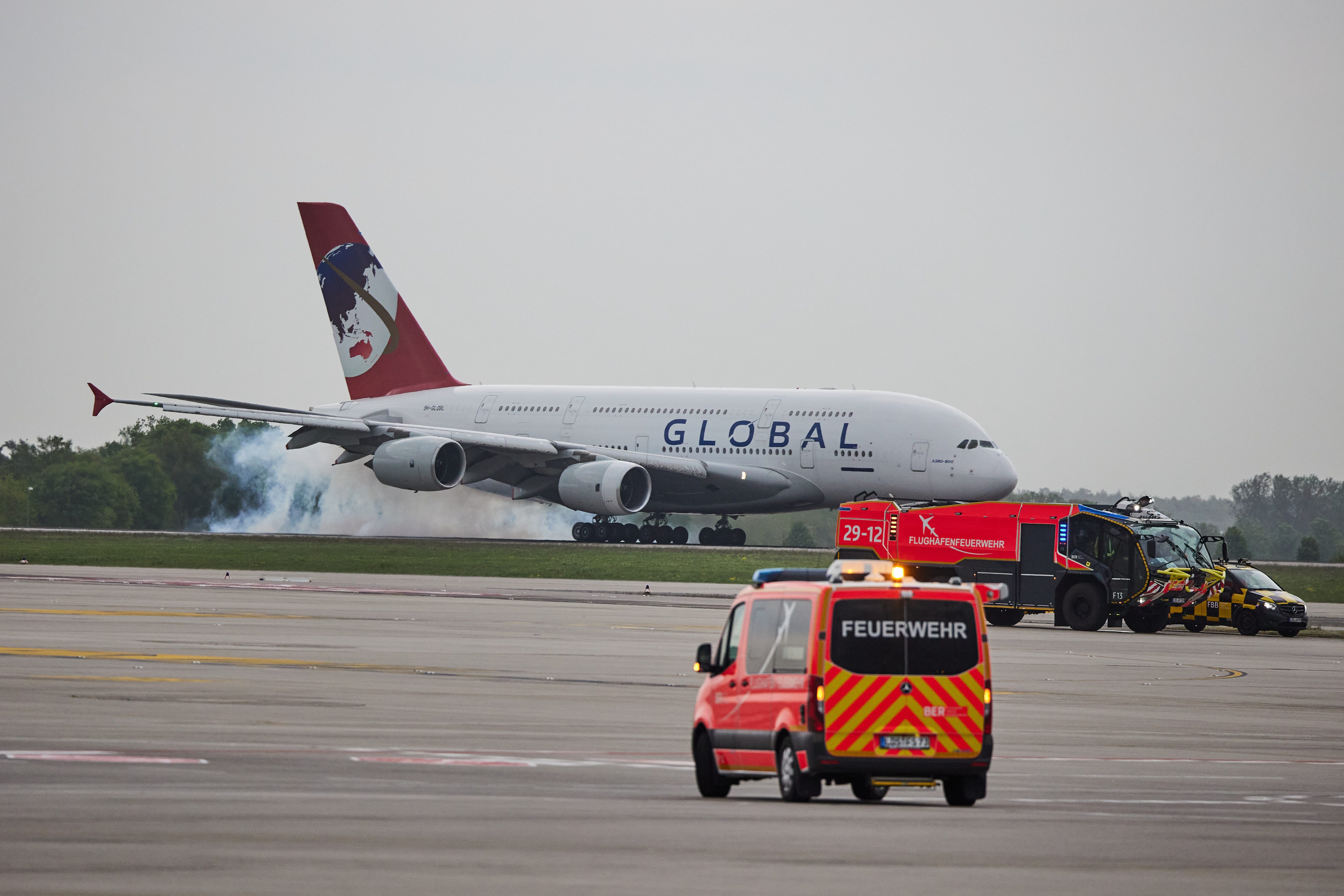
One missed goal is timing: Global originally aimed to launch in 2024, but it still has no regular service or its own operating certificate. Its one-off May flights, operated by Hi-Fly, were to prove it could carry passengers, and the flagship A380 has been grounded since July.
Asquith told Simple Flying in December that the jet must undergo a weeks-to-months-long “D-check,” meaning mechanics must essentially disassemble it piece by piece to inspect its safety and airworthiness, and then reassemble it.
Global plans to eventually start US to UK service. But doing so means taking on airlines with entrenched loyalty programs, major corporate contracts, and fleets of fuel-efficient twin-engine Airbus and Boeing aircraft far cheaper to operate than Global’s aging, four-engine jets.
Beyond the nostalgic appeal of its quad-engine jets, Global has little yet to draw travelers. With only two planes, any maintenance problem can fully disrupt travel.
Younger airlines are also prone to sudden shutdowns, as seen with WOW Air in 2019 or the short-lived Nevada-based regional airline Aha! in 2022, leaving travelers with booked tickets in the lurch.

And the few flights that run weren’t cheap. Its April debut fares were around $1,000 round-trip in economy, $5,000 in business, and $9,000 in first — higher than competitors on the inaugural route.
The airline bills itself as a luxury option, so premium fares aren’t surprising, but uncompetitive pricing hurts its appeal — especially when the cabin fell short of the hype.
Global eventually cut fares by roughly half, but only filled about a fourth of its 506 seats: “The A380, and the A340 even, is way too much plane for a startup,” Hardeveldt said.
Global’s cabin and route strategy need tuning
Global’s inaugural flight drew mixed reactions from bloggers and YouTubers on board.
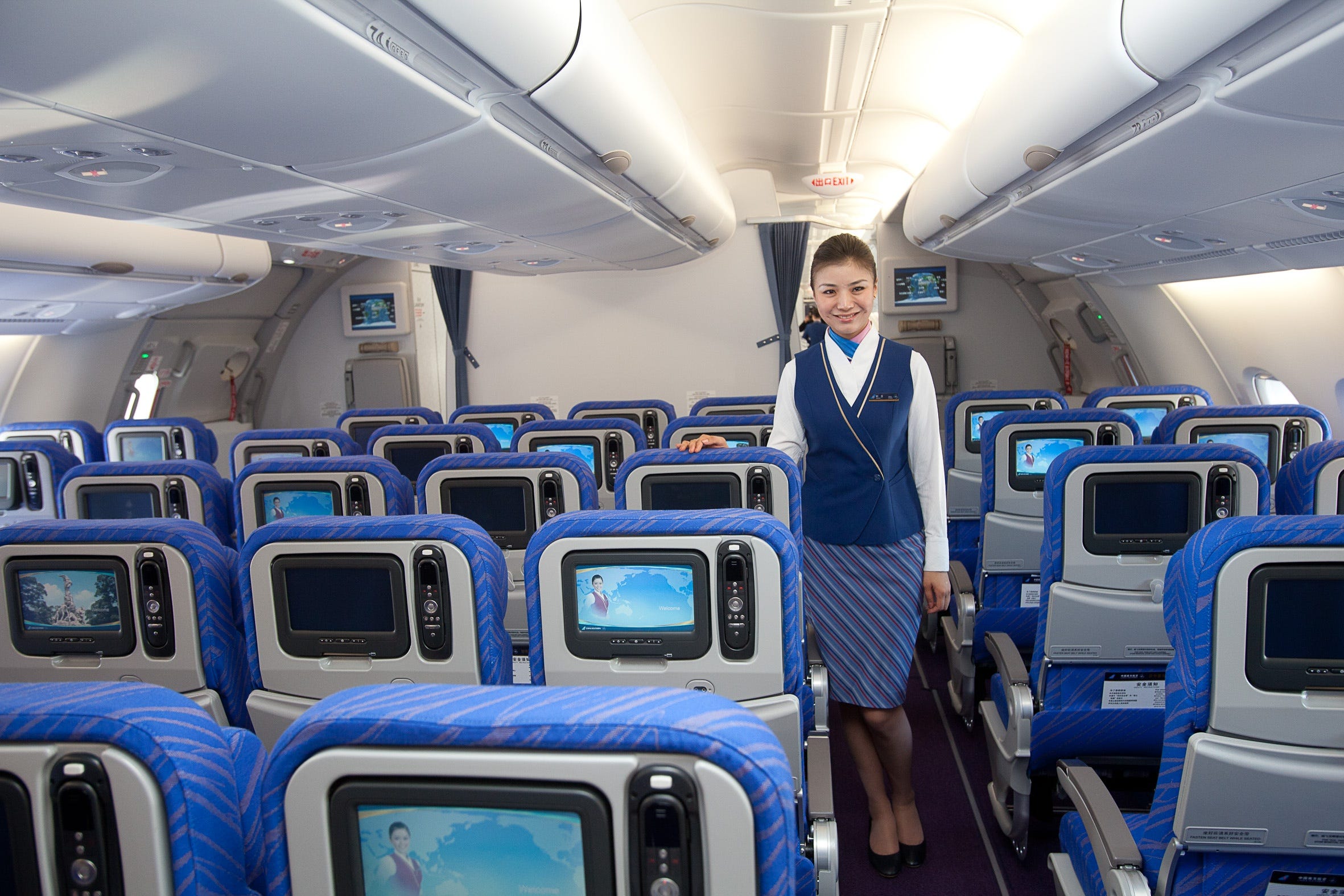
While some praised the food and amenities, others complained about the broken in-flight entertainment and inconsistent service. And some said the seats — even in business and first class — didn’t match the grand interior Global had long promised
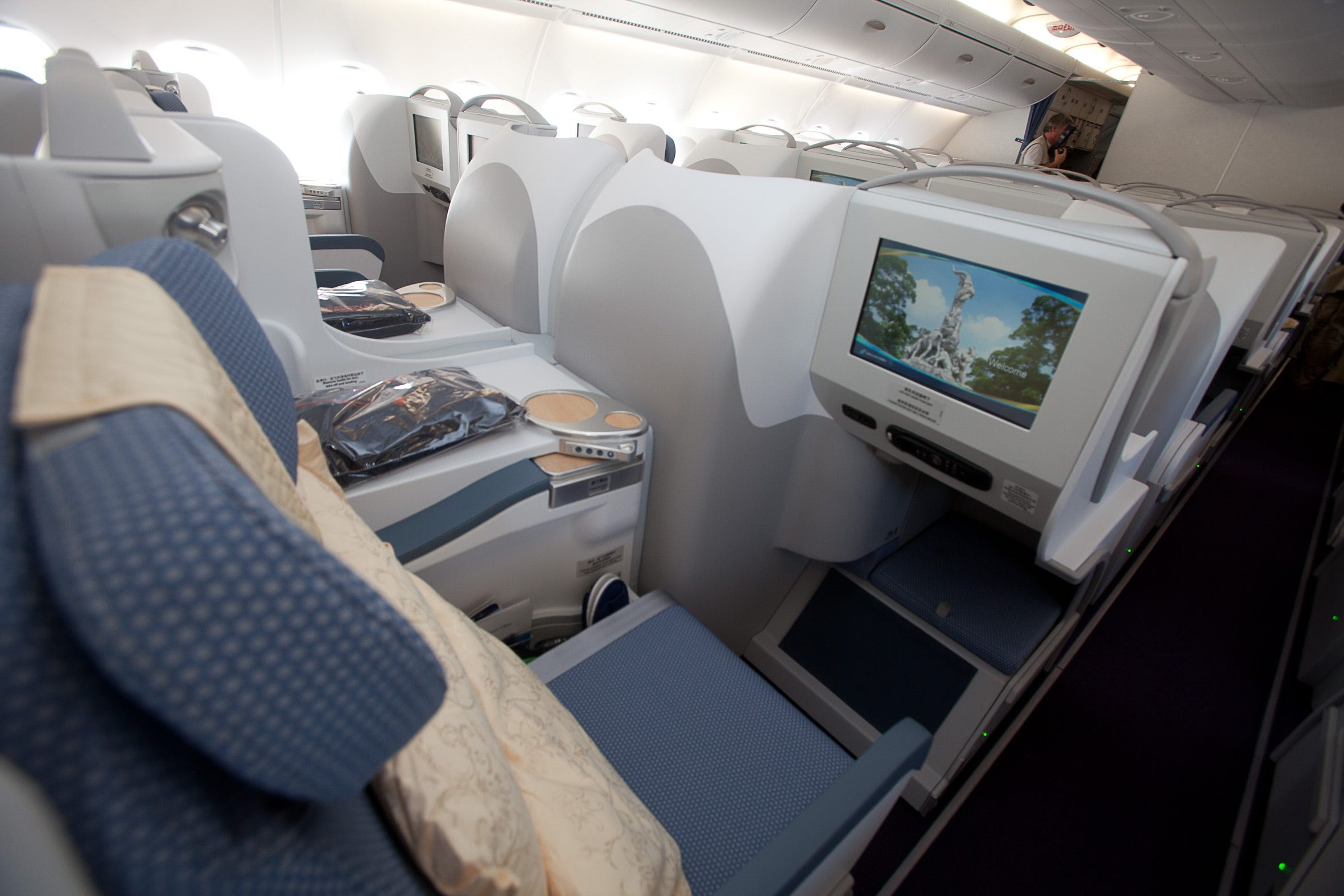
Instead of installing a new cabin, Global kept the China Southern seats but upholstered them with Global branding and added touches, like complimentary Champagne in economy and lamps in business.
Harteveldt said it would take at least 18 months to design, certify, and install a completely new cabin.
Even if it fixes the luxury aspect, Harteveldt questioned where Global could profitably fly. London Heathrow and Gatwick are slot-restricted, limiting daily flights. Other metro airports are inconvenient or can’t handle the larger quad-engine jets.
Plus, UK destinations are already served by well-known airlines. American Airlines, for example, is launching an Airbus A321XLR with an all-new cabin to Edinburgh in December. JetBlue and United are also expanding to Scotland.
“Richard Branson started Virgin Atlantic with a single [four-engine] Boeing 747 between New Jersey and Gatwick, but this isn’t the 1980s,” Harteveldt said. “It’s a very different North American market now; airlines aren’t going to cede even one-tenth of a point of market share willingly.”
Read the original article on Business Insider
The post This startup UK airline is doubling down on the 4-engine Airbus jets that most carriers have abandoned appeared first on Business Insider.