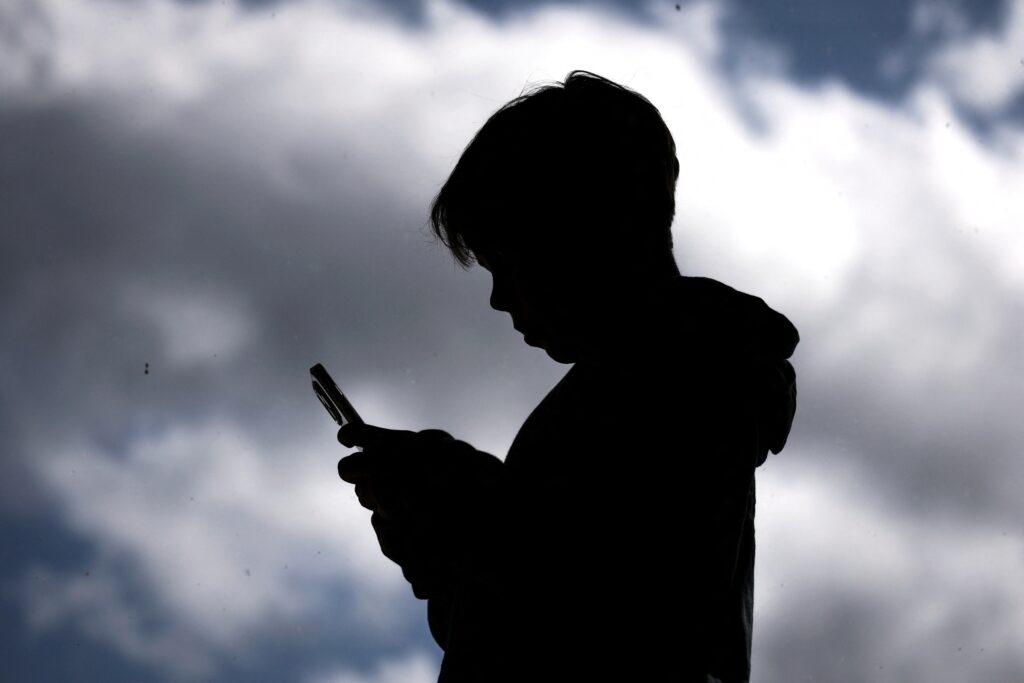
Australia on Wednesday is set to begin enforcing a ban on social media apps for children under the age of 16 — becoming the first country to do so, as companies and global policymakers look on.
“I’ve always referred to this as the first domino,” Julie Inman Grant, who leads Australia’s online safety regulator, said in remarks Thursday, Reuters reported. The major platforms have “pushed back,” Grant said, in part because Australia could serve as a proving ground for an approach that has begun to draw interest elsewhere.
The measure is meant to protect children from the pressures and risks of social media, a mounting global concern. Big platforms including Snapchat, X, Facebook, Meta, TikTok, Threads and YouTube are set to or have already begun freezing or deactivating affected accounts.
“We share the Australian Government’s goal of creating safe, age-appropriate online experiences, but cutting teens off from their friends and communities isn’t the answer,” read a statement from Meta on Thursday. “This new law will unfortunately restrict teens from these benefits, and will result in inconsistent protections across the many apps they use.”
Social media platforms, not teens or their parents, will be responsible for taking “reasonable steps” to prevent under-16 kids from managing accounts under the policy, according to Australia’s online safety commission, which characterized the measure as “a delay to having accounts” rather than “a ban.”
Australia’s approach has opened up the possibility of similar social media rules in other countries, including Malaysia and Indonesia, as policymakers debate whether a the model is worth emulating. But ritics of the policy argue that online age verification is difficult to implement and could impact adult internet users in the country by risking their anonymity and data.
Malaysia plans to impose age restrictions for social media use next year, the Daily Star, a Malaysian outlet, reported. Indonesia has also announced similar plans according to the Jakarta Post, but their communications and digital ministry is still mulling over the age cutoff.
“Australia is being mentioned as a source of inspiration in some of the draft laws for similar bans in Brazil, the U.K., Spain, Malaysia and Indonesia, so this law is likely to have many followers,” said Urs Gasser, the dean of the School of Social Sciences and Technology at the Technical University of Munich.
The European Commission is also working on an age verification mobile app that would seek to check whether users are over 18 — Spain, France, Greece, Denmark and Italy are testing this template. Age-verification impositions on websites and platforms have downsides including redirecting traffic to seedy parts of the internet, discrimination against minorities and an possible uptick in data breaches, The Washington Post has reported.
European Commission president Ursula von der Leyen said in September she was “inspired” by Australia’s “bold” social media policy, the Australian Broadcasting Corporation reported.
The Netherlands has taken a different approach, advising parents to disallow children from using apps such as Instagram and TikTok before 15. “Intensive screen and social media use can be detrimental to children’s (mental) health and development,” according to the recommendations issued by the country’s Ministry of Health, Welfare and Sport.
While similar idea have yet to gain mass traction in the United States, a bipartisan group of senators — Ted Cruz (R-Texas), Brian Schatz (D-Hawaii), Chris Murphy (D-Connecticut) and Katie Britt (R-Alabama), along with cosponsors — introduced a bill earlier this year to impose on social media platforms a minimum user age of 13, among other efforts at the state and national level.
Critics of the Australian policy include platforms such as YouTube, which said the “rushed regulation” will “make Australian kids less safe on YouTube” by removing the parental controls that teenagers’ account could have; an Australia teenager who has sued the government, according to Reuters, and said the move will isolate teens from each other; and UNICEF Australia, the Australian chapter of the United Nations Children’s Fund.
“The proposed changes won’t fix the problems young people face online,” UNICEF Australia said on its website.
“I’m very skeptical I don’t think bans of this sort of ban as particularly helpful,” said Gasser from the Technical University of Munich. “It’s more of a reaction by concerned parents and politicians, but there’s little evidence that it will work, in fact we have reasons to believe it will have downsides.”
Kids will likely find ways to circumvent the ban through new apps or by finding ways around the age verification system, and could lose out on important social and peer support networks on the internet, he said.
It remains unclear if platforms can enforce the ban effectively and without privacy concerns since self reporting age has proven unreliable, Jasmine Fardouly, a psychology professor at the University of Sydney, wrote in an analysis online.
Bans on activities that people have been conducting for years rarely work, said Mary Chayko, a sociology professor at Rutgers University’s School of Communication and Information and the author of “Superconnected: The Internet, Digital Media, and Techno-Social Life.”
“The intent behind this ban, to make the internet safer for kids, is good, but to implement it properly is hard,” said Chayko. “A coordinated effort that’s been discussed and decided between parents, teens, educators, the platform and maybe even law enforcement could see much better results.”
The ban could also impact older users who are unable to verify their age for reasons including a desire to protect their anonymity, said Jennifer Huddleston, a senior fellow focusing on technology policy and law at the Cato Institute, a libertarian think tank in Washington.
“The ban could silence anonymous users,” said Huddleston. “Someone who doesn’t want to share their identity with tech platforms, or someone who doesn’t want to risk a data breach that is possible with age verification softwares.”
But Australian regulators argue that a measured approach is not working, and a more drastic approach is needed to protect developing minds from the social media maelstrom.
Youngsters are connected to a “dopamine drip” as soon as they get smartphones and social media accounts, said Anika Wells, Australia’s communications minister on Wednesday, as reported by the BBC.
“With one law, we can protect Generation Alpha from being sucked into purgatory by the predatory algorithms,” said Wells.
Australia’s government has embraced its position on the far edge of social media regulation. “Our strong action is being watched right around the world because other leaders that I’ve spoken to have indicated that they applaud the fact that Australia has taken this action,” Australian Prime Minister Anthony Albanese told the ABC earlier this year.
The post Australia is set to ban social media for teens. Others could follow. appeared first on Washington Post.