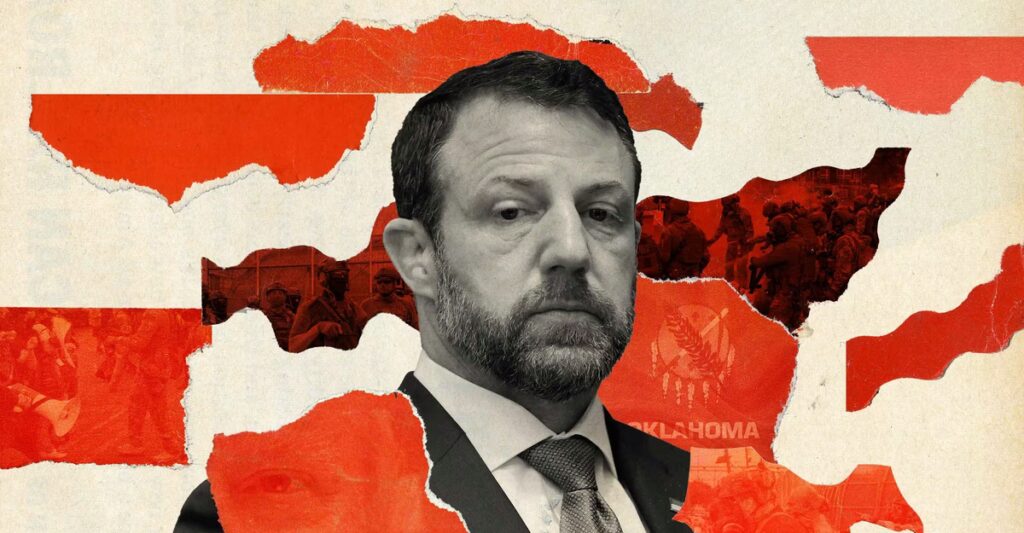
The most important policy decision made by Markwayne Mullin in his short tenure atop the Department of Homeland Security stood for barely a day. ICE officers had just killed two people: a Mexican construction worker with three American sons in Texas, and a Colombian delivery driver whose 3-year-old daughter saw him lying dead in the street in Maine. In each case, the officers had been looking for men other than the ones they killed. DHS officials claimed that the officers had fired defensively during chaotic vehicle stops, but they offered no body-camera footage to back those claims. After phone calls with Maine’s senators, including Susan Collins, the secretary ordered an emergency halt to most traffic stops. But the decision surprised many in the White House, including President Trump, who reversed the order in a social-media post the next morning. Mullin wasn’t fired, but his authority was undercut, to the delight of the online MAGA mob that had been hammering the former Oklahoma senator as a wuss.
Mullin declared on social media that he and Trump were “on the same page” on ICE enforcement tactics and priorities. But for a secretary whose views on the department he leads are still vague, the phrasing posed a question: What page are they on, exactly?
Trump seeks the removal of millions of immigrants from U.S. cities and communities, and Mullin was brought in to do that more quietly and cheerfully than his predecessor. Kristi Noem was ousted after the killings in January of two U.S. citizens protesting ICE in Minneapolis. But Mullin, who started in March, is already being squeezed by the same forces that led to her removal. Trump’s supporters want to see the record-breaking deportation campaign that Trump promised them. But when DHS dials up the intensity of ICE enforcement, the broader public recoils from the violence it generates.
Mullin, who dropped out of college to run his father’s plumbing business in eastern Oklahoma, took an unusual path to leading the most important domestic-policy initiative of Trump’s second term. He came to the job as somewhat of a blank slate, lacking both the ideological zeal of Stephen Miller, Trump’s immigration-policy chief, and the icy resolve of Noem, who pressed Trump’s mass-deportation campaign with a ruthless determination.
Mullin was an improbable choice in other ways. He is not from a border state and did not arrive with deep knowledge of immigration policy or a background in counterterrorism. He never served in the military or in law enforcement, and he didn’t work on the congressional committees that directly oversee DHS and immigration. A former wrestler and mixed-martial-arts fighter, Mullin was known for organizing vigorous bipartisan workout sessions on the Hill, where he served for a decade in the House and for three years in the Senate. What was never in doubt were Mullin’s qualifications as a combatant for Trump. The president liked that Mullin was someone, he said, who “truly gets along well with people” but is also a “MAGA Warrior,” ready to brawl in congressional hearings and cable-news hits on the president’s behalf.
Mullin spent his career running businesses he owns, rarely having to follow a chain of command. Some of the DHS officials I’ve spoken with, who are generally supportive of Mullin, say that he’s not used to getting permission from superiors and lacks the experience on immigration issues to understand the implications of policy decisions such as halting vehicle stops. “He wasn’t brought in because of his command of CBP and ICE issues,” one DHS official told me. “He was brought in to restore normalcy.” But normalcy is not what MAGA hard-liners want to see. When Mullin demonstrates the slightest unease with the human cost of enforcement operations, right-wing critics pounce, taunting him as “Markwayne Muslim” and the “Kung Fu Plumber.”
Mullin does bring to DHS the one quality valued above any other in this administration: an imperturbable loyalty to Trump. The question hanging over him, as the pressure to ramp up deportations collides with the messy realities of carrying them out, is whether that loyalty has any limit.
Created in the aftermath of the September 11 attack, the Department of Homeland Security is a buttoned-up place with leaders who generally try to project steady resolve. Mullin brings more emotion to the job. Despite his tough-guy image, he struggles to hold back tears when he talks about his family. He got choked up during his confirmation hearing in March talking about his father’s work ethic and the devotion of his wife, Christie, whom he “fell in love with in third grade.” His eyes welled up during a budget hearing last month when he talked about sex-trafficking victims and confronting “evil in the world.” And he breaks down when talking about the brain injury his son survived in 2020, a story that also explains his personal devotion to Trump.
Mullin’s son Jim was 15 years old when he took a blow to the head during a wrestling match and collapsed. The boy’s pulse dropped, and his lips turned blue. When Jim woke up in the hospital 26 hours later, he didn’t recognize his parents and had the motor skills of a toddler. “He’s a totally different kid,” Mullin later recalled. “We almost lost him.” But when the teenager was asked who the president was, his father says, he knew. Trump was delighted when he heard this. The president offered his plane to fly Jim to a rehab clinic in California and showed deep concern for the boy’s condition, visiting him and calling every week to check on his “buddy” for a year and a half. It was Trump’s affection, Mullin said, that helped Jim reclaim his memories and stay motivated. “We were acquaintances before that,” Mullin told a Senate panel earlier this year. “We’ve been friends ever since.”
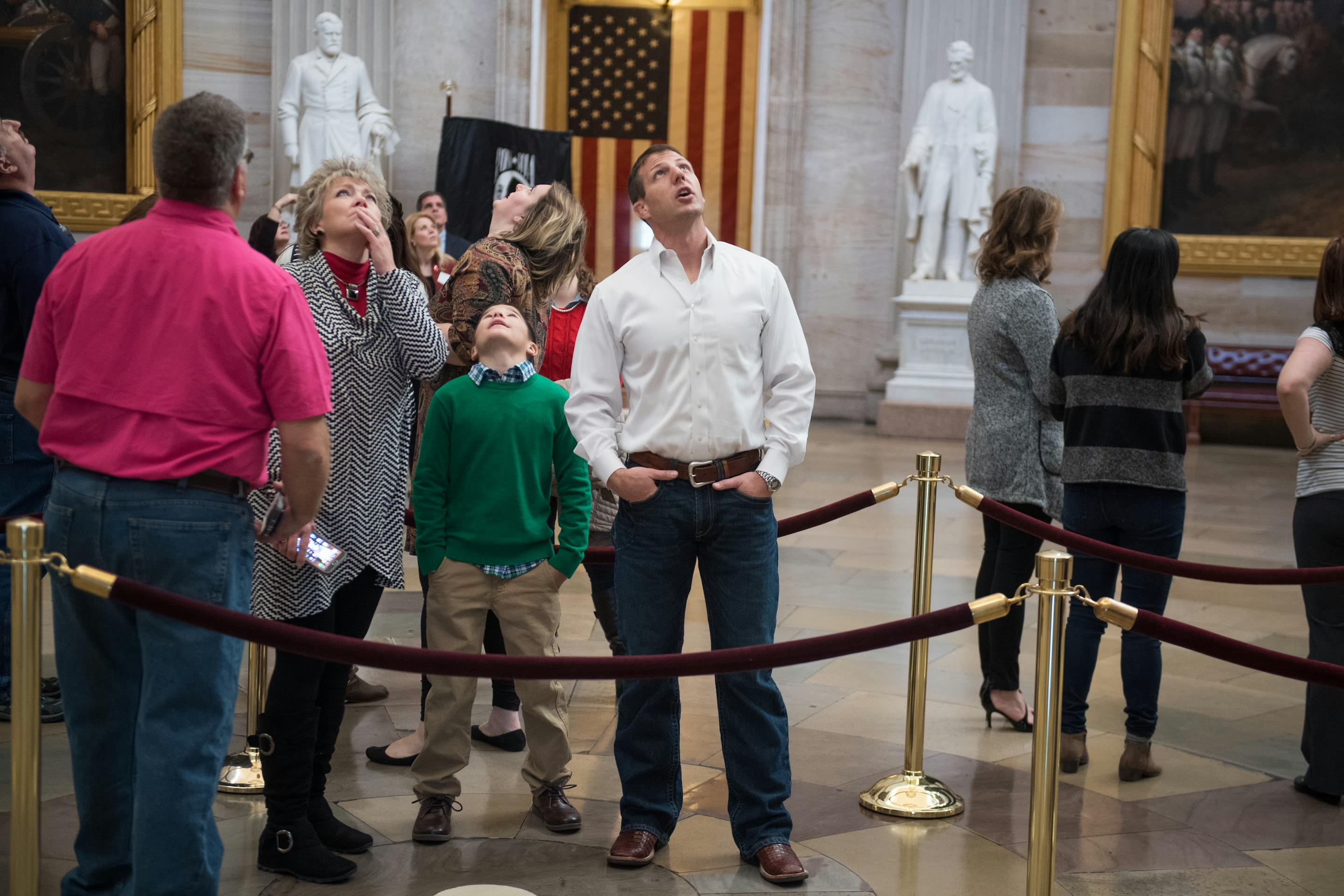
Mullin declared that he would follow Trump “into any situation”—and he has. Not long after Jim’s injury, Mullin joined the president in falsely claiming that the 2020 presidential election had been stolen, a position he stuck to even after he directly confronted rioters as they tried to break into the House chamber on January 6. As a senator, Mullin championed the president’s massive spending bill last year, even though he’d first run for office as a fiscal hawk. And in March, when Trump asked Mullin to replace the scandal-ridden Noem at DHS, Mullin gave up what could have been a long congressional career for a job often described as one of the worst in Washington: a political hot seat with grave security responsibilities, atop a bureaucratic mash-up of 22 agencies and subagencies, and 275,000 employees. Mullin, who said he was surprised by Trump’s request, didn’t think twice.“It’s hard to say no to someone you have that kind of connection with,” Jason Owens, a former Border Patrol chief who is also Mullin’s cousin, told me.
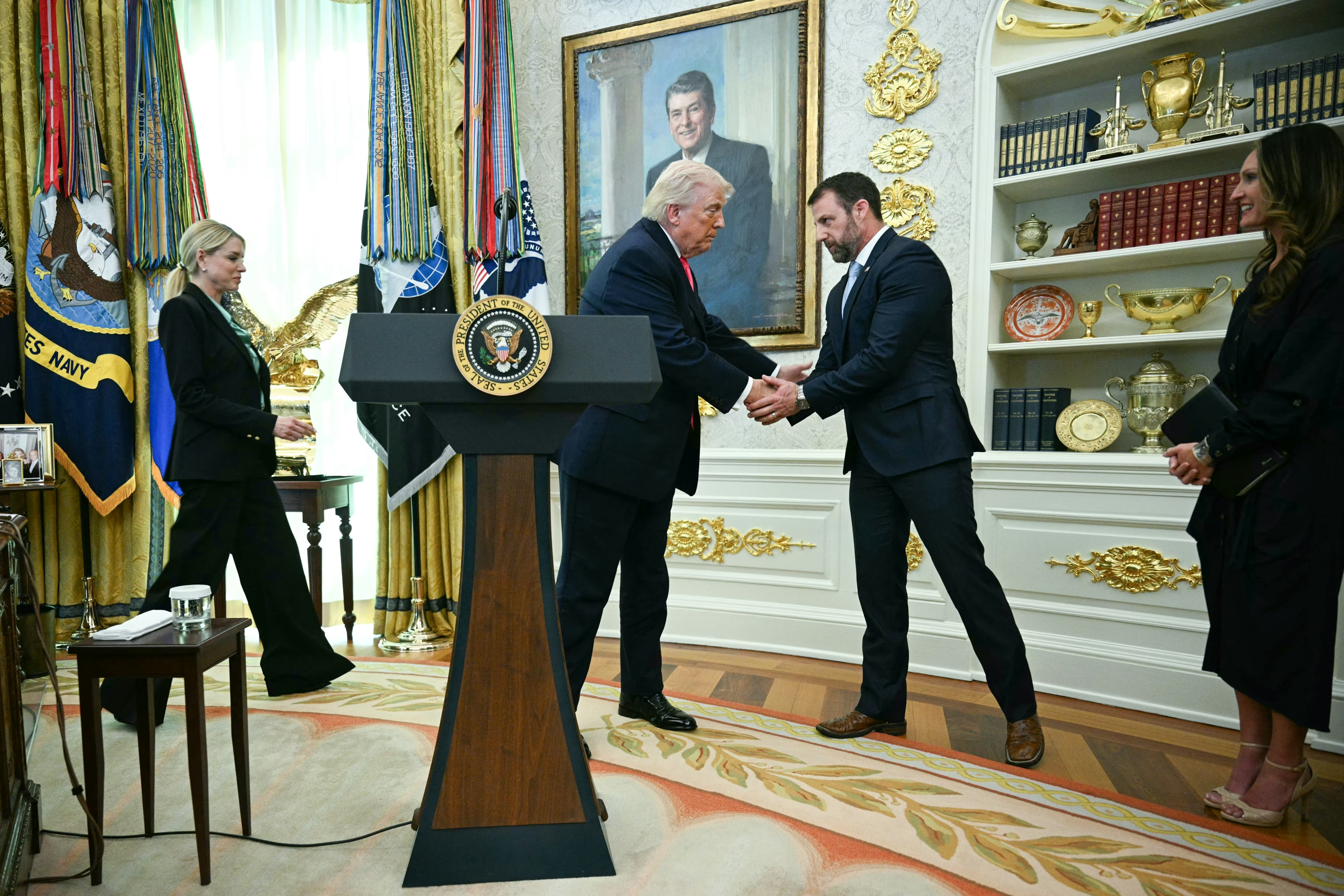
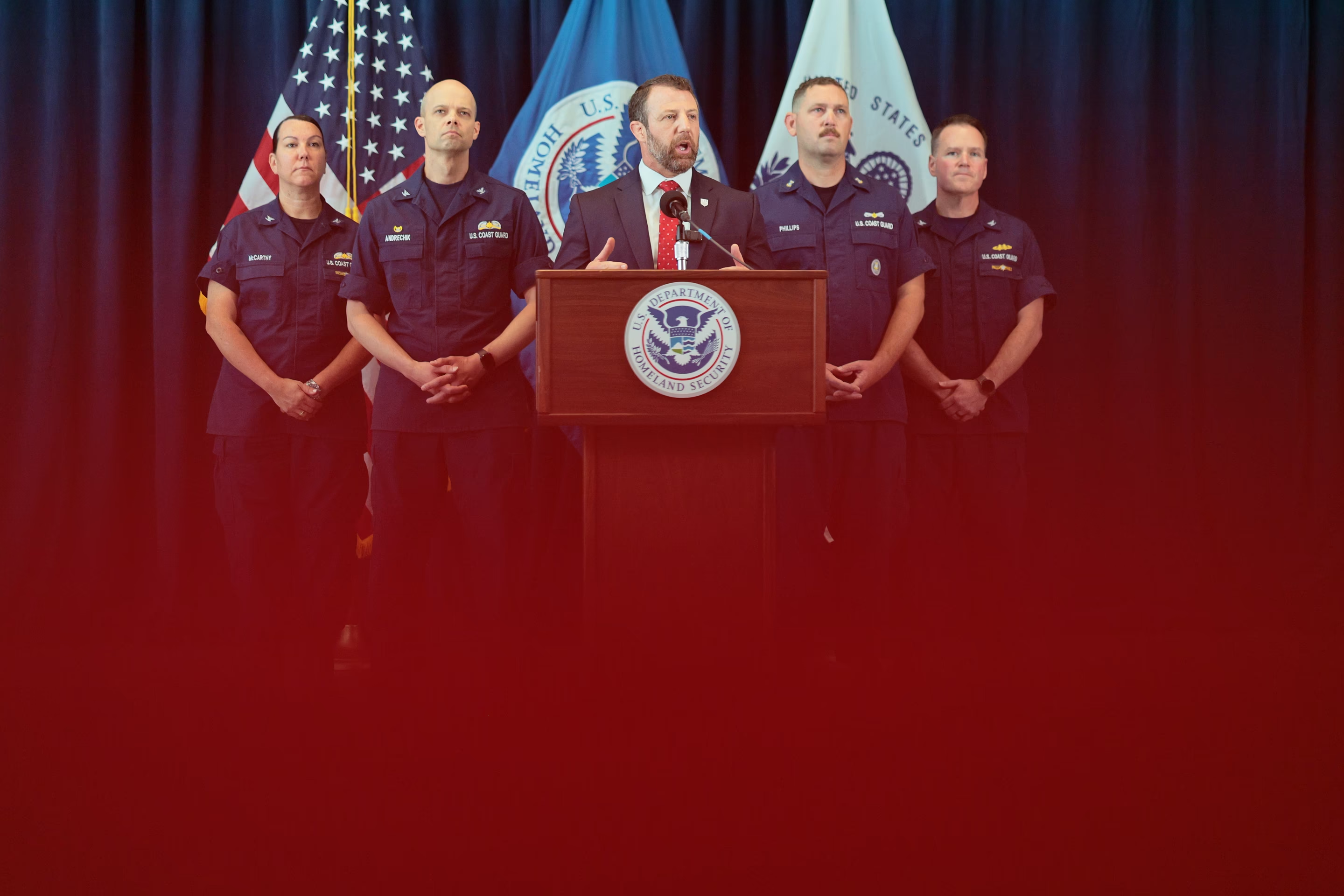
The department has become far more partisan under Trump, and Mullin has done nothing to indicate that he’s likely to impose boundaries. Two days after the public reversal on vehicle stops, Mullin held a media briefing next door to the White House to push Trump’s favorite issue, echoing thin claims about election fraud while issuing threats—idle ones, legal experts say—to state officials who refuse to hand over voter data. When a reporter asked Mullin whether Trump had known in advance about the order halting ICE vehicle stops, Mullin dissembled, insisting that there was “no daylight” between them. “I’ve turned down the temperature of the stove, to try to get it correct, without boiling over,” Mullin said, touting record numbers of immigration arrests in recent weeks. Asked to clarify what he meant by “temperature,” Mullin said that he wanted less intense media coverage, not less aggressive ICE operations. “We’re turning up the heat on the streets,” he said.
Mullin is 48, compact and powerful, with a thick neck and tight-fitting suits that look as if they’re about to burst. His front teeth are fake, he says; the original ones were knocked out at a rodeo by a “horn to the mouth.” Bull riding, wrestling, and MMA fighting all involve short, performative bursts of action, not unlike partisan combat. Mullin shares his boss’s urge to lunge at any slight but also to befriend former enemies if they decide to embrace him. Sean O’Brien—the burly Teamsters boss whom Mullin told to “stand your butt up” and fight him during a 2023 Senate hearing—ended up endorsing Mullin’s nomination to lead DHS after the president encouraged the two to make peace. During the confirmation hearing, O’Brien sat just over his shoulder, next to Mullin’s wife, Christie.
Miller remains the driving force behind Trump’s immigration agenda, even though his influence over day-to-day DHS operations has diminished somewhat since the Minneapolis shootings. Mullin, like Miller, delights in hyperbolic attacks on Democrats, but the two men are in many ways stylistic opposites: Mullin is earnest and unpretentious; emotional, not cerebral. It’s almost impossible to imagine Miller crying in public.
[Read: Kristi Noem is gone. Now mass deportations can really begin.]
Mullin has been a vocal supporter of ICE officers and Trump’s border wall, but he has also spoken sympathetically about hard-working immigrants who stay out of trouble, sounding more like a conventional pro-business Republican than a closed-borders ideologue. Some Republicans facing difficult midterm races hoped that Mullin would defuse some of the backlash to Trump’s heavy-handed tactics, while hard-liners have been wary of Mullin’s statements in support of legal immigration (they want none) and his emphasis on deporting dangerous criminals (they want more deportations than that).
Others have even loftier dreams for Mullin. I was surprised when a conservative former DHS official told me that he expected Trump to seek a major immigration compromise before the end of his term, as a legacy-building project and a bid to bring Latino voters back to the Republican Party. Mullin, who has impeccable MAGA credentials and improbably friendly relations with key Democrats, would be the ideal person to make such a deal, he told me.
Mullin’s desire to keep DHS out of the headlines was wishful thinking, if not naive. After a few weeks on the job, he threatened to curb international flights to U.S. airports that serve “sanctuary” jurisdictions that won’t help ICE, then backed off that idea after it was panned by business groups, members of both parties, and Transportation Secretary Sean Duffy. Although there are no longer sweeping crackdowns on major cities for the time being, ICE arrests are ramping up again to roughly 2,000 a day nationwide, nearly double the pace since spring.
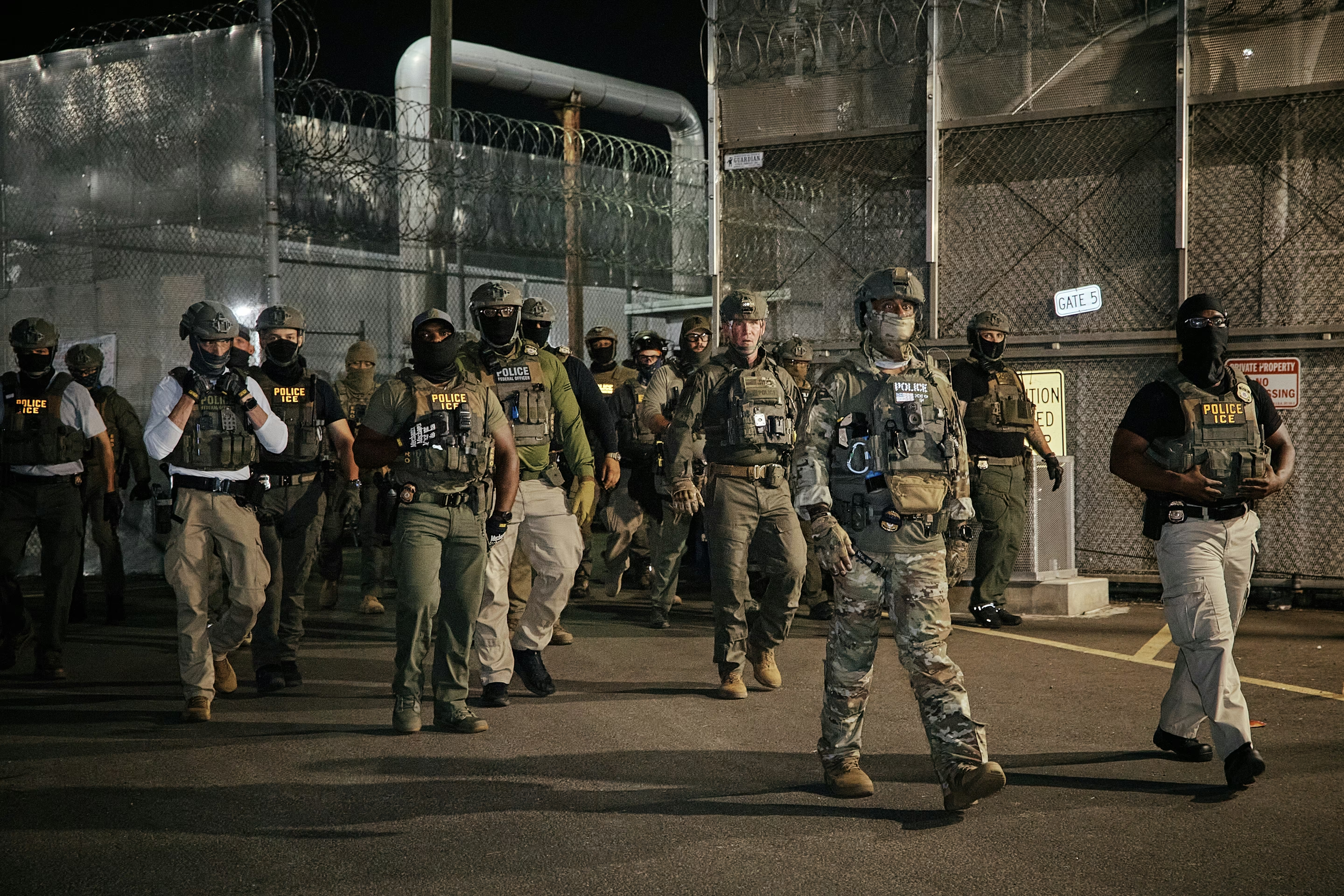
Mullin has been trying to turn temperatures down in other ways. He has eased off warrantless searches and enforcement around sensitive locations such as courthouses and schools. ICE recruits are no longer being fast-tracked through the training academy, and Mullin has halted plans to house tens of thousands of detainees in retrofitted warehouses. But Mullin gets prickly when Democrats claim a victory that could make him look weak. When New Jersey Governor Mikie Sherrill, a Democrat, boasted on social media last month that DHS had “backed down” from its plan to open an ICE jail in her state, Mullin reversed course. “DHS will NEVER back down,” he declared. “We will be keeping this site for a detention center.”
Mullin says that his personal mantra is “Love the people, love the call,” and he has applied that as a management approach at DHS. Employee morale suffered during Noem’s tenure, and Mullin has devoted time to rallying the workforce, earning the nickname “MAGA Mayorkas.” It’s meant as a favorable comparison to Joe Biden’s DHS secretary, Alejandro Mayorkas, who was known within DHS for being kind to his staff even though Republicans treated him like the boogeyman.
In Mullin’s office at DHS headquarters, located in the former Saint Elizabeths psychiatric-hospital complex in Southeast Washington, the secretary carries around a little squishy pink ball. Since middle school, he has used it as a stress-relief device and fidget tool—he calls it his “pacifier”—and he’ll bounce it to center himself when he wants to make a point. He grew up with a “bad speech impediment,” he says, and the alphabet soup of agencies and subagencies at DHS tripped him up at first. Mullin has since learned to carefully enunciate initialisms such as “CBP” in the correct order but has a curious habit of referring to DHS simply as “Homeland,” like the TV show, and his role as the “secretary of Homeland.” It makes the job sound warmer—like heartland—while also subtly reinforcing the view, popular with Trump appointees at DHS, that the nation’s top immigration-enforcement official should be a kind of cultural and demographic policeman as well as a real one.
[Read: ‘Maybe DHS was a bad idea’]
Mullin is only the second Native American to lead a Cabinet agency, but for much of his political career, he treated his Cherokee identity as more of a biographical footnote than a central feature. “I never knew I was special for being Cherokee until I came to D.C.,” Mullin said during a Senate hearing last year. “Where I’m from, everybody’s Indian, or wants to be.”
When Democrats pressed Mullin last month during a DHS budget hearing to address questions about discrimination and racial profiling by immigration-enforcement officers, Mullin used his Cherokee identity as a shield. Representative Lou Correa of California, a Democrat, asked Mullin whether his constituents needed to carry their U.S. passport to protect themselves from ICE. “I’m from Indian Country, and we got a lot of brown people around there too,” Mullin fired back. After Representative Al Green of Texas, another Democrat, accused Mullin of defending racism, Mullin interrupted: “Are you calling me racist?” Green, incensed, shouted at him to “shut up,” but Mullin kept on swinging. “No one will call me a racist. I’m Cherokee,” he said.
Mullin flies home to his family in Oklahoma most weekends on the same executive jet that Noem controversially purchased for the department, one of several missteps that led to her ouster. DHS told me that Mullin pays for his trips, but the department did not respond to follow-up questions about how his share of the cost is calculated. The Mullins—who married when they were teenagers—live in a large house in the Tulsa suburb of Bixby, where they moved a few years ago when their kids’ beloved wrestling coach took a job there. Mullin’s convoy of black SUVs has been spotted rolling around Bixby when he’s home. The couple have six children, three of whom are adopted. “I am proud to be pro-life,” Mullin has said of his large family.
I went to northeast Oklahoma, where Mullin grew up, to gain a better understanding of his origins and his divided life between home and Washington, D.C. Although much of the state is flat, and rich in oil and gas, the 14 counties that compose the Cherokee Nation are a gentle landscape of forests, rivers, and cattle pastures in the foothills of the Ozark Mountains.
Mullin was dragged on social media after asserting his Cherokee identity during the hearing, because he appears white. He is one of more than 460,000 enrolled members of the country’s largest federally recognized tribe. Eligibility is based on genealogical lineage, not on physical appearance or a minimum “blood quantum.” Members must trace direct lineage to a Cherokee ancestor inscribed in the Dawes Rolls, a federal registry of tribal members in Oklahoma kept from 1898 to 1914. Chuck Hoskin Jr., the chief of the Cherokee Nation, told me that he estimates that the majority of enrolled members have one-eighth or less Cherokee DNA. People who see Mullin “may say, ‘That doesn’t fit my perception of what a Native American should be,’” Hoskin said. “But it’s very much statistically who we are.”
Other Cherokee members I met described their tribal heritage as Mullin does, as a source of pride but not necessarily the defining feature of their life. It’s also a source of social-welfare benefits. Cherokee identity has long been bound up in the tribe’s relationship to the federal government; enrollments surged during the creation of the Dawes Rolls, Julie L. Reed, a historian at the University of Tulsa, told me. In the mid-20th century, more white-passing members were eager to assimilate and downplay their heritage. Things have come full circle in recent decades, Reed said, the result of government benefits, federal-contracting advantages, and a resurgent pride in Cherokee identity. “People whose families had distanced themselves from the Cherokee Nation for all sorts of reasons over the course of the 20th century found their way back once the Nation really started to have real economic, political, and social impacts on the surrounding area,” Reed said.
The Cherokee Nation, whose chief is an elected official, is an economic juggernaut with annual revenues of more than $3 billion from casinos, federal contracts, and an array of tribe-owned businesses. One of the region’s largest employers, the Nation has invested more than $1.2 billion into capital projects in recent years, according to Hoskin. Tahlequah, the Cherokee capital, is a thriving midsize town, with chain stores along the highways and a welcoming, well-maintained historic district. There’s a new medical complex, along with new community centers, senior care, playgrounds, and schools, some offering Cherokee-language immersion programs.
Oklahoma was solidly Democratic for decades after it became the 46th state, in 1907, especially after the New Deal brought federal jobs and benefits to counties that were among the nation’s poorest. Benny Denton, an 85-year-old rancher who lives near the Mullin-family homestead, told me that when he was growing up, “I didn’t know of anybody who actually starved to death. But there wasn’t a rabbit in the field or a fish in the river.” The Cherokee Nation, whose government is nonpartisan, has spent the past several decades building the kind of cradle-to-grave welfare state once contemplated in the New Deal, even as Democrats have virtually disappeared from Oklahoma public office.
The ranch where Mullin grew up is less than a mile from the Arkansas state line, outside the tiny town of Westville, at the end of a narrow road winding past battered houses and trailers. A tall metal fence surrounds the 1,600-acre property, its gates engraved with the large M of the family logo. Mullin is the youngest of seven children, and friends and neighbors of the family spoke highly of his parents as hardworking, devout, and down-to-earth. Mullin’s father has a reputation for being somewhat stern, and he disciplined his kids with a belt; his mother is known for being warm, chatty, and a prodigious baker of cookies. Mullin was named after her brothers, Mark and Wayne. John Garrett, the 84-year-old chief justice of the Cherokee Nation Supreme Court, has known the family for decades and remembers Mullin accompanying his father to plumbing calls as a teenager. He was ambitious, a “go-getter,” Garrett told me. “He just had a lot of energy.”
[Read: High stakes, and a low bar, for Markwayne Mullin at DHS]
The state’s shift to the Republican Party happened during those teen years, and the party’s attacks on “big government” found traction in a region with a fraught relationship to federal agencies that many Cherokee both depended on and resented. Mullin’s father embodied the change. He was a small-business owner who didn’t hide his frustrations with the IRS. Mullin was a devoted son who ran errands for his father. “You wouldn’t want to get in his father’s way,” said Denton, who owned the hardware store in town.
Mullin enrolled in college on a wrestling scholarship but left to help run the family plumbing business. Over the years, he grew the company—known for its signature red vans and its slogan, “The Red Rooter”—and became its pitchman in commercials. Working around construction sites in the Tulsa metro area was probably when Mullin first had experience with immigrant laborers, people I spoke with there told me; eastern Oklahoma was not a destination for immigrants when Mullin was growing up. Records show that Mullin Plumbing has earned more than $520,000 in federal contracts since 2010, mostly through the Indian Health Service. Mullin Plumbing was listed as minority-owned, Native American–owned, American Indian–owned, and a “small disadvantaged business,” but according to contracting records, those categories were not a factor in the awards.
In 2011, before he entered politics, Mullin began hosting a weekly radio show, House Talk, modeled in part after NPR’s Car Talk, to dispense advice on home improvement and repairs. Friends of the family told me that they think Mullin’s father pushed him to run for Congress around the same time to deploy his combativeness against environmental regulators and tax collectors. Mullin railed against the Affordable Care Act, opposing mandates that would require him to offer coverage to his employees despite having access himself to free health care as a tribal member. Mullin’s 2012 campaign slogan was “A rancher. A businessman. Not a politician.” When he arrived in Washington, he said, he didn’t know how to put on a tie.
Mullin positioned himself firmly among the most conservative members of Congress, proposing, for example, a total abortion ban, even when a mother’s life is in danger. When he first took office, he pledged to serve a maximum of three terms, then broke the promise in 2018. Mullin explained the decision in a video, seated with Christie, saying that he “didn’t understand politics” when he got to Washington. With Trump in office, Mullin said, he could have a bigger impact if he stayed on the job. It turned out to be the most pivotal moment of his career, consolidating his transition from D.C. outsider to MAGA insider. “The first lesson I learned up there is, you gotta build relationships,” Mullin said.
A private-equity company acquired Mullin Plumbing in 2021 for an undisclosed sum, estimated in the tens of millions of dollars’ worth of shares on the same day of the sale. The next year, Mullin won a special election for an open Senate seat. In both chambers, he was one of the few lawmakers without a four-year college degree, but his recent financial disclosures show an estimated net worth somewhere from $29 million to $97 million.
John Bankel, a GOP activist in the area who knows the family, told me that he doubts that DHS will be Mullin’s last job in politics. Christie Mullin believes deeply in her husband’s political talents and “is the one who pushes Markwayne to the next level,” he said. Bankel told me that he thinks Mullin could run for president someday.
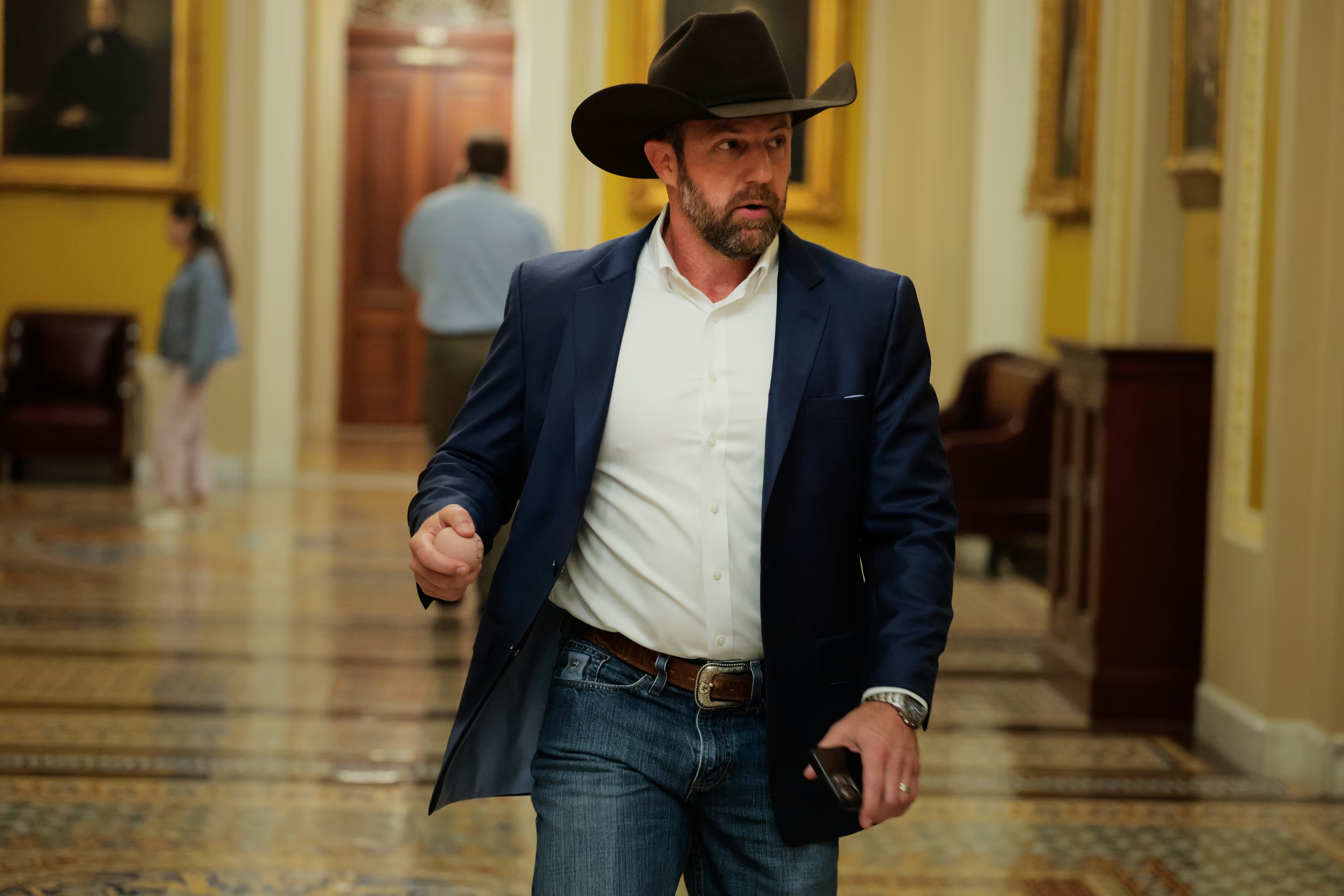
Friends of the family told me that Mullin has sometimes regretted not serving in the military or law enforcement. The DHS-secretary job gives him a chance to be a man of action, with a lead role in national security and law enforcement. Mullin’s grandfather, who was Cherokee and a competitive bull rider, served in World War II, and last year, Mullin cited his role in liberating Nazi concentration camps when condemning a group of young Republicans who’d made racist and anti-Semitic statements in group chats.
Mullin has tried to burnish his own reputation for daring, though in a cryptic way. He has told interviewers that he performed “special assignments” outside of the U.S. military. After the Taliban took Kabul in 2021, Mullin asked the U.S. ambassador to Tajikistan to help him bring in a large amount of cash so he could rent a helicopter and lead a dangerous mission into Afghan territory to rescue a mother and her four children, all U.S. citizens. Mullin threatened U.S.-embassy staff when they turned him down. After Trump nominated him for the DHS job, Mullin told senators that the “smell” of war was something he would “never forget.” When Democrats asked what he meant, Mullin said that he’d taken a classified trip in 2016 as a member of Congress that required specialized conflict-zone training. But he refused to provide more details. “There’s another side of my bio that I don’t talk about, nor will I,” Mullin previously said on a podcast, in no great hurry to dispel the intrigue.
Soon, it came out that Mullin had told Senate colleagues during a 2023 closed-door meeting with Jordan’s King Abdullah II that he and other Americans were once rescued when the king sent his personal helicopter, because they could not get help from the U.S. military, according to The New York Times. Mullin described blood all over the helicopter. Had Mullin made a top-secret trip into war-torn Syria? Mullin has refused to say, and no one from the administration has cleared up the mystery.
Not far from Mullin’s old high school, in Stilwell, is a cemetery with a historic marker that commemorates the end of the Trail of Tears, the 1,000-mile journey made by thousands of Cherokee who were forced out of their ancestral homes in southeastern Appalachia under the Indian Removal Act of 1830. The ordeal remains central to Cherokee identity—it’s the foundational story of the Cherokee Nation as well as its greatest tragedy. From 1838 to 1839, more than 3,500 Cherokee arrived at the site in Stilwell, an official “disbandment depot” just outside the borders of the settled United States. The deported families waited in lines to receive government provisions and were sent off into the forest to rebuild their lives. Most of them spent the winter in tents around the edges of the depot site. Some of the more than 1,000 Cherokee who died making the journey are buried in the Stilwell cemetery, according to the National Park Service.
Removal remains an official government term, though today it’s used primarily at DHS to tally ICE deportations. There is no comparison, of course, between the removal of immigrants who enter the United States illegally and the relocation of the Cherokee and other tribes. That doesn’t make deportation less fraught or painful for those who develop deep ties to the United States or have children here. Taking people from their home and separating families are grave and consequential acts.
Mullin so far has engaged little with these messy realities, at least publicly. Mostly, he has echoed the rhetoric of Trump officials who prefer to depict ICE enforcement as a matter of public safety focused on the removal of dangerous criminals. (ICE data show that only a small percentage of deportees—ranging from about 5 to 15 percent—have violent felony convictions.) Like Tom Homan, the White House “border czar,” Mullin has seemed most animated when talking about the trafficking and abuse of underage migrants who arrived in record numbers during the Biden administration, an issue that lacks the moral complexity of much of ICE’s other work.
Republican lawmakers used the reconciliation process last month to score $70 billion in additional funding for Trump’s immigration crackdown over the next three years, adding to the $170 billion they’d obtained in the One Big Beautiful Bill Act last summer without a single Democratic vote. Trump has nominated a Mullin loyalist, the former Oklahoma state trooper Lance Schroyer, to be the next ICE director.
The flood of congressional funding and recent Supreme Court rulings in favor of tougher enforcement have positioned Trump’s mass-deportation plan for takeoff. That leaves Mullin, who launched his political career attacking big government, as the face of one of the largest-ever law-enforcement operations in U.S. history. Mullin’s “Homeland” department will soon have twice as many ICE officers on the streets, and all of the money it needs to round up and deport 1 million people a year. Mullin would like that to happen quietly, but it will likely trigger new pushback and protest, testing just how far he’s willing to go for Trump.
Marie-Rose Sheinerman and Isabel Ruehl contributed to this report.
*Illustration sources: Jim Watson / Getty; Andrew Lichtenstein / Corbis / Getty; Elizabeth Fernandez / Getty; Chip Somodevilla / Getty.
The post Bull Rider appeared first on The Atlantic.