Impaired memory and thinking are the most common symptoms associated with a dementia diagnosis. But noncognitive symptoms can appear years or even decades earlier.
Alzheimer’s disease, which accounts for 60 to 80 percent of dementia cases, can progress through three main stages. The first stage can start 15 to 20 years before any obvious changes to cognition. During this time, the brain starts to shrink, and the misfolded proteins that are a hallmark of Alzheimer’s begin to build up — sticky amyloid beta plaques in the brain and tau tangles in neurons.
This is followed by mild cognitive impairment, where people begin having noticeable problems with memory and cognition but otherwise have good overall function. Then comes the “dementia” stage, when multiple cognitive domains are impaired, leading to an inability to function independently in day-to-day life.
Scientists think the biological changes to the brain during the first and second stages may cause emotional, sensory and physical symptoms even years before a potential diagnosis.
“You can have many of these other precursors but not have any cognitive symptoms,” said Timothy Chang, an associate professor of neurology at UCLA.
Of course, experts caution that having early symptoms linked to an increased risk of Alzheimer’s does not mean you’ll necessarily develop dementia, and about 45 percent of dementia cases are preventable with lifestyle changes.
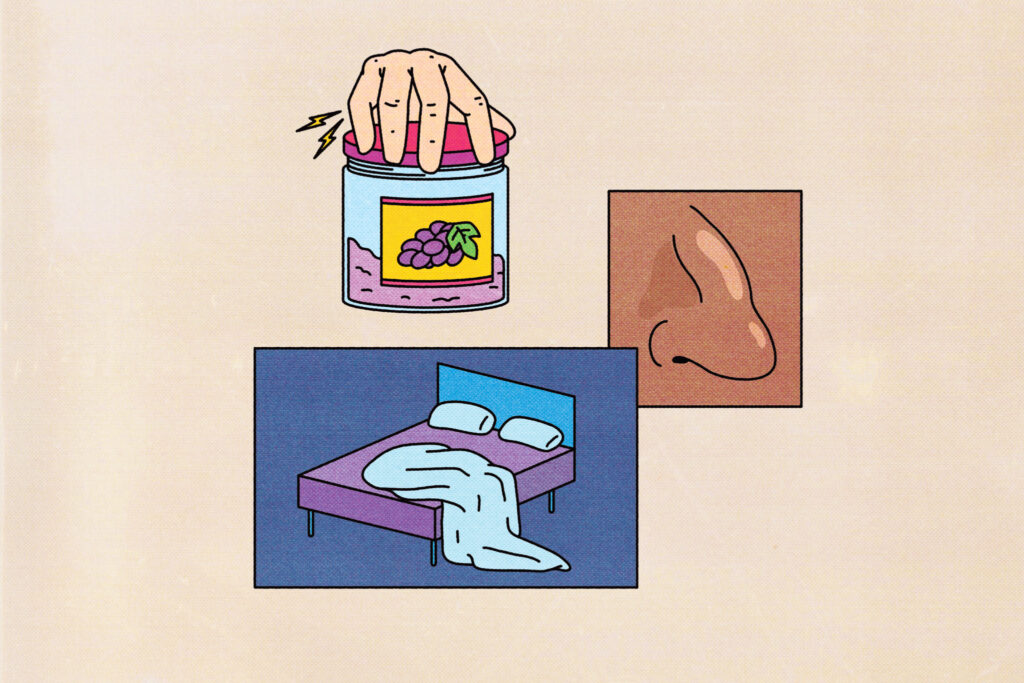
Here are six early symptoms that often appear in people who are later diagnosed with Alzheimer’s disease.
Depression and anxiety that start later in life
Depression is a known risk factor for dementia. A 2023 study of more than 1.4 million Danish adults found that the risk of dementia was 2.4 times higher in those diagnosed with depression.
But depression and anxiety that develop later in life — around age 55 or 60 — can also be warning signs that something is amiss.
“The idea is that some of the brain network changes that are happening early in dementia affect your mental health as well,” so changes to mental health are “a signal for early potential changes in brain function,” Chang said.
Having these mood symptoms may also accelerate the progression of dementia, researchers have found.
Increased apathy, irritability or agitation
Neuropsychiatric symptoms such as irritability and agitation are common in Alzheimer’s disease and can be found before cognitive decline occurs.
One 2017 study of about 1,400 people found that about 31 percent of older cognitively healthy adults had mood symptoms, compared with about 47 percent among those with increased dementia risk and about 54 percent in people who had mild cognitive impairment.
About 50 to 60 percent of people with biomarkers of Alzheimer’s pathology have at least one neuropsychiatric symptom, said Adam Turnbull, an instructor in psychiatry and behavioral sciences at Stanford University who wrote a recent paper about disruptions to emotion regulation in preclinical Alzheimer’s disease.
“If you just feel like you’re mad and grumpy all the time, and you’re snapping at people and your relationships with people seem to be highlighted by kind of consistent fighting and kind of negative vibes, then go seek mental health support” from a geriatric psychiatrist, Turnbull said.
Problems with sleep
Because sleeping well can be protective, poor sleep can serve as “an indicator of something going wrong,” Turnbull said.
Sleep apnea and other sleep disorders, including excessive daytime sleepiness, restless leg syndrome and circadian rhythm sleep disorders, are associated with increased dementia risk, according to a 2025 meta-analysis of 39 studies.
Insomnia or reduced nighttime rest can also precede dementia. One study of more than 4,400 cognitively healthy older adults found that having less nighttime sleep or more daytime sleep was linked to an increased accumulation of amyloid beta — a biological hallmark of Alzheimer’s disease — in the brain.
On the other hand, each additional hour of nighttime sleep was linked to reduced amyloid beta levels. Research suggests that sleep may help flush out waste, including amyloid beta, from the brain.
Of course, you shouldn’t worry about an afternoon nap. But sleeping a lot during the day, and then not sleeping well at night, may be a cause for concern, Turnbull said.
Loss of sense of smell
Our ability to smell is linked to brain health, and losing this sense is often one of the first signs of neurodegenerative disorders, including Alzheimer’s disease and Parkinson’s disease. About 85 percent of people with early-stage Alzheimer’s have problems smelling.
The nose has a unique connection with the brain. Compared with other senses, such as hearing and sight, information for smell is sent more directly to the cortex where it then connects to areas important for cognition, memory and mood, including the hippocampus and the amygdala.
Intriguingly, the smell — or olfactory — nerve is able to regenerate, and people can improve their smell with training. There is even preliminary evidence that smell training can improve cognition, even for people with a normal ability to smell.
Slower walking
For years, changes such as walking more slowly, taking shorter steps or having a wider stride were considered a normal part of aging. But research now suggests that these changes can precede and predict cognitive impairment and other neurological problems.
A 2024 study of more than 1,300 healthy adults older than 65 found that walking ability — including walking speed and the ability to turn 360 degrees — diminished up to a decade before cognitive decline.
Weaker handgrip strength
Grip strength is closely linked with healthy aging and may be a better indicator of life expectancy than blood pressure.
Weaker grip strength is also associated with worse cognitive health. One recent study analyzing over 190,000 adults found every 11-pound decrease in hand grip strength was associated with a 20 percent increase in dementia in men and a 12 percent increase in women. Weaker handgrip strength was linked to lower problem-solving scores and worse performance on a memory task, as well.
Grip strength is one of the ways doctors assess physical frailty, along with how you walk. In medical terms, physical frailty means your body is more vulnerable to illness and injury. It’s both a risk factor for dementia and a potential early warning sign that can appear about a decade before cognitive symptoms begin.
When to talk to your doctor
“If you’re an older adult noticing these symptoms, I wouldn’t panic and assume it’s dementia,” Turnbull said. “There’s a good chance it’s not anything to do with anything neurological.”
But if you’re concerned about your memory or thinking, especially alongside any of these symptoms, it’s important to talk to your doctor. Recent advances in diagnostics, including for PET scans, lumbar puncture and a new blood test, can detect Alzheimer’s biomarkers earlier, which in turn could speed up treatments.
“I think it’s good to have an evaluation and have a physician kind of give feedback on like, oh, this is concerning or it’s not,” Chang said.
How to reduce your dementia risk
There’s a genetic component to dementia risk, but there are also many ways we can reduce our risk.
Last year, the U.S. POINTER clinical trial found that a mix of exercise, a healthy diet, social engagement and brain games could improve cognitive capabilities in older adults at risk of cognitive decline or dementia.
Other studies have found that eliminating alcohol, getting regular vaccines and protecting our hearing could help preserve cognition.
The post 6 dementia symptoms that can show up years before a diagnosis appeared first on Washington Post.