Last week presented a stark contrast in the trajectories of the Trump administration’s two riskiest foreign policy ventures. On July 13, the President Donald Trump formally declared a return to military action in Iran, making clear that a war that he had anticipated would last just four or five weeks will stretch past the five month mark and probably longer. Trump appears increasingly frustrated by Iran’s failure to concede to his demandto fully reopen the Strait of Hormuz, comparing the country to a “great boxer”: “You think you have them beat, and then all of a sudden he comes back and he gives you a shot.”
Key takeaways
- After removing President Nicolás Maduro in January, the US is now effectively controlling Venezuela via new President Delcy Rodríguez. On the other hand, after five months of fighting, Iran shows no signs it will accede to Trump’s demands.
- Trump cited Venezuela as a model for how he would like to control Iran and spoke of finding another “Delcy” to run that country, but it should have been obvious that was never going to work, given the differences between the two countries.
- Trump has spoken of attempting regime change in other countries, particularly Cuba. The question going forward is whether the experience of Iran has changed his views on how easy this would be.
On the far side of the globe, however, the other country Trump attacked this term has proven much more manageable. Venezuela’s government — now led by former Vice President Delcy Rodríguez, who took power when Nicolás Maduro was captured in a US raid in January — agreed to talks with an opposition leader handpickedby the US that aimed at “strengthening democracy.”
The New York Times reported earlier this week that US Secretary of State Marco Rubio is effectively the “viceroy” of Venezuela, ruling the country in absentia from Washington, DC. (“Viceroy” is traditionally an official who governs a country or colony as a direct representative of a monarch.) The US has direct control over the revenues Venezuela receives from selling its oil abroad, giving Rubio effective power over the country’s budget. The grip is so tight, the Times reports, that Rodriguez asks for White House approval before appearing on Fox News, much to Trump’s delight.
Two different countries in two different parts of the world with two different responses to Trumpian military pressure. But when future historians tell the story of how this administration ended up enmeshed in exactly the sort of Middle East quagmire that he had run for office pledging to avoid, they’re likely to devote at least a few paragraphs to Venezuela. The easy success of one operation set the stage for the still unfolding disaster of the other.
Exporting the Venezuela model
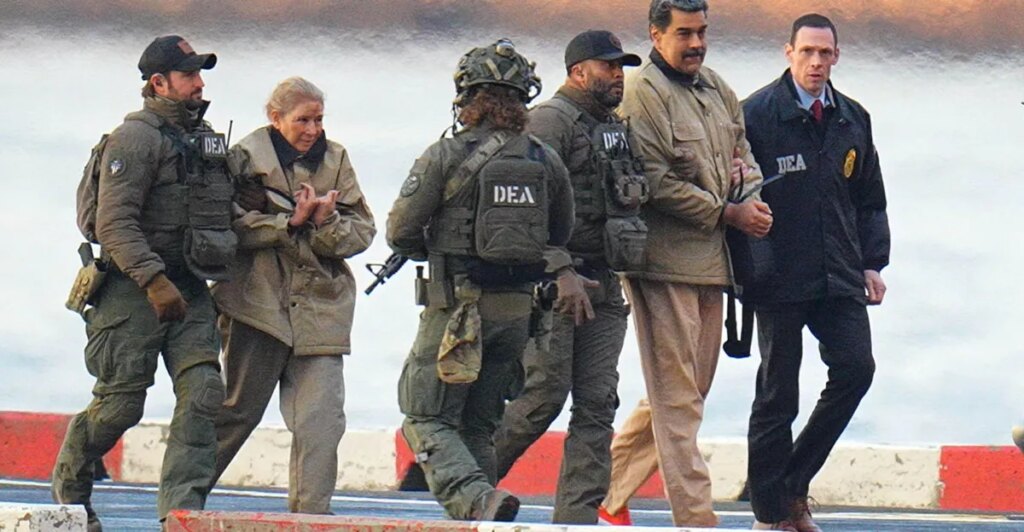
In a daring predawn raid on January 3, US Special Forces managed to capture Maduro in a matter of hours, with no US troops killed. Contrary to the warnings of critics that such regime change would result in chaos — and to the hopes of the Venezuelan opposition that it would lead to democracy — Trump and Rubio successfully replaced Maduro with his much more pliant vice president, who has proven more than happy to let Washington call the shots. Trump now regularly muses about making Venezuela the 51st state.
The operation was, the Times reported, “evidence to the president of the unmatched prowess of U.S. forces” and, along with the relative success of the first round of airstrikes against Iran’s nuclear program last June, emboldened him to take further military action.
“What we did in Venezuela, I think, is the perfect scenario,” Trump said in early March, referring to prospects for regime change in Iran. And in one sense it worked; the US was able to remove the head of state within hours of launching military action, with Iranian Ayatollah Ali Khamenei killed in a joint US-Israeli airstrike.
“I have to be involved in the appointment, like with Delcy in Venezuela,” Trump said, when Iran’s regime was considering Khamenei’s successor.
Trump was not involved. Iran’s Assembly of experts chose the former supreme leader’s son, Mojtaba Khamenei, whom Trump dismissed as “unacceptable” and a “lightweight”.
Despite this, Trump continued to insist that regime change had effectively happened in Iran and that its new leaders were “much more reasonable.” While Iran’s new political system is still very much a work in progress, its insistence on maintaining control of the state and ongoing attacks against shipping and US allies in the region have made it fairly clear that it will not be taking orders from Marco Rubio or anyone else in DC.
Why Iran is not Venezuela
On the surface, there are some striking similarities between Iran and Venezuela: They were once close allies of each other, as well as of Russia and China. Both are oil dependent authoritarian states espousing a revolutionary ideology defined in large part by opposition to the United States. Both are known for sponsoring foreign militant groups. Both have a history of disputed elections and crushing opposition protests. Both have large and vocal exile communities in the US. Both have struggling economies and have spent years under US sanctions.
That’s where the similarities end, however. Start with the military: Iran’s combined forces are roughly three timesthe size of Venezuela’s and far better equipped, possessing missile and drone capabilities that have spread chaos across the region for months. Iran’s senior leaders came of age during the brutal Iran-Iraq war of the 1980s and have spent decades engaged in proxy battles with the US and Israel, whereas Venezuela has not fought an interstate war in modern times. It’s telling that Maduro was relying on Cuban personnelfor his own security.
Then, there’s geography. Thanks to its fortuitous location on the western side of the Strait of Hormuz, Iran has means to retaliate against the US by blocking shipping through the world’s most important energy chokepoint, driving up oil prices. Venezuela may have the world’s largest oil reserves, but it doesn’t have anywhere near the ability to disrupt global energy flows.
Iran was able to attack US allies throughout the Gulf with both its own missiles and via the military groups it supports throughout the region. Despite Trump’s misleading claims that Maduro’s government was in direct control of gangs in the US or weaponizing migration, Venezuela simply didn’t have the same kind of leverage with which to fight back.
There’s history, too. Even at the nadir of relations with the US, when Venezuela was under heavy American sanctions and formal diplomatic contacts were cut off, there were still periodic talksover energy issues and prisoner releases. The US oil company Chevron continued to operate inside the country. Rodriguez herself was a familiar figure to US officials, having participated in talks with both the Biden and Trump administrations.
And finally, there’s ideology. Venezuela’s rulers may still be publicly committed to the “Bolivarian” socialist vision of former leader Hugo Chávez, but, in reality, the regime operates as “an extreme form of crony capitalism with some pretenses of redistribution of oil windfalls to the poor,” said Chris Sabatini, director of the Latin America program at the think tank Chatham House. Senior civilian and military officials were heavily involved in a range of enterprises of varying degrees of legality from the oil industry, from gold mining to drug trafficking. When push came to shove, they were more interested in preserving their fiefdoms than standing up for a long-dead revolution.
According to some reporting, denied by the Venezuelan government, Rodríguez had been in direct contact with US officials prior to Maduro’s capture, assuring them of her cooperation, which would make this less a regime change invasion than a US-enabled coup. Even Interior Minister Diasdello Cabello, considered the hardest of the hardline Chavistas with a US price on his head, has been more than happy to play ball with the country’s new American overlords.
Iran has widespread corruption, as well, but the regime is far more organized, disciplined, and committed to the radical Islamist ideology of the 1979 revolution. Iran’s leaders had long been planning for invasion and had detailed succession plans in place for when top leaders were eliminated. The fact that the US’s Israeli partners were reportedly cultivating Mahmoud Ahmadinejad, the former president best remembered for calling for Israel to be wiped off the map and promoting a long-shot plan to arm Kurdish rebels to mount a ground invasion, is an indication that there were simply no plausible candidates for an “Iranian Delcy.”
It should have been obvious from the start that a quick and easy operation that would replace Iran’s top leaders with more cooperative ones without requiring a dangerous and costly ground invasion by US troops was never a realistic prospect. It’s notable that the administration sidelined many of its own Iran experts ahead of the war, but, in fairness, Trump’s own CIA director dismissed Israel’s optimistic regime change scenarios as “farcical.”
“President Trump has not really taken the time to study the history of Iran-US relations going back to 1979, or even earlier,” said the Middle East Institute’s Alex Vatanka. “If he had studied that relationship, I think he would have taken a different approach.” But Trump may have been thinking less about what happened in Tehran in 1979 than what had happened in Caracas just a few weeks earlier.
The end of hubris?
Many scoffed in January when Trump suggested that the US would be “running” Venezuela for the foreseeable future, but that appears to be more or less what’s happening now. It’s not clear how long this arrangement can last. Discontent with both Rodríguez and Trump is growing in Venezuela, and many in the opposition accuse the governmentof using the recent devastating earthquake as a pretext to delay called-for democratic reforms. Venezuelans may come to hold the United States responsible for the failures of the government it is remotely controlling.
But the initial success of the Venezuela operation was a vindication for a president who often sees himself as running the worldin addition to the United States.
Has Trump faith in his ability to bend other countries to his will been shaken at all by the Iran experience? He has frequently described Cuba as “next” on the list of countries he’d like to “take” after Venezuela and Cuba.
In terms of culture and geography, Cuba may look more like Venezuela. But in terms of its political system, it’s “more like Iran,” said Sabatini. “It’s completely state-centric, vertical, disciplined.” Dealing with a system still fiercely devoted to its founding revolutionary ideology that has been largely isolated from the US for decades, the administration may have no better luck finding a “Cuban Delcy” than it did finding an Iranian one.
Trump still hasn’t ruled out taking over Cuba in some fashion, and Pentagon planners are reportedly examining a range of options for action against the island, though he claimed Rubio wants to “get [Iran] finished first.” If that’s true, it may be a long wait until Iran is “finished.”
On the other hand, Trump is once again talking about taking over Greenland and posting memes referencinghis desire to annex Canada. Iran may have proven that Venezuela was the exception, not the rule, when it comes to regime change, but Trump’s ambitions for world domination do not seem to have disappeared.
The post How success in Venezuela set Trump up for disaster in Iran appeared first on Vox.