A couple of weeks ago, I wrote a long essay on the revolutionary meaning of the Declaration of Independence and how it was given life by the Black Americans, free and enslaved, who wielded its language of equality against bondage and racial discrimination. Unexpectedly, the piece made for good reading alongside Justice Ketanji Brown Jackson’s concurrence in Trump v. Barbara, the birthright citizenship case that was decided just before the Fourth of July.
In Trump v. Barbara, a 6-3 majority of the court struck down President Trump’s 2025 executive order purporting to end birthright citizenship for certain categories of immigrants. But of that majority, only five justices held that the executive order was also unconstitutional, rather than simply unlawful.
The principal dissent was written by Justice Clarence Thomas, who argued that the citizenship clause was a narrow remedy meant exclusively for the formerly enslaved. The 14th Amendment does not, in his view, cover undocumented immigrants or, potentially, anyone that the president deems to be unlawfully on American soil.
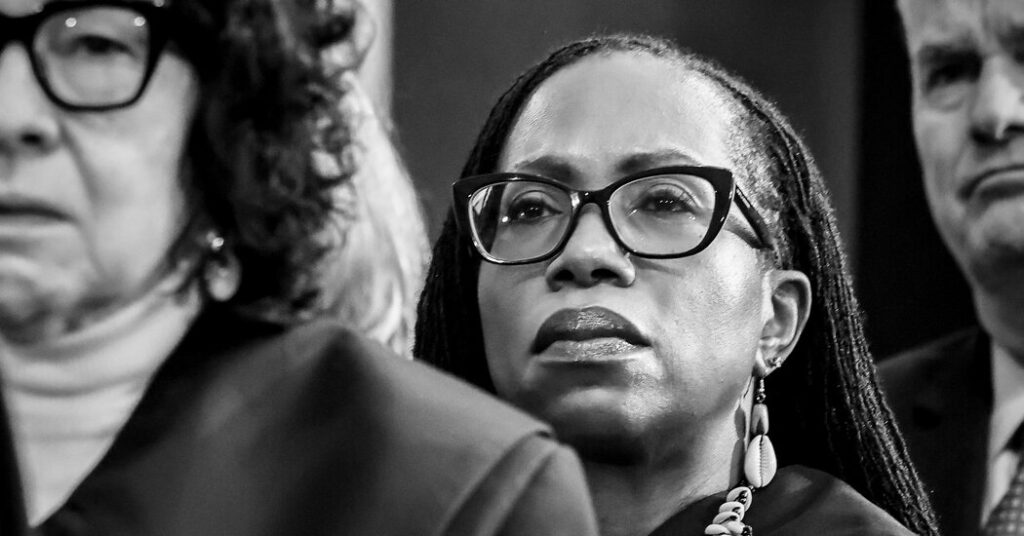
Writing primarily in response to Thomas, Jackson challenges this interpretation of the 14th Amendment, showing readers that the authors of the citizenship clause were informed by decades of work performed by Black Americans. Speaking through hundreds of “colored conventions” — which we have discussed before — Black Americans both claimed their “native-born” citizenship and articulated visions of a broad, egalitarian citizenship, based on birth and open to all:
Delegates to the Colored Conventions drew upon their own experiences to successfully argue for a new Constitution — one that protected fundamental human rights, including an individual’s “‘right to own his body and mind’” and “the right of personal security and protection against injuries to our bodies or good name.”
You should read Jackson’s concurrence as a complement to my essay because we are each telling different parts of the same story: the struggle of Black Americans to realize their freedom and, in the process, forge the path to a freer, more equal United States.
What I Wrote
My column this week was a comment on Senator Lindsey Graham of South Carolina, who died last weekend:
It is one thing to go with the flow — Graham was a politician, after all — but it is something else entirely to throw caution to the wind and embrace a man you denounced, just months earlier, as inimical to your basic values — a man who was as unfit for the presidency on Jan. 20, 2017, as he was on Jan. 19, 2017. For someone as eager for rank as Graham, the temptation of power — of real influence over the new administration — was too much to resist. When it came time to choose between his career and his values, Graham chose Trump, and it would define the rest of his life.
Also, on this week’s episode of my podcast with John Ganz, we watched Michael Bay’s 1998 disaster thriller “Armageddon.”
Now Reading
Brenda Wineapple on America’s centennial for The New York Review of Books.
Adom Getachew on how 20th-century anticolonial figures wielded the American Revolution and the Declaration of Independence for their own struggles, in Dissent magazine.
In Jewish Currents, 23 Palestinians from Gaza and the West Bank reflect on their lives and futures.
Adam Serwer on the “colorblind” Supreme Court for The Atlantic.
Zohran Mamdani on Nelson Mandela for The Guardian.
Photo of the Week
A Catholic mission in San Antonio.
Now Eating: Lablabi (Tunisian Chickpea Soup)
Ingredients
For crispy chickpeas
-
1 ¾ cup cooked chickpeas, or 1 (15-ounce) can chickpeas, drained and rinsed
-
2 teaspoons extra-virgin olive oil
-
½ teaspoon kosher salt, plus more to taste
-
1 teaspoon za’atar, plus more to taste
For soup
-
1 ½ cups dried chickpeas, soaked overnight and drained
-
¼ cup plus 3 tablespoons extra-virgin olive oil, plus more for serving
-
2 bay leaves
-
1 ½ teaspoon kosher salt, plus more to taste
-
½ loaf hearty rustic bread (about 8 ounces)
-
1 cup chopped onion, from 1 medium onion
-
6 garlic cloves, minced or finely grated
-
1 tablespoon ground cumin, plus more for serving
-
1 tablespoon tomato paste
-
1 tablespoon harissa paste, plus more for serving
-
3 tablespoons fresh lemon juice
-
1 tablespoon finely grated lemon zest, for serving
-
½ cup chopped flat-leaf parsley, for serving
Directions
Prepare the crispy chickpeas: Transfer chickpeas to a rimmed baking sheet lined with a clean dish towel or paper towels. Cover with another towel (or paper towels), rubbing gently to dry. Remove top towel and let air-dry for at least 30 minutes and preferably 1 hour.
As chickpeas dry, start preparing the soup: In a Dutch oven or heavy stockpot, combine soaked chickpeas, 5 cups water, 1 tablespoon olive oil, bay leaves and ½ teaspoon salt over high heat. Bring to a boil for 2 to 3 minutes, then reduce heat to a simmer, cover and cook until chickpeas are tender, about 1 to 2 hours.
Heat oven to 400 degrees. While chickpeas are cooking, cut bread into thick slices, then tear slices into bite-size pieces. Place bread in one layer on large rimmed baking sheet and toast until crisp and light brown, about 10 minutes. Let cool on pan and set aside.
Finish the crunchy chickpeas: Raise oven temperature to 425 degrees. Remove the towels from baking sheet with the chickpeas, and toss the chickpeas with 2 teaspoons olive oil, ½ teaspoon salt and za’atar until well coated. Roast until golden and crispy, about 13 to 18 minutes, tossing halfway through. When chickpeas are still hot, sprinkle lightly more salt. Taste and add more salt or za’atar, or both, if you’d like.
When the chickpeas for the soup are tender, discard bay leaves. Using a slotted spoon, transfer 2 cups of chickpeas, ½ cup of chickpea cooking liquid and ¼ cup olive oil to a blender or food processor, and purée until smooth.
In a large skillet over medium-high, heat the remaining 2 tablespoons oil until shimmering. Add the onion and cook, stirring occasionally, until softened, about 5 minutes. Add garlic and cook until golden, about 2 minutes. Add the remaining 1 teaspoon salt, 1 tablespoon cumin and tomato paste and cook, stirring, until fragrant, 1 minute. Add a splash of the chickpea cooking liquid to the pan, and bring to a simmer to deglaze, scraping up the browned bits on the bottom of the pan. Turn off heat.
Add chickpea purée and onion mixture to soup, along with harissa and lemon juice, and stir well. Add a little water if soup seems too thick, and more salt, if needed.
To serve, divide toasted bread pieces among soup bowls, then ladle in soup. Garnish with lemon zest, parsley, olive oil, more cumin and some of the crispy chickpeas — you’ll have leftovers. Serve hot, with more harissa on the side.
The post Ketanji Brown Jackson Knows What 1776 Meant appeared first on New York Times.