When Spain and Argentina face off in the World Cup final in New Jersey on Sunday afternoon, the three stripes of Adidas will be everywhere.
Adidas sponsors both national teams. It also has endorsement deals with the two biggest superstars on the pitch, Argentina’s Lionel Messi and Spain’s Lamine Yamal. Even the ball will be wearing an Adidas logo.
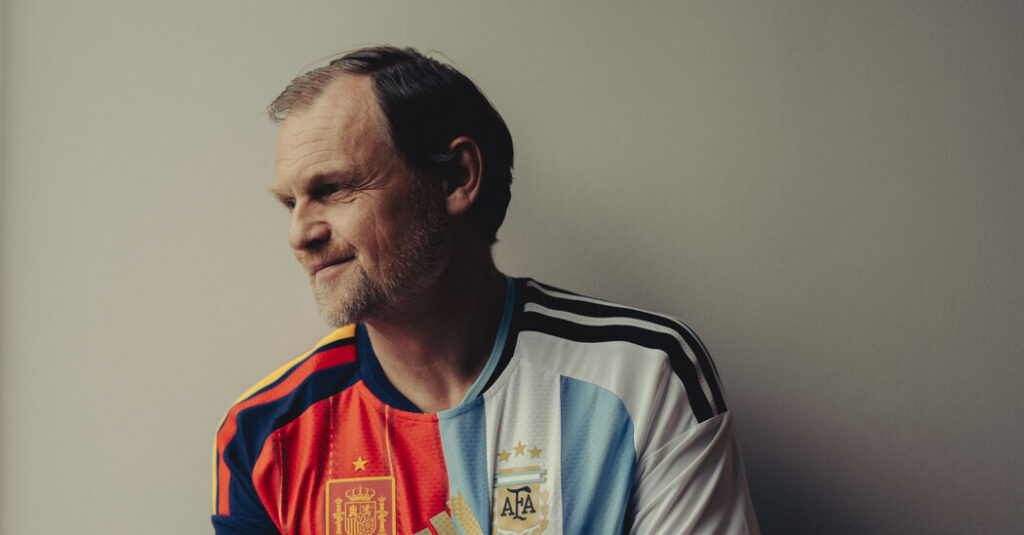
“You couldn’t have scripted it better,” Bjørn Gulden, the chief executive of Adidas, said in an interview in New York the day before he planned to attend the match.
Adidas sold four times as many jerseys and twice as many balls as it did during the previous World Cup in Qatar, he said. The company expects event-related sales to reach over $1.7 billion.
Sportswear companies have spent millions on the tournament, which was hosted across the United States, Canada and Mexico. They’ve held extravagant events and released ads to raise the sport’s profile in the United States and sell more soccer merchandise in a valuable market.
But for Adidas, based in Germany, it has also served as a springboard for its ambitions in a country where Nike, its longtime competitor in Beaverton, Ore., has dominated.
Mr. Gulden, 61, has guided Adidas through a period of robust growth since he jumped from Puma, a hometown rival, in 2023. The business has done well across product categories, including performance goods and lifestyle sneakers. Adidas had double-digit sales growth in all regions except for Europe in its most recent quarter.
Despite the hot streak, the company still has much ground to make up. It had about $5.5 billion in sales in North America in its last fiscal year. Nike had $20.5 billion.
“In the U.S., our competitor has been much, much, much stronger than us,” Mr. Gulden said, referring to Nike. “So the plan is to be more American.”
He said that Adidas used to be more in tune with American culture in the 1980s, but in the decades since, the brand has lost some of that connection, an essential driver for lifestyle sneakers, or the sort of shoes worn on sidewalks, rather than the soccer pitch or basketball court.
American executives now fill the top roles in the company’s North America division, a change from several years ago when they were mostly Europeans. Mr. Gulden said that it’s critical that Adidas understands the U.S. sports ecosystem, from high school to college to the pros.
“We can’t tell the American consumer what they want,” Mr. Gulden said. “We need to listen and we need to live in the culture.”
Adidas has been looking to make a splash across U.S. sports. In basketball, it has heavily promoted the Minnesota Timberwolves star Anthony Edwards, who has a successful signature shoe. In football, it has signed college athletes like Lincoln Kienholz, a star quarterback for Louisville, and young pros like Fernando Mendoza, the No. 1 draft pick who was selected by the Las Vegas Raiders this year.
Distribution in the United States has been a sticking point, though. Adidas had pulled back its products from many of its retail partners, like specialty running stores, in favor of its own stores and website, and management is trying to expand its presence once again in stores like Dick’s Sporting Goods and regional shops such as Academy Sports.
“I really feel that we now have teams, a frame and resources to continue to improve our business,” Mr. Gulden said.
He said it would take Adidas many years to catch up to Nike, particularly in North America. Still, Nike has been dealing with many of the same problems as Adidas, including distribution issues and a strained American consumer. Nike’s slow sales in China have also weighed on its business in recent years.
Adidas’s World Cup triumph stands to be one of its biggest moments this year, but the London Marathon may have had more impact for the company.
In April, two Adidas athletes, Sabastian Sawe and Yomif Kejelcha, each broke the two-hour marathon barrier. They wore new technology on their feet, the Adizero Adios Pro Evo 3 — a $500 shoe that weighs only 97 grams (3.4 ounces) with springy foam and a stiff carbon fiber plate.
For Adidas, which has had mixed performance in its running business throughout its history, it was a good result — just like the World Cup final.
“We need to build credibility, meaning having the best products.” Mr. Gulden said. “And we need to have the best athletes.”
The post Adidas Hopes Its World Cup Moment Can Drive U.S. Sales appeared first on New York Times.